Icterus spurius
Orchard Oriole
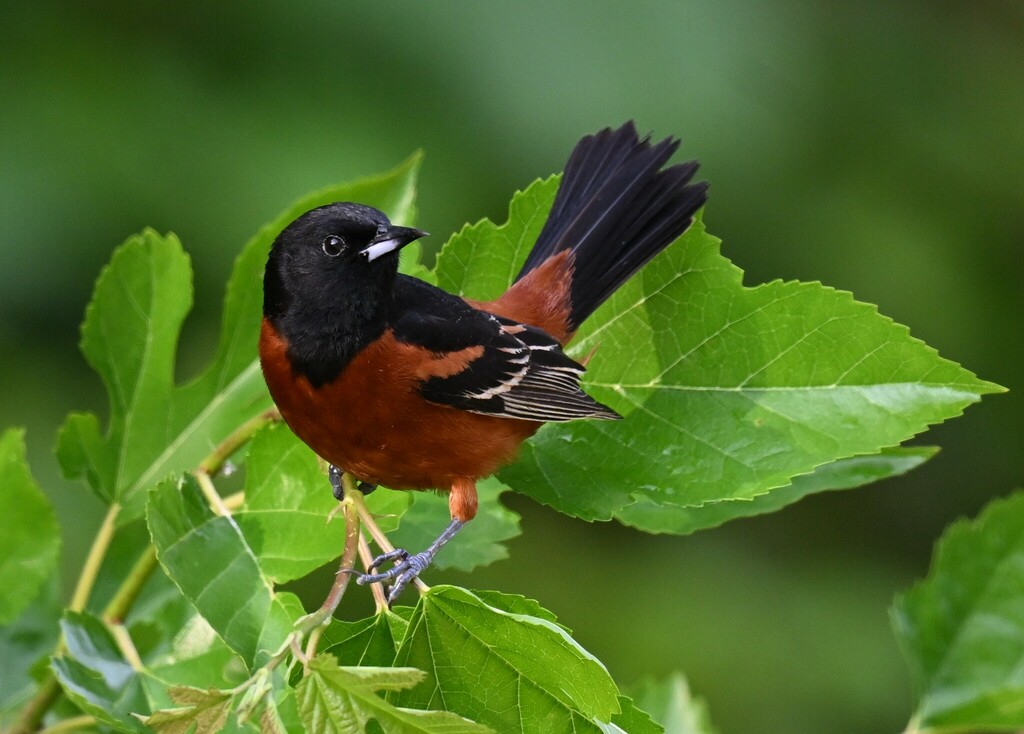
no rights reserved · CC0
Family: Icteridae · Class: Aves · Order: Passeriformes
Icterus spurius (Orchard Oriole) is a California animal in the Icteridae family.
The Orchard Oriole is a small passerine bird measuring 15-18 cm (6-7 inches) in length with a wingspan of 23-27 cm (9-11 inches). Adult males are distinctive with chestnut-orange underparts, black head, throat, back, wings, and tail. The wing coverts display a prominent white bar. Adult females and juveniles are yellow-green to olive above with bright yellow underparts and two white wing bars. Males require two years to attain full breeding plumage, with first-year males resembling females but showing a distinctive black throat patch. The Orchard Oriole breeds across much of eastern North America from southern Canada to the Gulf Coast. In California, the species occurs primarily as a migrant and occasional breeder in the Central Valley and desert regions. Small breeding populations have been documented in riparian areas of the Sacramento and San Joaquin valleys, particularly where cottonwoods and willows are present. The species is most commonly observed during spring and fall migration periods from April through May and August through September. During the breeding season, Orchard Orioles inhabit open woodlands, riparian corridors, orchards, parks, and suburban areas with scattered trees. They show preference for areas with a mix of open space and tree cover, avoiding dense forests. In California, they are typically found in elevations below 500 meters (1,640 feet), particularly in agricultural areas with fruit orchards and shade trees. Wintering habitat in Central and South America includes tropical forests, plantations, and gardens. Orchard Orioles are primarily insectivorous during the breeding season, feeding on caterpillars, beetles, grasshoppers, and other arthropods. They supplement their diet with nectar from flowers, particularly during migration, and consume ripe fruits including mulberries, cherries, and figs. The species constructs distinctive hanging nests woven from grass and plant fibers, typically suspended from the fork of a branch 3-6 meters (10-20 feet) above ground. Females lay 3-7 pale blue eggs marked with brown and purple spots. Incubation lasts 12-14 days, with nestlings fledging after 11-14 days. Breeding occurs from May through July, with pairs typically producing one brood per season. Males establish territories through song and aggressive displays, often arriving at breeding sites 7-10 days before females. The species forms loose colonial nesting arrangements, with multiple pairs sometimes nesting in proximity. The Orchard Oriole is not federally or state listed as threatened or endangered. According to the North American Breeding Bird Survey, populations have remained relatively stable over the past several decades, though some regional declines have been documented. Primary conservation concerns include habitat loss from agricultural intensification and urban development in breeding areas. Climate change may affect migration timing and breeding success. In California, maintaining riparian habitat and preserving mature trees in agricultural landscapes supports the species' limited breeding population and provides critical stopover habitat during migration.
Classification
Class: Aves · Order: Passeriformes · Family: Icteridae
Frequently asked questions
How is Icterus spurius classified?
Icterus spurius belongs to class Aves, order Passeriformes, family Icteridae.
What family does Icterus spurius belong to?
Icterus spurius is in the Icteridae family.
What is Icterus spurius?
The Orchard Oriole is a small passerine bird measuring 15-18 cm (6-7 inches) in length with a wingspan of 23-27 cm (9-11 inches).
Is Icterus spurius found in California?
Yes. Icterus spurius is recorded in California in The California Species Project's catalogue.
Related species
Other California species in the same genus, family, or bioregion.
Data from The California Species Project — 14,000+ California species with verified data from CNPS, CDFW, USFWS, and more.