Ictinia mississippiensis
Mississippi Kite
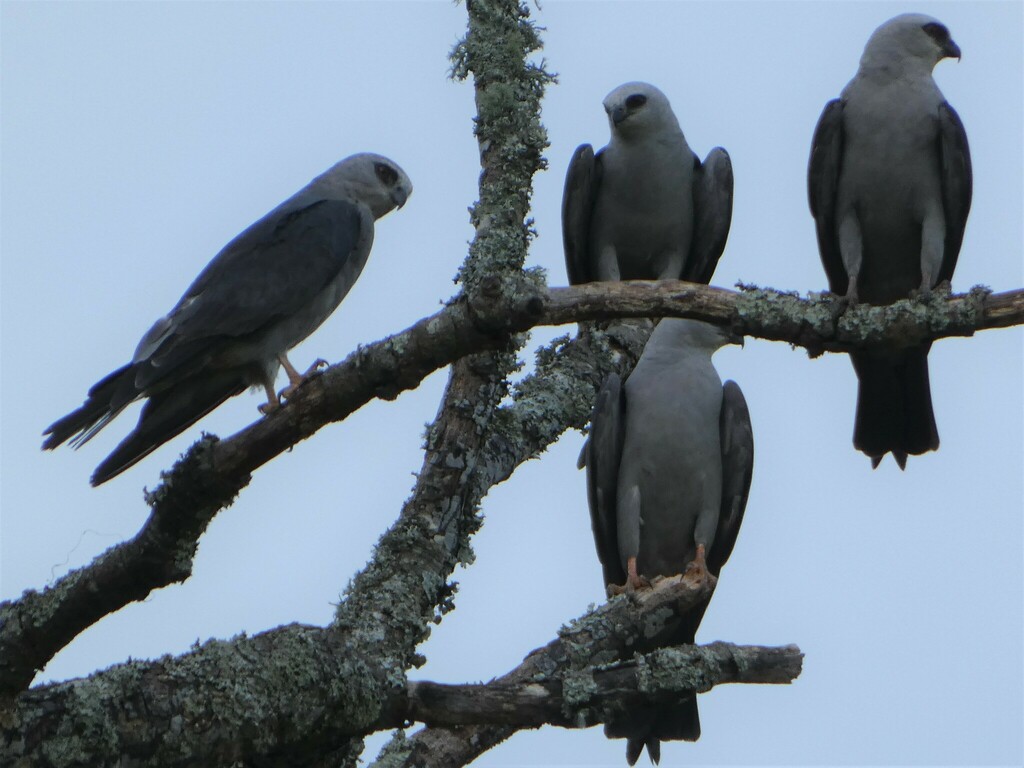
no rights reserved · CC0
Family: Accipitridae · Class: Aves · Order: Accipitriformes
Ictinia mississippiensis (Mississippi Kite) is a California animal in the Accipitridae family.
The Mississippi Kite is a medium-sized raptor with distinctive features that distinguish it from other North American hawks. Adults measure 330 to 370 mm (13 to 14.5 inches) in length with a wingspan of 760 to 840 mm (30 to 33 inches). Males typically weigh 216 to 269 grams, while females are slightly larger at 269 to 361 grams. Adults display pale gray heads and bodies with darker gray flight feathers and a black tail. The wings appear long and pointed in flight, with a characteristic falcon-like silhouette. Juveniles show brown and white streaked plumage with banded tails, developing adult coloration by their second year. Historically, Mississippi Kites bred primarily in the southeastern United States from Texas east to South Carolina and north to Kansas and southern Illinois. In California, the species occurs as a rare vagrant, with occasional sightings documented along the Colorado River valley and in the Central Valley during migration periods. Most California records involve single individuals observed during spring and fall migration, typically from April through September. The species has expanded its breeding range northward in recent decades, with new populations established in Colorado, New Mexico, and other western states. Mississippi Kites inhabit open woodlands, riparian forests, and urban areas with mature trees. During the breeding season, they prefer areas with tall trees for nesting, particularly cottonwoods, sycamores, and oaks near water sources. The species shows strong site fidelity, often returning to the same nesting areas annually. In California, vagrant individuals are typically observed in riparian corridors, agricultural areas with scattered trees, and urban parks during migration. These raptors are highly aerial, spending much of their time soaring and hunting on the wing. Mississippi Kites feed primarily on insects, particularly cicadas, grasshoppers, and dragonflies, which they capture in flight with exceptional agility. They also consume small reptiles, amphibians, and occasionally small birds. The species is strongly migratory, with populations wintering in South America from Bolivia to northern Argentina. Breeding occurs from May through August, with pairs constructing stick nests in the upper canopy of tall trees. Females typically lay 1 to 2 pale blue-white eggs, which are incubated for 31 to 32 days. Young fledge at approximately 34 to 35 days but may remain dependent on parents for several additional weeks. Mississippi Kites are not federally listed and are considered stable throughout most of their range. According to the North American Breeding Bird Survey, populations have shown increases in many regions since the 1960s, likely due to reduced pesticide use and habitat restoration efforts. In California, the species remains an uncommon vagrant with no established breeding populations. Climate change may influence future distribution patterns, potentially increasing vagrancy events in western states. The species benefits from riparian habitat conservation and urban forestry programs that maintain mature tree canopies.
Classification
Class: Aves · Order: Accipitriformes · Family: Accipitridae
Frequently asked questions
How is Ictinia mississippiensis classified?
Ictinia mississippiensis belongs to class Aves, order Accipitriformes, family Accipitridae.
What family does Ictinia mississippiensis belong to?
Ictinia mississippiensis is in the Accipitridae family.
What is Ictinia mississippiensis?
The Mississippi Kite is a medium-sized raptor with distinctive features that distinguish it from other North American hawks.
Is Ictinia mississippiensis found in California?
Yes. Ictinia mississippiensis is recorded in California in The California Species Project's catalogue.
Related species
Other California species in the same genus, family, or bioregion.
Data from The California Species Project — 14,000+ California species with verified data from CNPS, CDFW, USFWS, and more.