Idia occidentalis
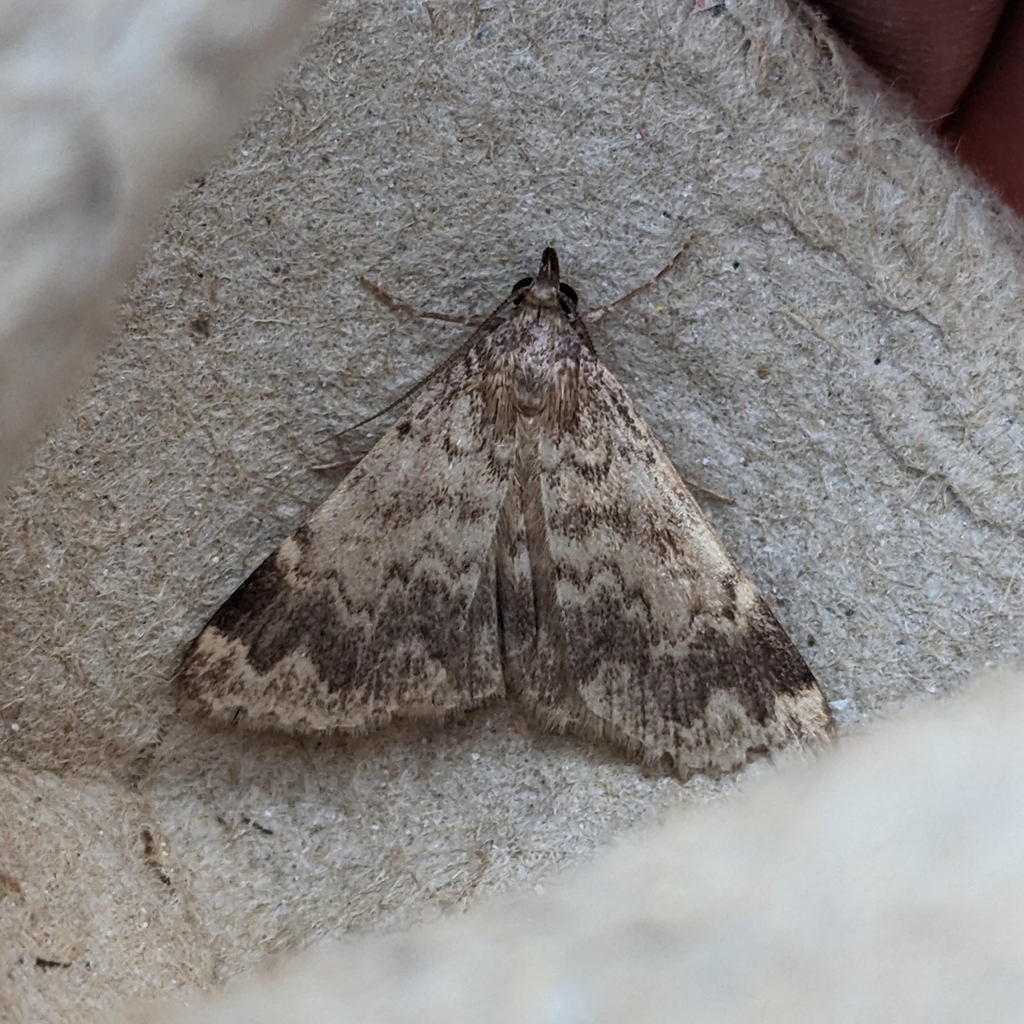
no rights reserved · CC0
Family: Erebidae · Class: Insecta · Order: Lepidoptera
Idia occidentalis is a California animal in the Erebidae family.
Idia occidentalis is a small moth in the family Erebidae, subfamily Herminiinae. Adults have a wingspan of approximately 20-25 mm (0.8-1.0 inches). The forewings are brownish-gray with distinctive darker crosslines and a characteristic reniform spot. The hindwings are paler, typically grayish-white with a faint discal spot. Like other Idia species, the labial palps are prominently projected forward, giving the moth a distinctive snout-like appearance when viewed from the side. The antennae are filiform in both sexes. This western North American species ranges from southern Alberta and British Columbia south through the western United States to Colorado, Arizona, and California. In California, Idia occidentalis has been recorded from various counties, though distribution records suggest it is more common in mountainous and foothill regions. The species appears to be widely distributed across its range but occurs at relatively low densities. Idia occidentalis inhabits diverse woodland and forest environments, including mixed coniferous forests, oak woodlands, and riparian areas. The species is typically found at elevations ranging from near sea level to approximately 2,500 meters (8,200 feet), though it appears most common at middle elevations. Adults are attracted to lights and can be found in areas with abundant leaf litter and decaying organic matter, which supports larval development. Adults are nocturnal and fly from late spring through early fall, with peak activity typically occurring from June through August. The species appears to be multivoltine in warmer portions of its range, producing multiple generations per year. Larvae are detritivores, feeding on dead leaves, organic debris, and possibly fungal material in the forest floor. This feeding behavior is characteristic of the Herminiinae subfamily, whose members play important ecological roles as decomposers. Females deposit eggs on or near suitable larval food sources, and larvae develop within the leaf litter layer. The species overwinters in various life stages depending on local climate conditions, with pupation occurring in the soil or leaf litter. Adults have a relatively short flight period at any given location, typically lasting several weeks. Males are attracted to pheromones released by females, and mating occurs during nighttime hours. Idia occidentalis does not currently hold any federal or state conservation status listings. The species appears to maintain stable populations throughout much of its range, likely due to its association with widespread forest and woodland habitats. However, like many forest-dwelling insects, it may be affected by habitat fragmentation, intensive forest management practices, and climate change impacts on montane ecosystems. The species' dependence on leaf litter and organic debris makes it potentially sensitive to changes in forest floor conditions and decomposition processes. No specific conservation measures are currently in place for this species, though general forest habitat protection benefits this and other woodland moths.
Classification
Class: Insecta · Order: Lepidoptera · Family: Erebidae
Frequently asked questions
How is Idia occidentalis classified?
Idia occidentalis belongs to class Insecta, order Lepidoptera, family Erebidae.
What family does Idia occidentalis belong to?
Idia occidentalis is in the Erebidae family.
What is Idia occidentalis?
Idia occidentalis is a small moth in the family Erebidae, subfamily Herminiinae.
Is Idia occidentalis found in California?
Yes. Idia occidentalis is recorded in California in The California Species Project's catalogue.
Related species
Other California species in the same genus, family, or bioregion.
Data from The California Species Project — 14,000+ California species with verified data from CNPS, CDFW, USFWS, and more.