Idiostatus kathleenae
Pinnacles Shieldback Katydid
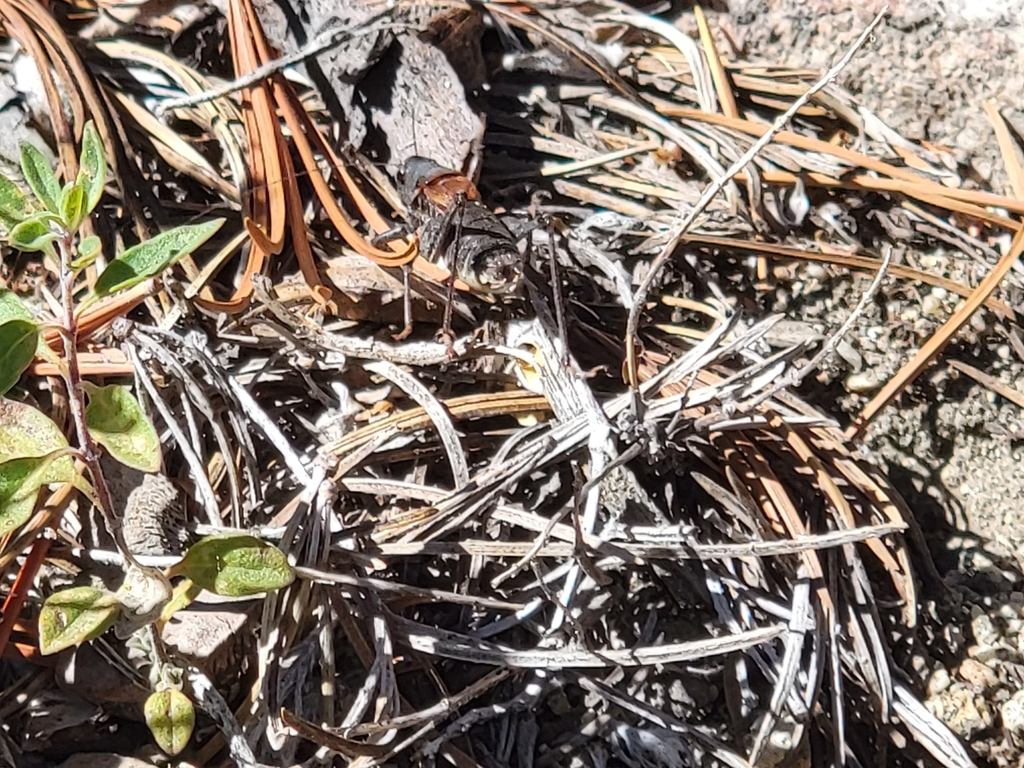
no rights reserved · CC0
Family: Tettigoniidae · Class: Insecta · Order: Orthoptera
Conservation status: G1G2 S1S2
Idiostatus kathleenae (Pinnacles Shieldback Katydid) is a California animal in the Tettigoniidae family.
The Pinnacles shieldback katydid is a flightless orthopteran insect endemic to a highly restricted area of California. This species belongs to the subfamily Tettigoniinae and represents one of the most geographically limited katydid species in North America. Adults measure approximately 15-25 millimeters in body length, excluding antennae, with females typically larger than males. The species exhibits the characteristic shieldback katydid morphology with a prominent pronotum extending over the thorax, reduced wing covers (tegmina), and long, thread-like antennae that may exceed twice the body length. Coloration ranges from brown to grayish-brown, providing camouflage among leaf litter and rocky substrates. Idiostatus kathleenae occurs exclusively in the vicinity of Pinnacles National Park in San Benito and Monterey counties, California. This extremely narrow endemic range places the species among California's most geographically restricted invertebrates. The species is found within the Diablo Range, part of the inner south Coast Range system that extends through central California. Current distribution appears limited to specific microhabitats within this already small geographic area. The katydid inhabits chaparral and oak woodland communities at elevations ranging from approximately 300 to 800 meters. Preferred microhabitats include areas with dense leaf litter, rock outcrops, and native shrub cover. The species shows particular association with coast live oak (Quercus agrifolia) woodlands and adjacent chaparral dominated by chamise (Adenostoma fasciculatum) and manzanita (Arctostaphylos species). Rocky talus slopes and areas with substantial organic debris accumulation provide essential shelter and foraging opportunities. As a primarily nocturnal species, Pinnacles shieldback katydids emerge after dark to forage among leaf litter and low vegetation. Diet consists primarily of decaying plant matter, small arthropods, and occasionally fresh plant material. Males produce acoustic signals by stridulation, rubbing specialized wing structures together to attract females during the breeding season. Reproduction likely occurs during late spring through early summer, with females depositing eggs in soil or organic matter. The species exhibits typical katydid development with multiple nymphal stages before reaching sexual maturity. The Pinnacles shieldback katydid holds a global conservation rank of G1G2, indicating it is critically imperiled to imperiled globally, and a state rank of S1S2, reflecting similar concern at the California level. The U.S. Fish and Wildlife Service has evaluated this species for potential federal protection. Primary threats include habitat degradation from human activities, altered fire regimes, invasive plant species establishment, and climate change effects on its limited montane habitat. The species' extremely restricted range makes it particularly vulnerable to localized disturbances. Conservation efforts focus on habitat protection within Pinnacles National Park boundaries and monitoring of known populations to assess long-term viability.
Classification
Class: Insecta · Order: Orthoptera · Family: Tettigoniidae
Conservation status
G1G2 S1S2
Frequently asked questions
How is Idiostatus kathleenae classified?
Idiostatus kathleenae belongs to class Insecta, order Orthoptera, family Tettigoniidae.
What family does Idiostatus kathleenae belong to?
Idiostatus kathleenae is in the Tettigoniidae family.
Is Idiostatus kathleenae protected or of conservation concern?
Idiostatus kathleenae carries the following status: G1G2 S1S2.
What is Idiostatus kathleenae?
The Pinnacles shieldback katydid is a flightless orthopteran insect endemic to a highly restricted area of California.
Is Idiostatus kathleenae found in California?
Yes. Idiostatus kathleenae is recorded in California in The California Species Project's catalogue.
Related species
Other California species in the same genus, family, or bioregion.
Data from The California Species Project — 14,000+ California species with verified data from CNPS, CDFW, USFWS, and more.