Idotea fewkesi
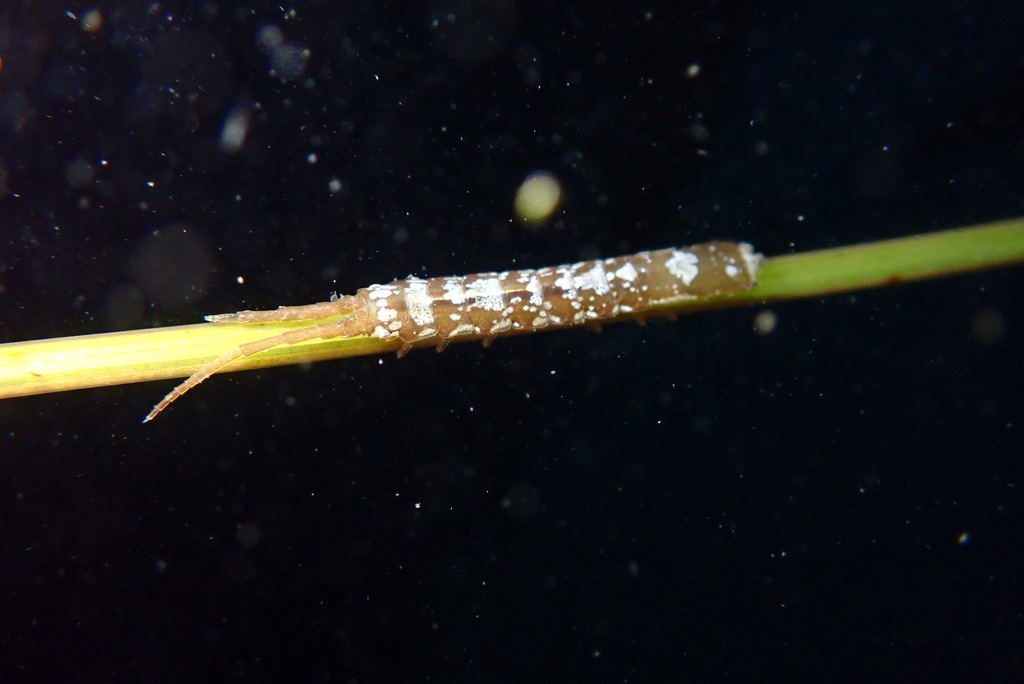
(c) Cricket Raspet, some rights reserved (CC BY) · licence
Family: Idoteidae · Class: Malacostraca · Order: Isopoda
Idotea fewkesi is a California animal in the Idoteidae family.
Idotea fewkesi is a marine isopod crustacean in the family Idoteidae, representing one of the less-documented invertebrate species in California's coastal waters. This small crustacean belongs to the order Isopoda within the class Malacostraca, placing it among the diverse group of marine arthropods that includes pill bugs and their aquatic relatives. The physical characteristics of I. fewkesi have not been extensively documented in the scientific literature. Like other members of the genus Idotea, this species likely exhibits the typical isopod body plan with a flattened, segmented body and seven pairs of walking legs. Idoteid isopods generally range from 5 to 40 millimeters in length, though specific measurements for I. fewkesi are not well established in available sources. The distribution of I. fewkesi appears to be associated with the northeastern Pacific coast, with documented occurrences in marine environments of the Pacific Northwest. Based on available records, the species has been reported from nearshore marine habitats in the Strait of Juan de Fuca region, suggesting it may occur in similar coastal environments along the California coast (Simenstad et al. 1977). However, the complete range within California waters requires further documentation. I. fewkesi inhabits marine and estuarine environments, likely occupying rocky intertidal zones, kelp beds, and other nearshore marine habitats typical of idoteid isopods. Members of this family are commonly found among algae, eelgrass beds, and other marine vegetation where they can find both shelter and food sources. The species may also occur in deeper subtidal areas on hard substrates or among marine debris. Ecological information specific to I. fewkesi remains limited. Like other idoteid isopods, this species likely functions as both a herbivore and detritivore, feeding on algae, decomposing plant material, and organic detritus. Idoteid isopods serve as important components of marine food webs, providing prey for various fish species and other marine predators. Research in the Strait of Juan de Fuca documented I. fewkesi as prey for nearshore fish species, indicating its role in coastal food chains (Simenstad et al. 1977). The conservation status of I. fewkesi has not been formally assessed by state or federal agencies. The species currently holds no listing status under the U.S. Endangered Species Act or California Endangered Species Act. The lack of comprehensive biological and ecological data represents a significant knowledge gap for this species. Like many marine invertebrates, I. fewkesi may face threats from coastal development, water quality degradation, and climate change impacts on marine ecosystems, though specific threat assessments have not been conducted. Further research is needed to characterize the basic biology, distribution, and ecological requirements of I. fewkesi. Systematic surveys of California's marine invertebrate fauna would help establish the species' current status and conservation needs within state waters.
Classification
Class: Malacostraca · Order: Isopoda · Family: Idoteidae
Frequently asked questions
How is Idotea fewkesi classified?
Idotea fewkesi belongs to class Malacostraca, order Isopoda, family Idoteidae.
What family does Idotea fewkesi belong to?
Idotea fewkesi is in the Idoteidae family.
What is Idotea fewkesi?
Idotea fewkesi is a marine isopod crustacean in the family Idoteidae, representing one of the less-documented invertebrate species in California's coastal waters.
Is Idotea fewkesi found in California?
Yes. Idotea fewkesi is recorded in California in The California Species Project's catalogue.
Related species
Other California species in the same genus, family, or bioregion.
Data from The California Species Project — 14,000+ California species with verified data from CNPS, CDFW, USFWS, and more.