Ilyanassa obsoleta
Eastern Mudsnail
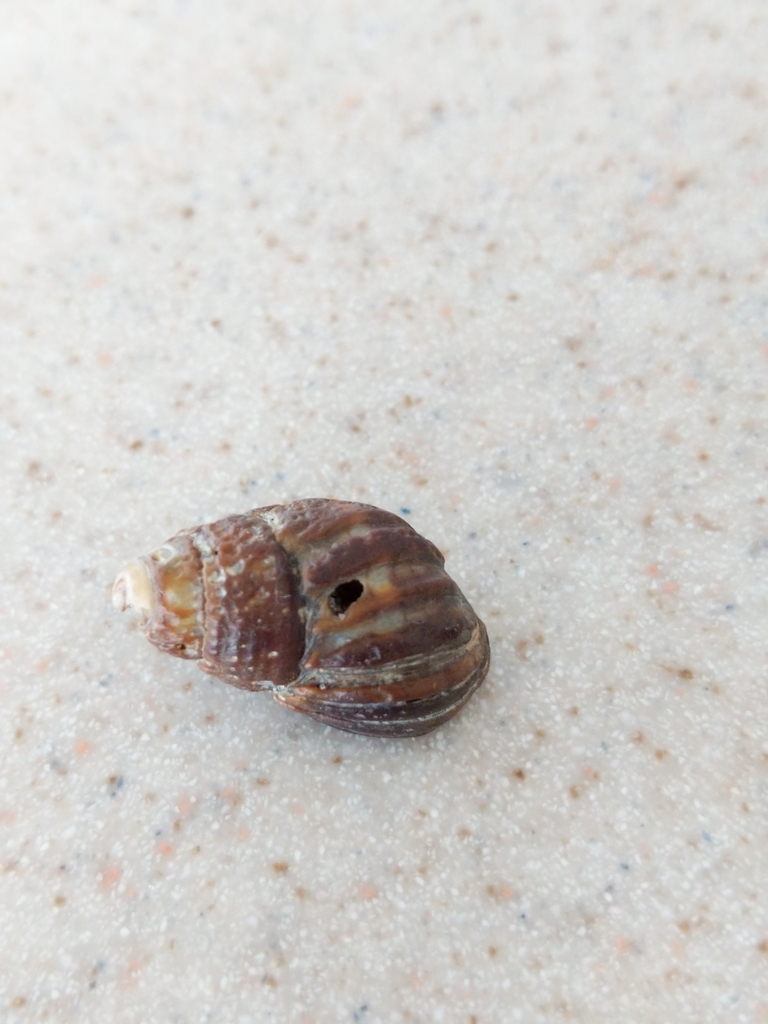
no rights reserved · CC0
Family: Nassariidae · Class: Gastropoda · Order: Neogastropoda
Ilyanassa obsoleta (Eastern Mudsnail) is a California animal in the Nassariidae family.
The Eastern Mudsnail (Ilyanassa obsoleta) is a small marine gastropod mollusk native to the Atlantic coast of North America. Adults typically measure 15-25 mm (0.6-1.0 inches) in shell height, with a dark brown to black conical shell featuring 6-8 whorls. The shell surface exhibits fine spiral ridges and growth lines, with a pointed spire and relatively large body whorl. The aperture is oval-shaped with a thick outer lip, and the operculum completely seals the opening when the animal retracts. Historically restricted to Atlantic and Gulf coasts from the Maritime Provinces to Georgia, this species has established non-native populations on the Pacific coast. In California, Eastern Mudsnails occur in San Francisco Bay and adjacent waters, where they were first documented in the early 20th century. According to USGS Nonindigenous Aquatic Species database, the species has become established in various bay habitats including Lake Merritt in Oakland. Eastern Mudsnails inhabit intertidal and shallow subtidal zones of estuaries, salt marshes, and protected coastal waters. They prefer soft sediments including mud, sand, and muddy sand substrates in areas with moderate to high salinity. The species tolerates a wide range of temperatures and can occur from the low intertidal zone to depths of several meters. In their introduced California range, they occupy similar estuarine habitats with fine sediments. This species exhibits typical nassariid feeding behavior as an opportunistic scavenger and deposit feeder. Eastern Mudsnails consume detritus, carrion, algae, and small invertebrates, using their radula to scrape organic matter from sediment surfaces. They are active during both day and night, moving across sediment surfaces in search of food. Reproduction involves separate sexes, with females laying egg capsules containing multiple embryos on hard surfaces during warmer months. The species can reach high population densities, particularly in nutrient-rich environments. As an introduced species in California waters, Eastern Mudsnails represent a significant ecological concern. Research indicates they may be playing a major role in altering the diversity, abundance, and size distribution of native invertebrate communities in San Francisco Bay. Their high reproductive rate and ability to exploit various food sources allow them to compete effectively with native species. The species' establishment in California estuaries demonstrates the ongoing challenge of marine invasions in disturbed coastal ecosystems. Unlike some introduced mollusks, Eastern Mudsnails have not been subject to specific management or eradication efforts, likely due to their widespread establishment and the difficulty of controlling established populations in open water systems.
Classification
Class: Gastropoda · Order: Neogastropoda · Family: Nassariidae
Frequently asked questions
How is Ilyanassa obsoleta classified?
Ilyanassa obsoleta belongs to class Gastropoda, order Neogastropoda, family Nassariidae.
What family does Ilyanassa obsoleta belong to?
Ilyanassa obsoleta is in the Nassariidae family.
What is Ilyanassa obsoleta?
The Eastern Mudsnail (Ilyanassa obsoleta) is a small marine gastropod mollusk native to the Atlantic coast of North America.
Is Ilyanassa obsoleta found in California?
Yes. Ilyanassa obsoleta is recorded in California in The California Species Project's catalogue.
More California species
This species has no close relatives in our California data — here are other species to explore.
Data from The California Species Project — 14,000+ California species with verified data from CNPS, CDFW, USFWS, and more.