Incilius alvarius
Sonoran Desert Toad
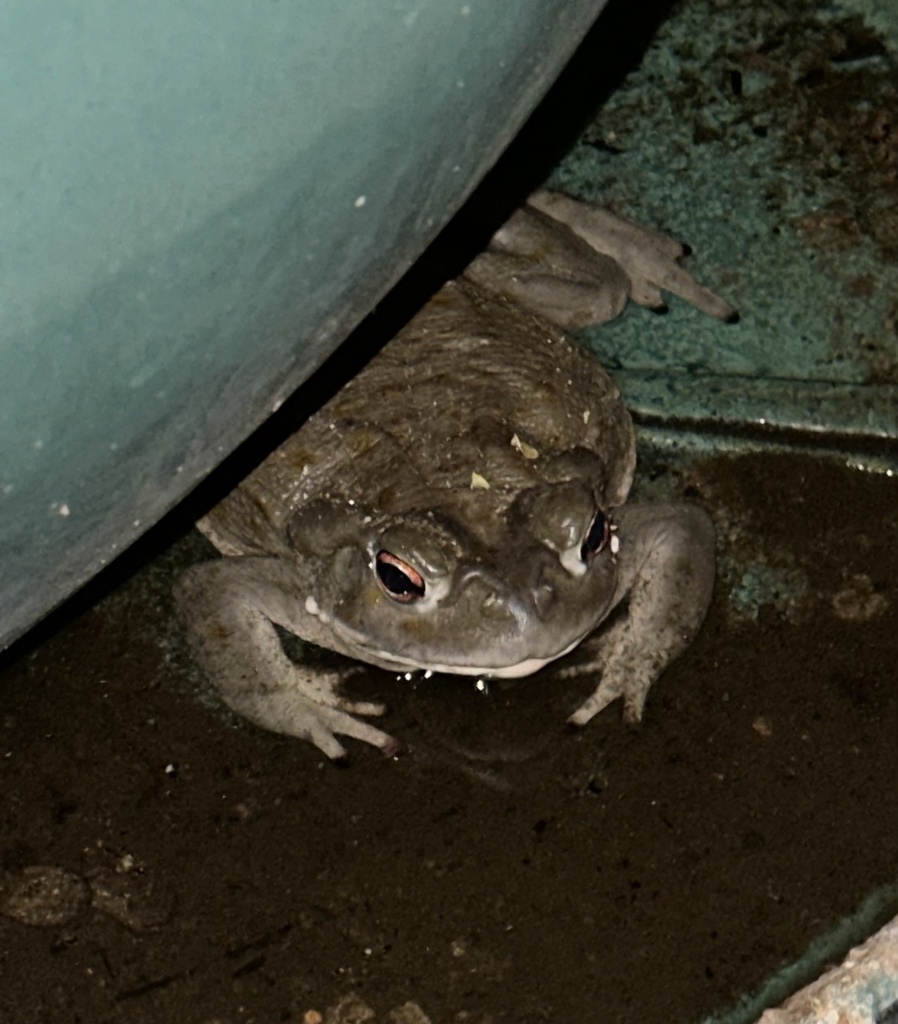
no rights reserved · CC0
Family: Bufonidae · Class: Amphibia · Order: Anura
Conservation status: G5 SH
Incilius alvarius (Sonoran Desert Toad) is a California animal in the Bufonidae family.
The Sonoran Desert Toad (Incilius alvarius) is one of North America's largest native toads, with adults reaching 190 mm (7.5 inches) in snout-vent length. The species exhibits smooth, olive-green to brown dorsal skin with prominent parotoid glands behind each eye that secrete potent toxins. Large, rounded warts are scattered across the dorsal surface, while the ventral side appears cream-colored or yellowish-white. Adult males can be distinguished by dark, keratinized nuptial pads on their thumbs during breeding season. Historically, the Sonoran Desert Toad ranged across the Sonoran Desert of Arizona, extreme southeastern California, northwestern Mexico, and a small portion of New Mexico. In California, the species was documented from the Colorado River Valley in Imperial and Riverside counties, including areas near Blythe and the Salton Sea region. According to NatureServe, the species maintains stable populations throughout most of its range, reflected in its G5 global rank, but is considered historically present (SH) in California, indicating uncertainty about current populations in the state. The species inhabits arid and semi-arid desert regions, typically at elevations below 1,600 meters (5,250 feet). Adults require access to permanent or semi-permanent water sources for reproduction, including desert springs, stock tanks, irrigation ditches, and slow-moving streams. During dry periods, individuals retreat to underground burrows or seek shelter under rocks, logs, or human structures. The species shows strong fidelity to water sources, often remaining within a few kilometers of breeding sites throughout their lives. Sonoran Desert Toads are primarily nocturnal, emerging during warm, humid nights to forage for insects, spiders, small vertebrates, and other arthropods. Adults can consume prey items up to one-third their own body length. Breeding typically occurs from May through September, coinciding with monsoon rains. Males gather at water sources and produce low-pitched calls to attract females. Females deposit 7,500 to 8,000 eggs in long, double strands in shallow water. Tadpoles develop rapidly, metamorphosing in 6 to 10 weeks depending on water temperature and availability. The species' parotoid glands produce bufotoxins, including 5-methoxy-N,N-dimethyltryptamine (5-MeO-DMT), which serves as protection against predators. These compounds are highly toxic to mammals and can cause severe illness or death in domestic animals that mouth or ingest the toads. While not federally listed, the Sonoran Desert Toad faces threats from habitat loss due to urban development, water diversions, and groundwater pumping in desert regions. Climate change may exacerbate water scarcity issues critical for breeding success. In California, the species' current status remains uncertain, with few recent confirmed sightings despite historical documentation. Illegal collection for the psychoactive compounds has emerged as an additional conservation concern in some portions of the range. Continued monitoring is needed to assess population trends and distribution in California's Colorado River region.
Classification
Class: Amphibia · Order: Anura · Family: Bufonidae
Conservation status
G5 SH
Frequently asked questions
How is Incilius alvarius classified?
Incilius alvarius belongs to class Amphibia, order Anura, family Bufonidae.
What family does Incilius alvarius belong to?
Incilius alvarius is in the Bufonidae family.
Is Incilius alvarius protected or of conservation concern?
Incilius alvarius carries the following status: G5 SH.
What is Incilius alvarius?
The Sonoran Desert Toad (Incilius alvarius) is one of North America's largest native toads, with adults reaching 190 mm (7.5 inches) in snout-vent length.
Is Incilius alvarius found in California?
Yes. Incilius alvarius is recorded in California in The California Species Project's catalogue.
Related species
Other California species in the same genus, family, or bioregion.
Data from The California Species Project — 14,000+ California species with verified data from CNPS, CDFW, USFWS, and more.