Iridopsis clivinaria
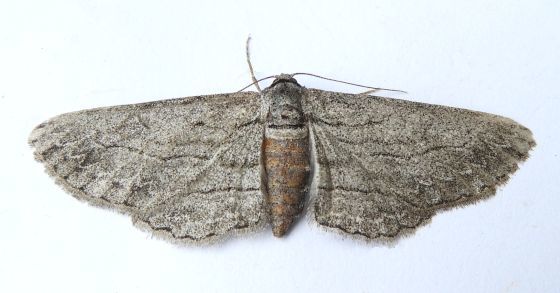
(c) jimeckert49, some rights reserved (CC BY) · licence
Family: Geometridae · Class: Insecta · Order: Lepidoptera
Iridopsis clivinaria is a California animal in the Geometridae family.
Iridopsis clivinaria is a moth species in the family Geometridae, commonly known as geometrid moths or inchworms. This species belongs to a large family of moths characterized by larvae that move in a distinctive looping motion. Adult geometrid moths typically have slender bodies and broad, delicate wings that are held horizontally when at rest. The specific physical characteristics of Iridopsis clivinaria are not well-documented in readily available literature. Like other members of the genus Iridopsis, adults likely exhibit the typical geometrid body plan with relatively thin bodies and wings that span wider than the body length. The genus name Iridopsis suggests potential iridescent coloration, though this requires verification from taxonomic sources. Adults probably measure between 15-30 mm in wingspan, consistent with related species in the family. The current distribution of Iridopsis clivinaria appears to be poorly documented. Many geometrid species have restricted ranges, particularly in California where habitat fragmentation and urbanization have impacted numerous lepidopteran populations. Without verified occurrence records, the historical and current range of this species remains uncertain. California supports over 1,000 described geometrid species, many of which have narrow habitat requirements. Habitat preferences for Iridopsis clivinaria are not established in available sources. Geometridae moths occupy diverse habitats throughout California, from coastal sage scrub to montane forests. Larvae typically feed on specific host plants, while adults may visit flowers for nectar or be attracted to artificial lights. The species likely requires native vegetation communities, as many California geometrids have co-evolved with indigenous plant species. The life cycle of Iridopsis clivinaria presumably follows the typical geometrid pattern of complete metamorphosis. Eggs are deposited on or near host plants, and larvae develop through several instars before pupating. The characteristic looping locomotion of geometrid caterpillars results from having fewer prolegs than other moth larvae. Adult flight periods vary among geometrid species but often coincide with host plant phenology. Many California geometrids have single annual generations, though some species may be multivoltine in favorable conditions. The conservation status of Iridopsis clivinaria is not established through standard assessment protocols. Many geometrid moths face threats from habitat loss, urbanization, and climate change. California's mediterranean climate regions, which support high lepidopteran diversity, are particularly vulnerable to development pressure and altered fire regimes. Light pollution may disrupt adult behavior, while pesticide use can impact both larval and adult stages. Without comprehensive surveys and taxonomic clarification, the population status and conservation needs of this species remain unknown. Further research is needed to determine distribution, habitat requirements, and potential conservation concerns for Iridopsis clivinaria.
Classification
Class: Insecta · Order: Lepidoptera · Family: Geometridae
Frequently asked questions
How is Iridopsis clivinaria classified?
Iridopsis clivinaria belongs to class Insecta, order Lepidoptera, family Geometridae.
What family does Iridopsis clivinaria belong to?
Iridopsis clivinaria is in the Geometridae family.
What is Iridopsis clivinaria?
Iridopsis clivinaria is a moth species in the family Geometridae, commonly known as geometrid moths or inchworms.
Is Iridopsis clivinaria found in California?
Yes. Iridopsis clivinaria is recorded in California in The California Species Project's catalogue.
Related species
Other California species in the same genus, family, or bioregion.
Data from The California Species Project — 14,000+ California species with verified data from CNPS, CDFW, USFWS, and more.