Iridopsis fragilaria
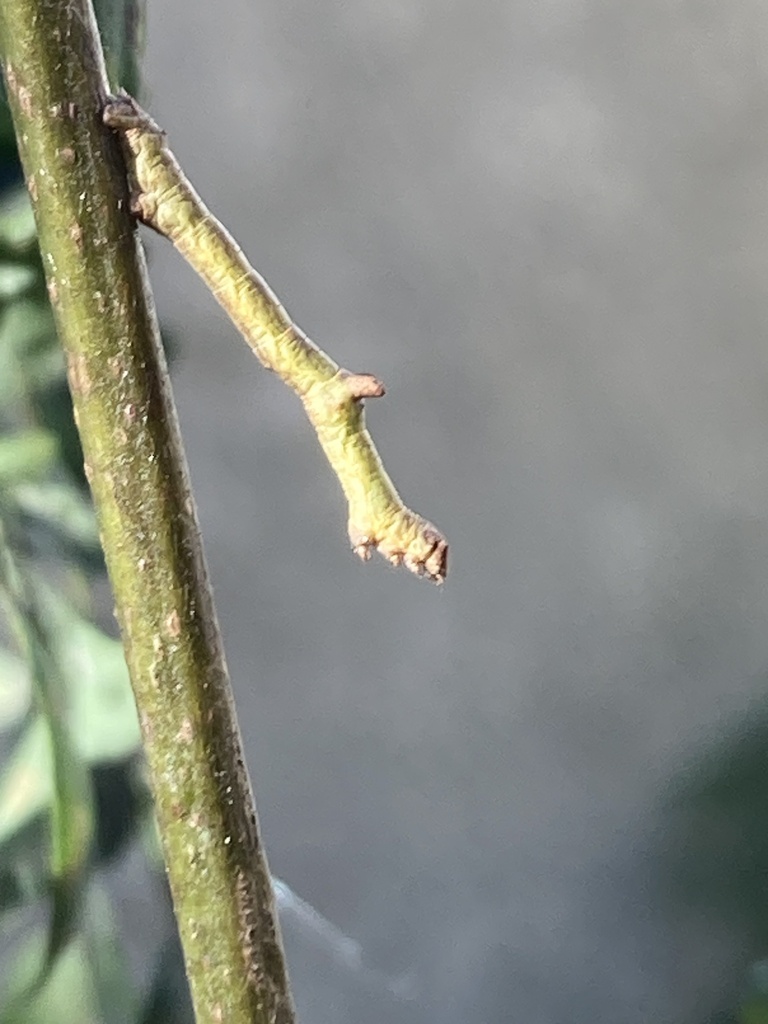
(c) arcaniac, some rights reserved (CC BY) · licence
Family: Geometridae · Class: Insecta · Order: Lepidoptera
Iridopsis fragilaria is a California animal in the Geometridae family.
Iridopsis fragilaria is a moth in the family Geometridae, commonly known as geometrid moths or inchworm moths. This species belongs to a diverse family characterized by larvae that move in a distinctive looping motion. Adult geometrid moths typically have slender bodies and broad, delicate wings, though specific morphological details for I. fragilaria are not well-documented in readily available literature. The distribution and range of Iridopsis fragilaria within California requires further documentation. Geometridae moths are found throughout North America, with many species exhibiting restricted ranges tied to specific host plants or habitat types. Without confirmed occurrence records, the precise counties or regions where this species occurs in California cannot be definitively stated. Habitat preferences for I. fragilaria are not clearly established in current literature. Geometridae moths as a group occupy diverse habitats ranging from forests and woodlands to chaparral and desert environments. Many species are associated with specific vegetation communities that support their larval host plants. Elevation ranges and specific microhabitat requirements for this species remain undocumented. The life cycle of I. fragilaria likely follows the typical geometrid pattern, though specific details are lacking. Geometridae moths generally undergo complete metamorphosis with egg, larval, pupal, and adult stages. Larvae are typically herbivorous, feeding on leaves of specific host plants. The common name "inchworm" or "looper" refers to the larval locomotion pattern, where caterpillars arch their bodies as they move due to having fewer prolegs than other moth larvae. Adult flight periods, mating behaviors, and reproductive strategies for I. fragilaria have not been well-studied or documented. Larval host plants for I. fragilaria are not identified in available sources. Geometridae larvae often specialize on particular plant families or genera, with some species being quite host-specific while others accept multiple plant species. Identifying host plant relationships is crucial for understanding species ecology and conservation needs. The conservation status of Iridopsis fragilaria is unclear, as this species does not appear on federal or California state listing documents as of December 2025. The lack of readily available ecological information suggests this may be either a rarely encountered species, one with limited study, or possibly a taxonomic entity requiring further verification. Many geometrid moths remain poorly known, particularly smaller or cryptic species that may be overlooked in surveys. Without documented threats, population trends, or habitat requirements, conservation priorities for I. fragilaria cannot be assessed. The species may face similar challenges to other California lepidopterans, including habitat loss, pesticide use, climate change, and invasive species, but specific impacts remain unknown. Further research is needed to establish basic ecological requirements, distribution patterns, and conservation needs for this geometrid moth species.
Classification
Class: Insecta · Order: Lepidoptera · Family: Geometridae
Frequently asked questions
How is Iridopsis fragilaria classified?
Iridopsis fragilaria belongs to class Insecta, order Lepidoptera, family Geometridae.
What family does Iridopsis fragilaria belong to?
Iridopsis fragilaria is in the Geometridae family.
What is Iridopsis fragilaria?
Iridopsis fragilaria is a moth in the family Geometridae, commonly known as geometrid moths or inchworm moths.
Is Iridopsis fragilaria found in California?
Yes. Iridopsis fragilaria is recorded in California in The California Species Project's catalogue.
Related species
Other California species in the same genus, family, or bioregion.
Data from The California Species Project — 14,000+ California species with verified data from CNPS, CDFW, USFWS, and more.