Iridopsis larvaria
Bent-Lined Gray
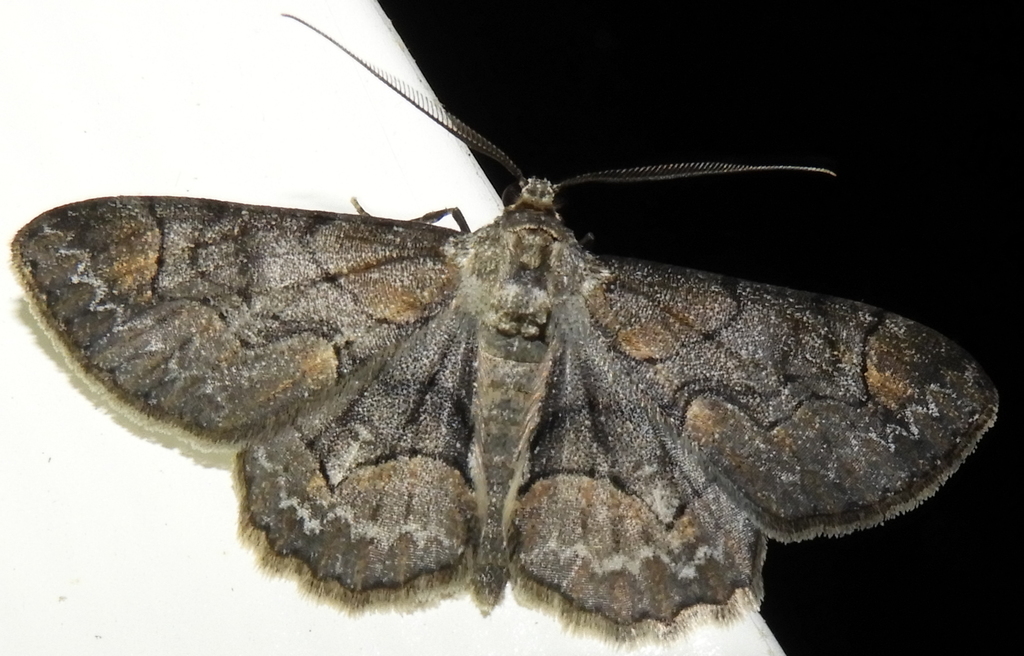
(c) pachips, some rights reserved (CC BY) · licence
Family: Geometridae · Class: Insecta · Order: Lepidoptera
Iridopsis larvaria (Bent-Lined Gray) is a California animal in the Geometridae family.
The Bent-Lined Gray (Iridopsis larvaria) is a geometrid moth in the subfamily Ennominae, tribe Boarmiini. This species displays the typical geometrid body plan with broad, horizontally held wings and a relatively slender abdomen. Adults exhibit gray coloration with distinctive bent or angular lines crossing the forewings, giving the species its common name. The wings typically show a mottled gray pattern with darker crosslines and markings that provide effective camouflage against tree bark and lichens. Iridopsis larvaria has a broad distribution across western North America, extending from British Columbia south through the western United States. The species occurs throughout much of California, with documented records from multiple counties across varied elevational zones. Recent documentation includes specimens collected from Boise County, Idaho, at Deadwood Campground and Bonneville County at Palisades Reservoir in July 2018 (News of the Lepidopterists' Society 2019). The species appears to have a relatively stable distribution throughout its range. This moth inhabits mixed coniferous and deciduous forests, woodland edges, and mountainous terrain. The species is typically found in areas with mature trees and diverse understory vegetation. Adults are attracted to lights and can be encountered at elevations ranging from foothills to montane zones. The habitat preferences suggest adaptation to cooler, forested environments typical of the Pacific Northwest and western montane regions. Adult Bent-Lined Gray moths are nocturnal and most active during summer months, with peak flight periods typically occurring from June through August based on collection records. Like other geometrids, the larvae are commonly called "inchworms" or "loopers" due to their characteristic locomotion method of arching their bodies as they move. The caterpillars likely feed on various deciduous trees and shrubs, though specific host plant relationships for this species have not been well documented in the available literature. Adult moths are attracted to artificial lights and may be encountered at porch lights or light traps in suitable habitat. Iridopsis larvaria currently has no special conservation status at federal or state levels. The species appears to maintain stable populations across its range, with regular documentation by lepidopterists and citizen scientists. As a forest-associated species, potential threats could include habitat loss from deforestation, wildfire, and climate change impacts on montane forest ecosystems. However, the broad distribution and apparent ecological adaptability suggest this species is not currently at conservation risk. The moth's presence in protected areas and national forests throughout its range likely provides adequate habitat protection. Continued monitoring through moth surveys and citizen science projects helps track population trends and distribution patterns for this and other geometrid species.
Classification
Class: Insecta · Order: Lepidoptera · Family: Geometridae
Frequently asked questions
How is Iridopsis larvaria classified?
Iridopsis larvaria belongs to class Insecta, order Lepidoptera, family Geometridae.
What family does Iridopsis larvaria belong to?
Iridopsis larvaria is in the Geometridae family.
What is Iridopsis larvaria?
The Bent-Lined Gray (Iridopsis larvaria) is a geometrid moth in the subfamily Ennominae, tribe Boarmiini.
Is Iridopsis larvaria found in California?
Yes. Iridopsis larvaria is recorded in California in The California Species Project's catalogue.
Related species
Other California species in the same genus, family, or bioregion.
Data from The California Species Project — 14,000+ California species with verified data from CNPS, CDFW, USFWS, and more.