Iridopsis obliquaria
Oblique Looper Moth
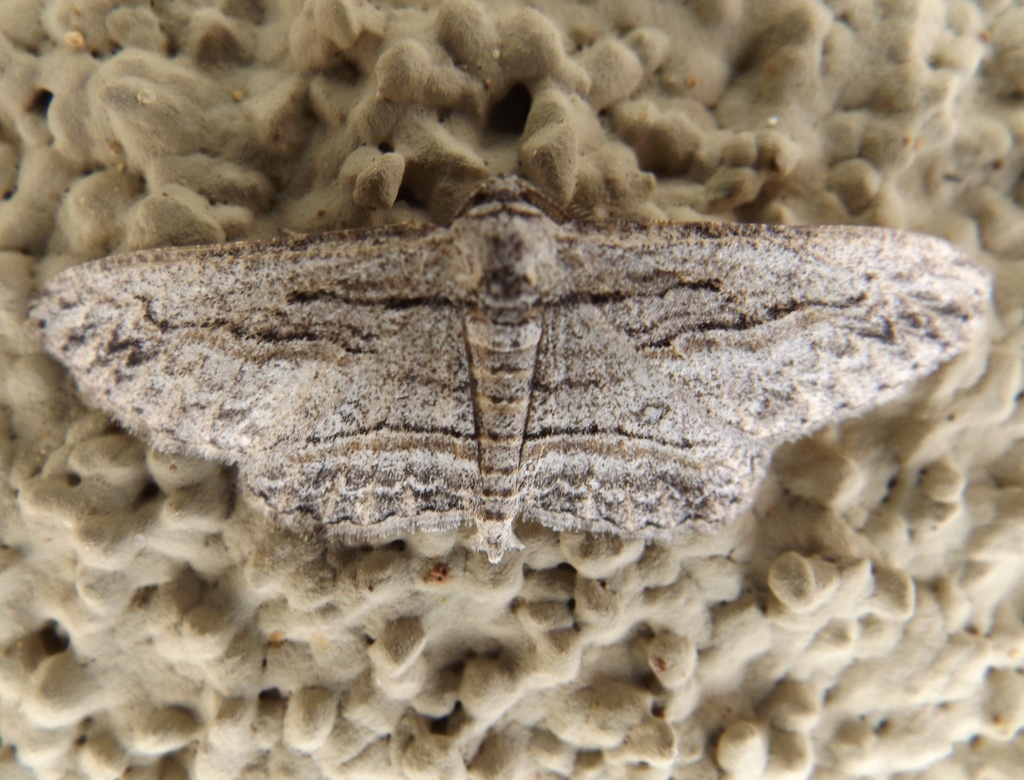
no rights reserved · CC0
Family: Geometridae · Class: Insecta · Order: Lepidoptera
Iridopsis obliquaria (Oblique Looper Moth) is a California animal in the Geometridae family.
The Oblique Looper Moth is a member of the Geometridae family, commonly known as geometrid moths or inchworm moths. Adults display the characteristic features of this group, with broad wings and slender bodies. The forewings typically show oblique markings that give the species its common name, though detailed morphological descriptions remain limited in the scientific literature. This species occurs across a broad range in the southwestern United States, including Arizona, southern and eastern California, southern Nevada, southern Utah, southern Colorado, New Mexico, and Texas. Within California, the Oblique Looper Moth is found primarily in the southern and eastern portions of the state. The species can be distinguished from the closely related Mountain Mahogany Looper (Iridopsis clivinaria), which is generally found north and west of obliquaria's range (BugGuide). Habitat preferences and ecological requirements for this species have not been well documented in the scientific literature. As a member of the Geometridae family, the Oblique Looper Moth likely inhabits areas that support its larval host plants, though specific host plant relationships have not been definitively established. The species' distribution across multiple southwestern states suggests adaptation to arid and semi-arid environments typical of this region. Like other geometrid moths, larvae of this species are likely caterpillars that move in a characteristic looping motion, measuring distances by bringing their rear end up to meet their front end before extending forward again. Adult moths are presumably nocturnal, following the typical pattern of most geometrid species. Specific information about flight periods, reproductive behavior, feeding preferences, and life cycle timing remains undocumented in readily available sources. The Oblique Looper Moth does not appear on federal or state endangered species lists and has no formal conservation status designation. The species' wide distribution across multiple states suggests it may be relatively stable, though population trends and specific threats have not been assessed. As with many moth species, potential threats could include habitat loss, light pollution, and climate change impacts on host plant distributions, but no specific conservation concerns have been identified for this species. Detailed ecological studies of this species are lacking. The above information synthesizes available taxonomic and distributional data from established entomological databases. Scientific documentation regarding the biology, ecology, and conservation needs of Iridopsis obliquaria remains limited, representing a knowledge gap common among many North American moth species. Further research would be valuable to better understand this species' ecological role and habitat requirements within its southwestern range.
Classification
Class: Insecta · Order: Lepidoptera · Family: Geometridae
Frequently asked questions
How is Iridopsis obliquaria classified?
Iridopsis obliquaria belongs to class Insecta, order Lepidoptera, family Geometridae.
What family does Iridopsis obliquaria belong to?
Iridopsis obliquaria is in the Geometridae family.
What is Iridopsis obliquaria?
The Oblique Looper Moth is a member of the Geometridae family, commonly known as geometrid moths or inchworm moths.
Is Iridopsis obliquaria found in California?
Yes. Iridopsis obliquaria is recorded in California in The California Species Project's catalogue.
Related species
Other California species in the same genus, family, or bioregion.
Data from The California Species Project — 14,000+ California species with verified data from CNPS, CDFW, USFWS, and more.