Iridopsis perfectaria
Perfect Iridopsis
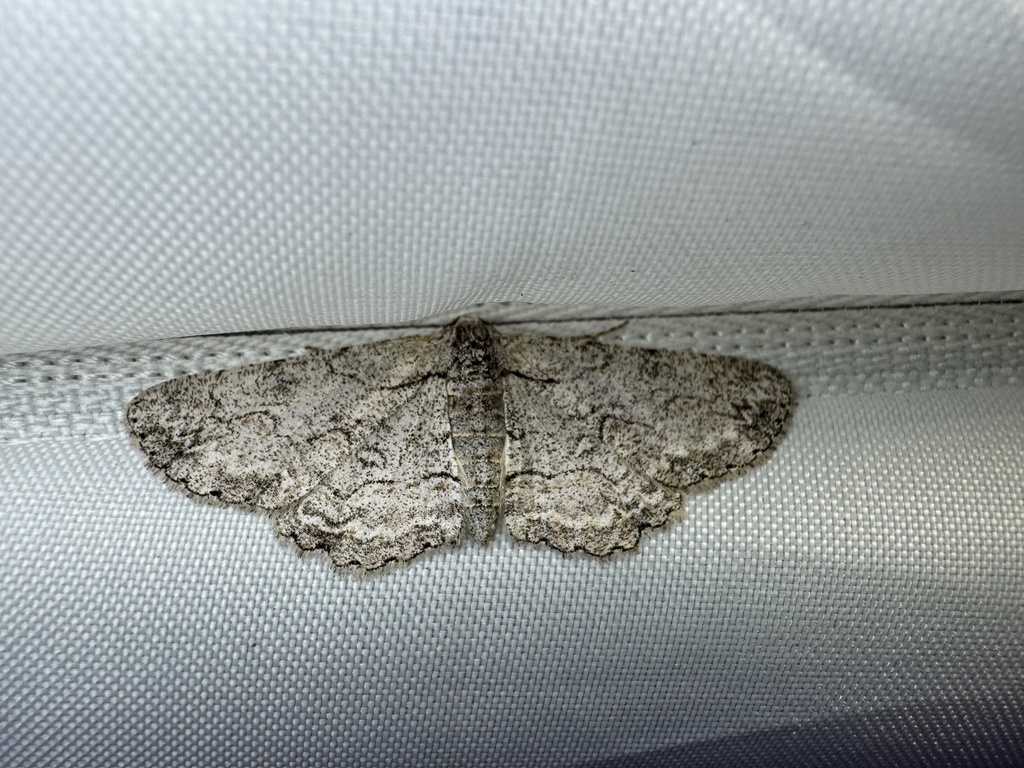
(c) IDClaire, some rights reserved (CC BY) · licence
Family: Geometridae · Class: Insecta · Order: Lepidoptera
Iridopsis perfectaria (Perfect Iridopsis) is a California animal in the Geometridae family.
The Perfect Iridopsis (Iridopsis perfectaria) is a geometrid moth belonging to the family Geometridae. As with many members of this family, adults likely possess the characteristic slender body and broad wings typical of geometrids, though specific morphological details for this species have not been well documented in available literature. Based on available records, Iridopsis perfectaria occurs in North America, with documented specimens from Texas. According to lepidopteran survey data, the species has been recorded from Val Verde County, Texas, specifically at East Blue Sage along the Devils River in October 2018 (News of the Lepidopterists' Society 2022). This suggests the species may have a southwestern distribution, though the full extent of its range remains poorly documented. Specific habitat requirements for I. perfectaria have not been thoroughly studied. The Texas locality record from the Devils River area suggests the species may be associated with arid or semi-arid environments characteristic of the Chihuahuan Desert region. Many Geometridae species are associated with specific host plants during their larval stage, but host plant relationships for I. perfectaria remain undocumented. Detailed behavioral and ecological information for this species is lacking in current scientific literature. Geometridae moths typically undergo complete metamorphosis with egg, larval, pupal, and adult stages. Adults are generally nocturnal and attracted to lights, as suggested by the collection methods used in lepidopteran surveys. Larvae of most geometrid species are leaf feeders, often called "inchworms" or "loopers" due to their distinctive method of locomotion, but specific feeding habits and life cycle timing for I. perfectaria have not been recorded. The conservation status of Iridopsis perfectaria has not been formally assessed. The species does not appear on federal or state endangered species lists, and no specific population data or threat assessments are available. The limited number of published records may reflect either genuine rarity or insufficient survey effort in appropriate habitats. As with many lesser-known moth species, habitat loss and degradation could potentially impact populations, but without baseline population data or ecological studies, conservation needs cannot be adequately assessed. Scientific documentation for this species remains extremely limited. The information presented here is based on available taxonomic databases and lepidopteran survey records. Additional research is needed to understand the species' distribution, habitat preferences, life history, and conservation status. Field studies and systematic surveys in potentially suitable habitats across the southwestern United States would help clarify the species' range and ecological requirements.
Classification
Class: Insecta · Order: Lepidoptera · Family: Geometridae
Frequently asked questions
How is Iridopsis perfectaria classified?
Iridopsis perfectaria belongs to class Insecta, order Lepidoptera, family Geometridae.
What family does Iridopsis perfectaria belong to?
Iridopsis perfectaria is in the Geometridae family.
What is Iridopsis perfectaria?
The Perfect Iridopsis (Iridopsis perfectaria) is a geometrid moth belonging to the family Geometridae.
Is Iridopsis perfectaria found in California?
Yes. Iridopsis perfectaria is recorded in California in The California Species Project's catalogue.
Related species
Other California species in the same genus, family, or bioregion.
Data from The California Species Project — 14,000+ California species with verified data from CNPS, CDFW, USFWS, and more.