Iris oratoria
Mediterranean Mantis
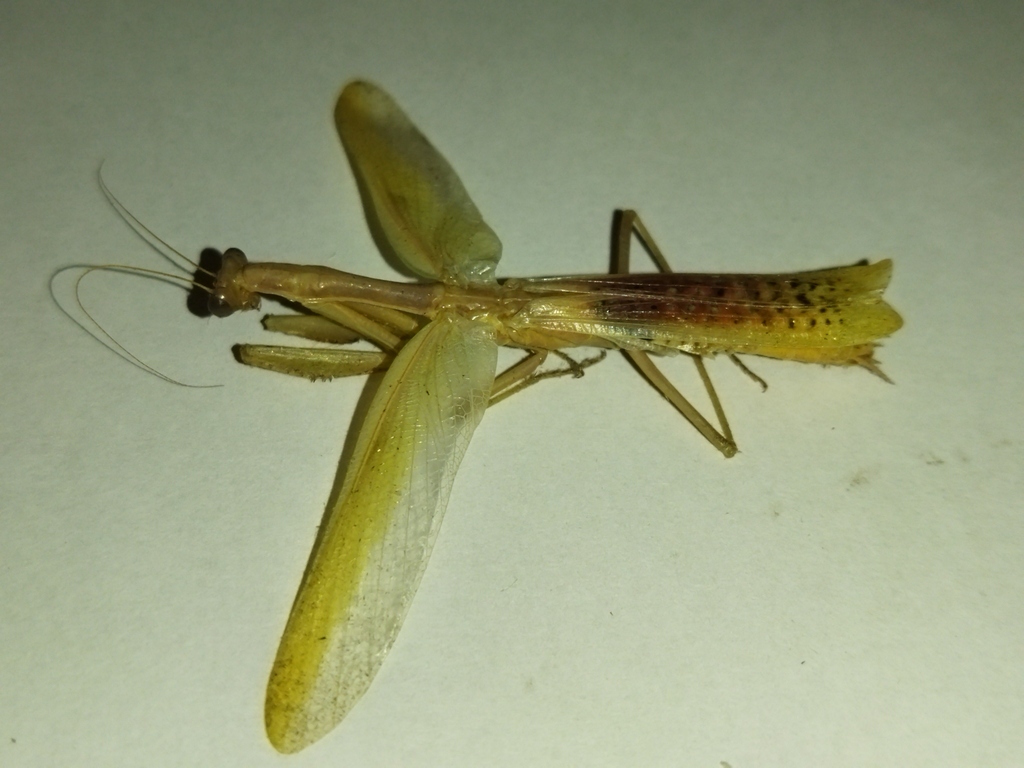
(c) SteveM4560, some rights reserved (CC BY) · licence
Family: Eremiaphilidae · Class: Insecta · Order: Mantodea
Iris oratoria (Mediterranean Mantis) is a California animal in the Eremiaphilidae family.
The Mediterranean mantis is a medium-sized praying mantis native to Europe that has established itself as an introduced species in California. Adults typically measure 50-65 mm (2.0-2.6 inches) in length, with females generally larger than males. The species exhibits considerable color variation, ranging from green to brown or gray, often with mottled patterns that provide effective camouflage. The forewings display distinctive eye-spots when spread, giving rise to the alternative common name "iris mantis." The species can be distinguished from native California mantises by its more robust build and the characteristic blue or purple spots visible on the inner surface of the forelegs. Iris oratoria invaded southern California in the 1930s (iNaturalist) and has been spreading throughout the state since its introduction. The species is now established across much of California's coastal and inland regions, particularly in areas with Mediterranean-type climates that mirror its native European habitat. The mantis has also been documented in other western states and continues to expand its North American range. The Mediterranean mantis occupies diverse habitats including gardens, agricultural areas, chaparral, oak woodlands, and urban environments. The species demonstrates high adaptability to both natural and human-modified landscapes, thriving in areas with abundant vegetation that supports prey populations. Adults are commonly found on shrubs, trees, and herbaceous plants, where they position themselves to ambush prey. The species tolerates a wide range of elevations from sea level to foothills. As an ambush predator, the Mediterranean mantis employs a sit-and-wait hunting strategy, remaining motionless until prey comes within striking distance. The diet consists primarily of flying insects including flies, moths, beetles, and other arthropods. Mating occurs in late summer and fall, with females producing foam egg cases (oothecae) that overwinter attached to vegetation or structures. Each ootheca contains 50-200 eggs that hatch the following spring. The species exhibits sexual cannibalism, with females occasionally consuming males during or after mating. Development includes five to seven molts before reaching adulthood, with the complete life cycle typically taking one year in California. The Mediterranean mantis is not protected under federal or state endangered species legislation and is considered a non-native species in California. As an introduced species, it may compete with native mantis species for resources and habitat, though specific ecological impacts have not been extensively studied. The species appears to be well-established and continuing to expand its range in suitable California habitats. No conservation measures are directed toward this non-native species, and management efforts, if any, would focus on monitoring its spread and potential impacts on native arthropod communities.
Classification
Class: Insecta · Order: Mantodea · Family: Eremiaphilidae
Frequently asked questions
How is Iris oratoria classified?
Iris oratoria belongs to class Insecta, order Mantodea, family Eremiaphilidae.
What family does Iris oratoria belong to?
Iris oratoria is in the Eremiaphilidae family.
What is Iris oratoria?
The Mediterranean mantis is a medium-sized praying mantis native to Europe that has established itself as an introduced species in California.
Is Iris oratoria found in California?
Yes. Iris oratoria is recorded in California in The California Species Project's catalogue.
More California species
This species has no close relatives in our California data — here are other species to explore.
Data from The California Species Project — 14,000+ California species with verified data from CNPS, CDFW, USFWS, and more.