Ischnomera excavata
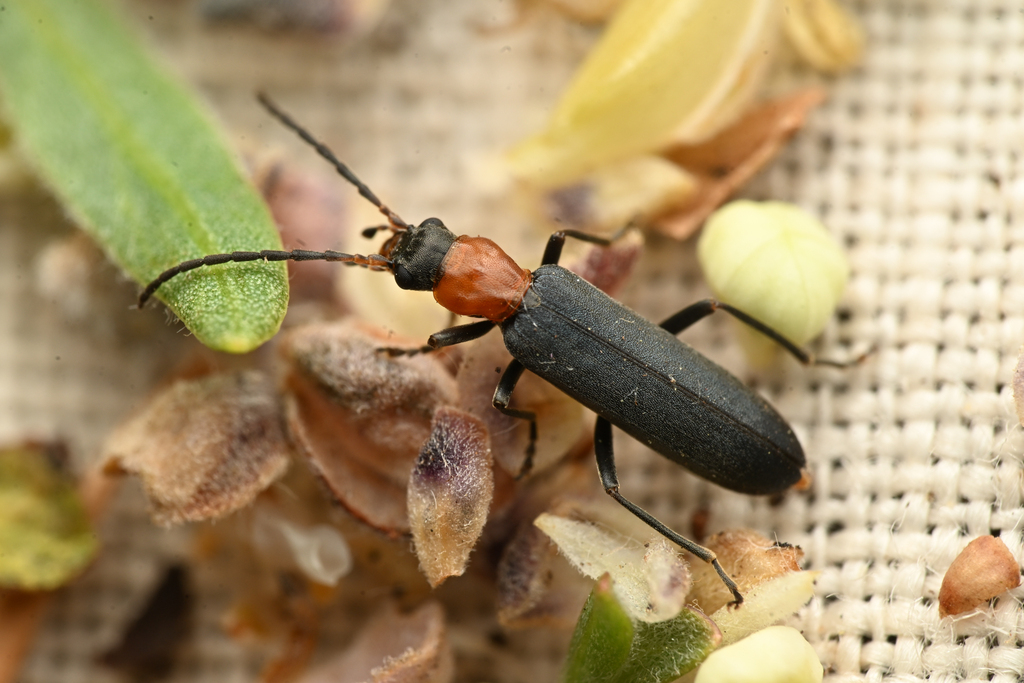
(c) Trevor Van Loon, some rights reserved (CC BY) · licence
Family: Oedemeridae · Class: Insecta · Order: Coleoptera
Ischnomera excavata is a California animal in the Oedemeridae family.
Ischnomera excavata is a beetle species in the family Oedemeridae, commonly known as false blister beetles or pollen beetles. This family comprises approximately 100 North American species that are typically associated with flowers and woody plant materials. Adult Oedemeridae beetles are generally elongate and soft-bodied, with many species displaying metallic coloration. The family is characterized by having heteromerous tarsi, where the front and middle legs have five tarsal segments while the hind legs have four. The current distribution and range of I. excavata within California and North America have not been well documented in available scientific literature. Many Oedemeridae species have restricted distributions, and comprehensive range mapping for less common species in this family remains incomplete. The species' occurrence patterns and geographic extent require further systematic survey work to establish baseline distribution data. Habitat preferences for I. excavata are poorly documented, though members of the Oedemeridae family typically inhabit diverse terrestrial environments. Most species in this family are found in association with flowering plants, dead wood, or fungal substrates. Adults are commonly encountered on flowers where they feed on pollen and nectar, while larvae typically develop in decaying organic matter such as rotting wood, plant debris, or fungal fruiting bodies. The specific microhabitat requirements and substrate preferences for I. excavata remain undetermined. Like other Oedemeridae species, I. excavata likely exhibits a complete metamorphosis life cycle with egg, larval, pupal, and adult stages. Adult beetles in this family are primarily active during warmer months and are frequently observed visiting flowers for feeding. Larvae are typically saproxylic, developing within decaying wood or other organic substrates. Reproductive biology, seasonal activity patterns, and host plant associations for I. excavata have not been thoroughly studied or documented in the scientific literature. Ischnomera excavata does not appear on current federal or California state endangered species lists, and its conservation status has not been formally assessed by major conservation organizations. The lack of comprehensive biological and ecological data for this species represents a significant knowledge gap that limits effective conservation planning. Many beetle species, particularly those with narrow habitat requirements or limited distributions, face threats from habitat loss, fragmentation, and environmental changes, but the specific conservation needs of I. excavata cannot be determined without baseline population and ecological studies. Detailed scientific investigation of this species' biology, distribution, and ecological requirements is needed to support future conservation assessments and management decisions. Current knowledge limitations highlight the broader challenge of documenting and conserving lesser-known invertebrate species within California's diverse beetle fauna.
Classification
Class: Insecta · Order: Coleoptera · Family: Oedemeridae
Frequently asked questions
How is Ischnomera excavata classified?
Ischnomera excavata belongs to class Insecta, order Coleoptera, family Oedemeridae.
What family does Ischnomera excavata belong to?
Ischnomera excavata is in the Oedemeridae family.
What is Ischnomera excavata?
Ischnomera excavata is a beetle species in the family Oedemeridae, commonly known as false blister beetles or pollen beetles.
Is Ischnomera excavata found in California?
Yes. Ischnomera excavata is recorded in California in The California Species Project's catalogue.
Related species
Other California species in the same genus, family, or bioregion.
Data from The California Species Project — 14,000+ California species with verified data from CNPS, CDFW, USFWS, and more.