Ischnura perparva
Western Forktail
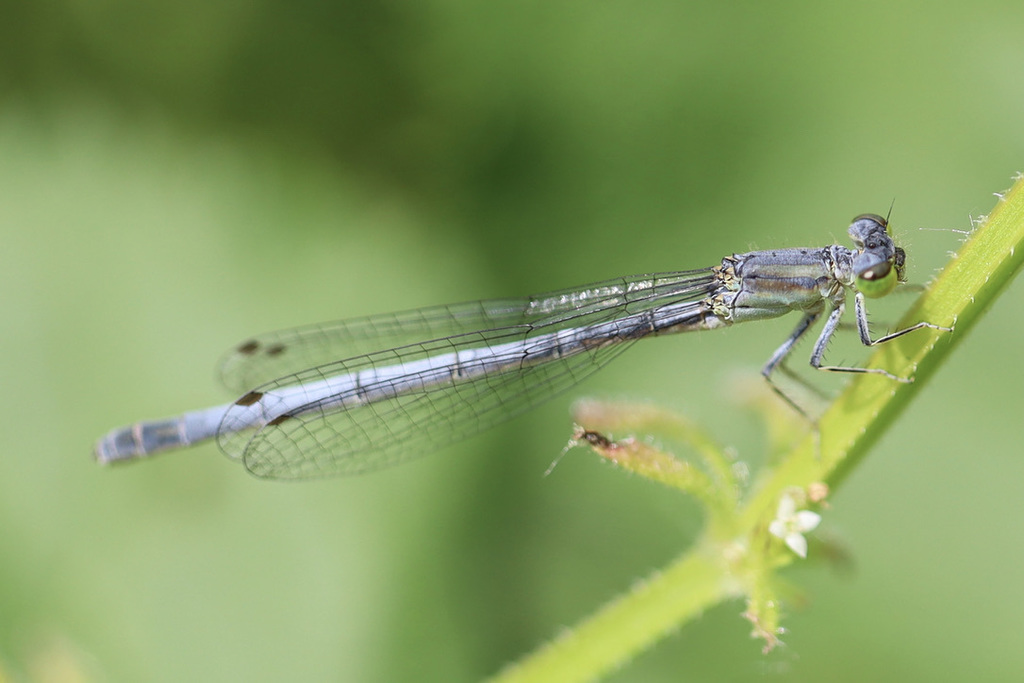
(c) eebee, some rights reserved (CC BY) · licence
Family: Coenagrionidae · Class: Insecta · Order: Odonata
Ischnura perparva (Western Forktail) is a California animal in the Coenagrionidae family.
The Western Forktail is a small damselfly native to western North America. Adults measure approximately 25-35 mm (1.0-1.4 inches) in total length, making them among the smaller members of the forktail genus (Paulson 2009). Like other Ischnura species, males typically display distinctive coloration patterns that change with age and maturity. Mature males exhibit a bright blue thorax with black markings and a predominantly black abdomen with blue segments near the base. Females and immature males are generally more subdued in coloration, often appearing brownish or tan with darker markings. The species can be distinguished from other forktails by specific details of wing venation and abdominal patterning, particularly the extent of blue coloration on abdominal segments 8 and 9 in males (Paulson 2009). Ischnura perparva occurs primarily in the western United States, with its range extending from the Pacific Coast inland to parts of the Great Basin and Rocky Mountain regions. The species is found in California, Nevada, Utah, Arizona, and portions of adjacent states. According to NatureServe, the species has a global conservation status of G5, indicating it is secure across its range (NatureServe 2015). However, specific population trends and detailed distribution data within California require further documentation. Western Forktails inhabit a variety of freshwater aquatic environments, showing preference for slow-moving or still waters with abundant vegetation. They are commonly found around ponds, marshes, slow streams, irrigation ditches, and seasonal wetlands (Paulson 2009). The species appears to favor areas with emergent and submergent vegetation that provide egg-laying substrates and shelter for developing larvae. Adults are often observed perching on vegetation near water edges or flying low over water surfaces, typically within one meter of the shoreline (OdonataCentral 2023). Like other damselflies, Western Forktails are predaceous throughout their life cycle. Adults feed on small flying insects including mosquitoes, midges, aphids, and other soft-bodied prey, typically captured during short aerial forays from perching sites (Corbet 1999). Mating occurs through the typical odonate tandem position, with females laying eggs in plant tissues below the water surface or in floating vegetation. Larvae develop in aquatic environments, feeding on aquatic invertebrates including chironomid larvae, small crustaceans, and other zooplankton, undergoing multiple molts before emerging as adults (Corbet 1999). The species likely has one generation per year in most of its range, with adults active from late spring through early fall. Currently, Ischnura perparva does not appear on federal or California state lists of threatened or endangered species. The NatureServe global ranking of G5 suggests stable populations across the species' range as of 2015. However, like many freshwater-dependent species, Western Forktails face potential threats from habitat loss due to wetland destruction, water diversions, pollution, and climate change impacts on aquatic ecosystems. Urban development and agricultural intensification in riparian areas may reduce suitable breeding habitat. Conservation efforts for this species would benefit from maintaining and restoring wetland habitats and implementing water management practices that preserve natural hydrological cycles in aquatic ecosystems.
Classification
Class: Insecta · Order: Odonata · Family: Coenagrionidae
Frequently asked questions
How is Ischnura perparva classified?
Ischnura perparva belongs to class Insecta, order Odonata, family Coenagrionidae.
What family does Ischnura perparva belong to?
Ischnura perparva is in the Coenagrionidae family.
What is Ischnura perparva?
The Western Forktail is a small damselfly native to western North America.
Is Ischnura perparva found in California?
Yes. Ischnura perparva is recorded in California in The California Species Project's catalogue.
Related species
Other California species in the same genus, family, or bioregion.
Data from The California Species Project — 14,000+ California species with verified data from CNPS, CDFW, USFWS, and more.