Iteomyia salicisverruca
Willow leaf gall midge
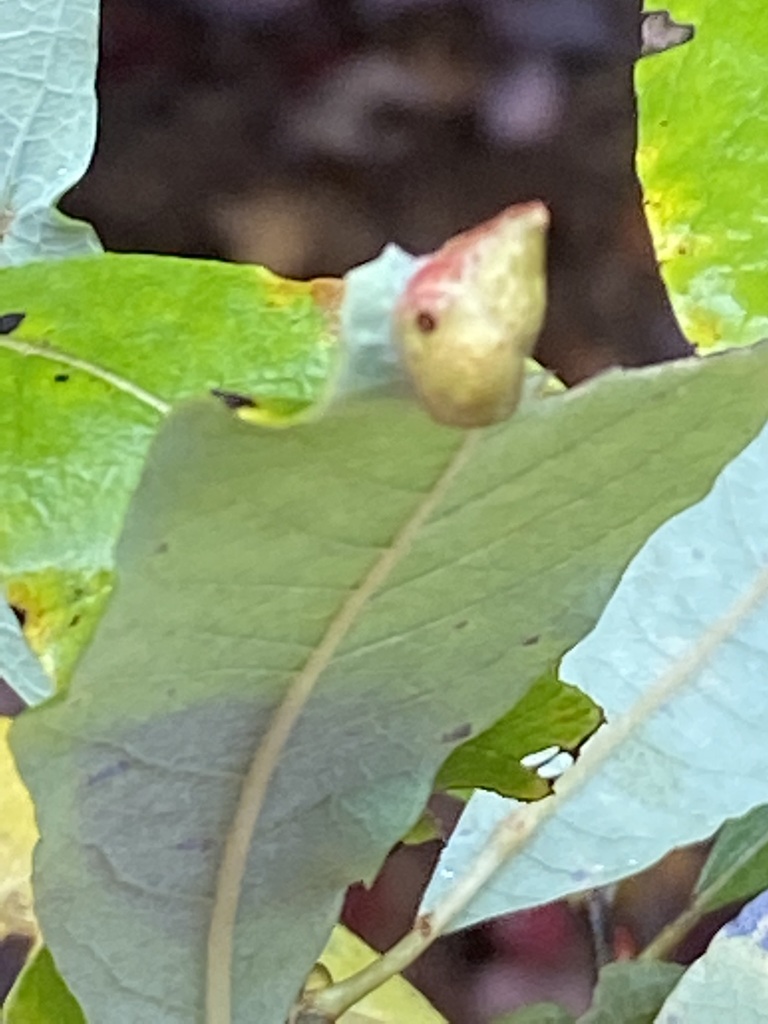
(c) Barry Cottam, some rights reserved (CC BY) · licence
Family: Cecidomyiidae · Class: Insecta · Order: Diptera
Iteomyia salicisverruca (Willow leaf gall midge) is a California animal in the Cecidomyiidae family.
The willow leaf gall midge (Iteomyia salicisverruca) is a small dipteran insect in the family Cecidomyiidae, known for inducing distinctive leaf galls on willow species. As a member of the gall midge family, adults are typically 1-4 mm in length with delicate, elongated legs and reduced wing venation characteristic of cecidomyiids. The larvae are legless, whitish to pale yellow maggots that develop within the plant tissue they modify during feeding. This species has a broad North American distribution, with records extending from Alaska to California. The species appears in the Kenai National Wildlife Refuge species list in Alaska, indicating its presence across a wide latitudinal range. In California, specific distributional records remain poorly documented, though the species likely occurs in riparian zones throughout the state where suitable willow hosts are present. Iteomyia salicisverruca inhabits riparian environments where various willow species (Salix spp.) grow. These areas typically include streambanks, wetland margins, and moist woodland edges from low elevations to montane zones. The species shows a strong association with willow-dominated plant communities, as the larvae are specialized gall-formers that depend entirely on these host plants for development. The life cycle involves complete metamorphosis typical of Diptera. Adult females deposit eggs on young willow leaves, and the developing larvae induce characteristic leaf galls through their feeding activities. The gall formation represents a complex plant-insect interaction where larval feeding stimulates abnormal plant cell division and growth, creating a protective structure that provides both shelter and nutrition. Larvae complete development within these galls before pupating and emerging as adults. The species likely has one to two generations per year, with timing synchronized to willow leaf phenology. Adults are weak fliers and remain close to host plants for mating and oviposition. Currently, Iteomyia salicisverruca lacks formal conservation status at federal or state levels. As a specialized gall-forming insect dependent on riparian habitats, the species may face threats from habitat modification, water diversions affecting riparian zones, and invasive plant species that alter native willow communities. Climate change impacts on riparian ecosystems and altered precipitation patterns could affect both the insect and its willow hosts. However, the species' apparently broad distribution across North America suggests some resilience to environmental variation. Like many small, specialized insects, detailed ecological studies of this species are lacking. The taxonomic placement within Iteomyia indicates close relationships with other gall-forming midges, but specific behavioral ecology, population dynamics, and conservation needs remain poorly understood. The species represents one of numerous understudied arthropods that play important roles in riparian ecosystem functioning through their specialized plant-insect interactions.
Classification
Class: Insecta · Order: Diptera · Family: Cecidomyiidae
Frequently asked questions
How is Iteomyia salicisverruca classified?
Iteomyia salicisverruca belongs to class Insecta, order Diptera, family Cecidomyiidae.
What family does Iteomyia salicisverruca belong to?
Iteomyia salicisverruca is in the Cecidomyiidae family.
What is Iteomyia salicisverruca?
The willow leaf gall midge (Iteomyia salicisverruca) is a small dipteran insect in the family Cecidomyiidae, known for inducing distinctive leaf galls on willow species.
Is Iteomyia salicisverruca found in California?
Yes. Iteomyia salicisverruca is recorded in California in The California Species Project's catalogue.
Related species
Other California species in the same genus, family, or bioregion.
Data from The California Species Project — 14,000+ California species with verified data from CNPS, CDFW, USFWS, and more.