Ixoreus naevius
Varied Thrush
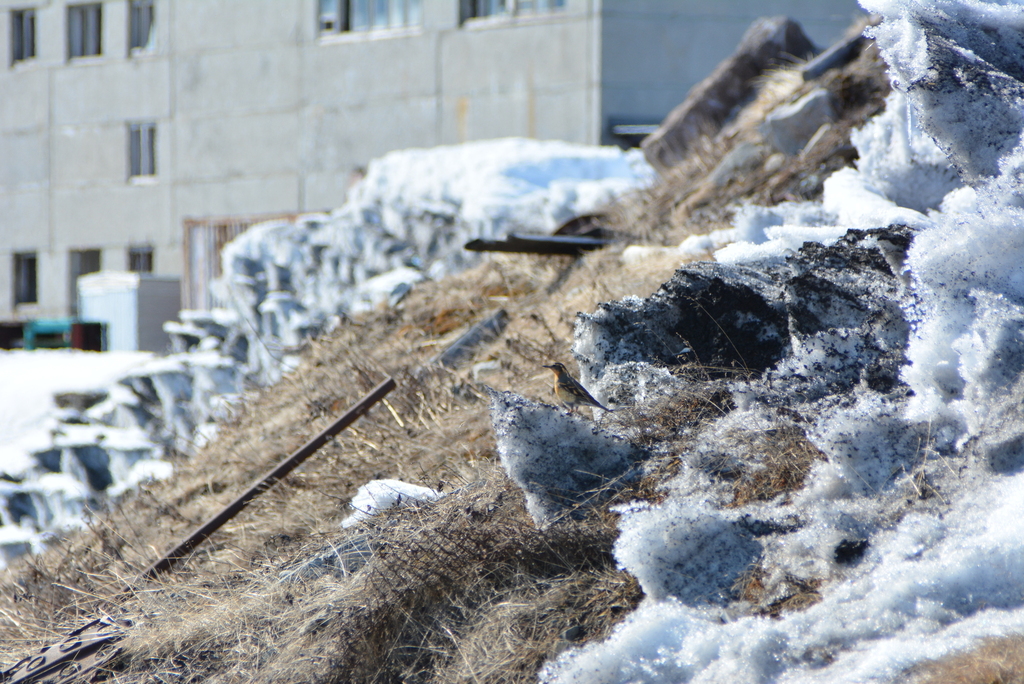
no rights reserved · CC0
Family: Turdidae · Class: Aves · Order: Passeriformes
Ixoreus naevius (Varied Thrush) is a California animal in the Turdidae family.
The Varied Thrush is a medium-sized songbird measuring 20-26 cm (7.9-10.2 inches) in length with a wingspan of 34-42 cm (13.4-16.5 inches). Adult males display striking plumage with a dark blue-gray head, back, and wings, contrasted by a bright orange throat, breast, and eyebrow stripe. A distinctive dark band crosses the orange breast. Females are similar but more subdued, with brownish-gray upperparts and paler orange underparts. Both sexes exhibit prominent white wing bars and orange markings on the wings and tail. The bill is straight and relatively short, adapted for ground foraging. The Varied Thrush breeds primarily in mature coniferous forests from Alaska south through British Columbia to northern California, with scattered populations extending into the Pacific Northwest mountains. In California, breeding populations occur in the Coast Ranges from Del Norte and Humboldt counties south to Marin County, and in the Sierra Nevada from Shasta County to Tulare County. During winter, the species expands its range southward along the Pacific Coast to southern California and occasionally into the southwestern United States. Non-breeding individuals may appear in urban parks and residential areas with mature trees. This species inhabits dense, mature coniferous forests dominated by Douglas fir, western hemlock, Sitka spruce, and redwood. Breeding habitat typically occurs at elevations from sea level to 1,200 meters (3,900 feet) in coastal areas and up to 2,100 meters (6,900 feet) in mountainous regions. The species prefers forests with dense canopy cover, abundant fallen logs, and thick understory vegetation. During winter, Varied Thrushes utilize a broader range of habitats including mixed coniferous-deciduous forests, riparian woodlands, and suburban areas with mature trees. Varied Thrushes are primarily ground foragers, using their bills to turn over leaf litter and probe soil for invertebrates including beetles, ants, caterpillars, and earthworms. They also consume berries and seeds, particularly during fall and winter. The species exhibits a distinctive foraging behavior of kicking backward with both feet to uncover prey beneath debris. Males establish territories in early spring, producing a distinctive single-note whistle that carries long distances through dense forest. Breeding occurs from May through August, with females constructing cup-shaped nests of twigs, moss, and leaves typically placed 1-4 meters above ground in conifer branches. Clutch size ranges from 2-5 eggs, which are incubated for 12-14 days. Young fledge after 10-15 days in the nest. The Varied Thrush is not federally or state listed in California and maintains stable populations throughout most of its range. According to the North American Breeding Bird Survey, populations have remained relatively stable from 1966-2019, though some regional declines have been documented. Primary conservation concerns include habitat loss from logging of old-growth forests, urban development in coastal areas, and climate change impacts on montane breeding habitats. The species benefits from forest management practices that maintain mature forest structure and snag retention.
Classification
Class: Aves · Order: Passeriformes · Family: Turdidae
Frequently asked questions
How is Ixoreus naevius classified?
Ixoreus naevius belongs to class Aves, order Passeriformes, family Turdidae.
What family does Ixoreus naevius belong to?
Ixoreus naevius is in the Turdidae family.
What is Ixoreus naevius?
The Varied Thrush is a medium-sized songbird measuring 20-26 cm (7.9-10.2 inches) in length with a wingspan of 34-42 cm (13.4-16.5 inches).
Is Ixoreus naevius found in California?
Yes. Ixoreus naevius is recorded in California in The California Species Project's catalogue.
Related species
Other California species in the same genus, family, or bioregion.
Data from The California Species Project — 14,000+ California species with verified data from CNPS, CDFW, USFWS, and more.