Ixoreus naevius naevius
Varied Thrush (Pacific)
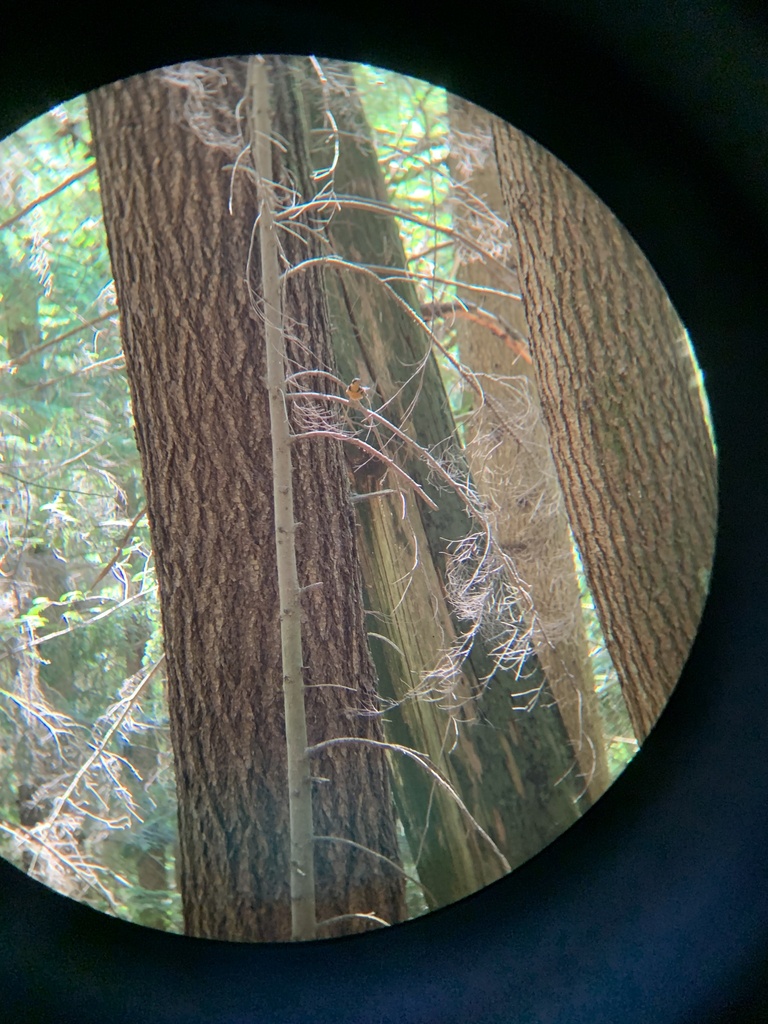
(c) Senna Bryce Robeson, some rights reserved (CC BY) · licence
Family: Turdidae · Class: Aves · Order: Passeriformes
Ixoreus naevius naevius (Varied Thrush (Pacific)) is a California animal in the Turdidae family.
The Varied Thrush is a medium-sized songbird distinguished by its contrasting black and orange plumage pattern. Males display a dark slate-blue to black head, back, and wings with bright orange underparts, prominent orange wing bars, and an orange stripe above the eye. A distinctive black breast band crosses the orange chest. Females exhibit similar patterns but with brownish-gray replacing the male's black coloration. Adults measure 20-26 cm (7.9-10.2 inches) in length with a wingspan of 34-42 cm (13.4-16.5 inches). The Pacific subspecies (I. n. naevius) breeds from southeastern Alaska south through coastal British Columbia and the Pacific Northwest to northern California. This subspecies winters primarily along the Pacific Coast from Alaska to southern California, with most individuals remaining within the coastal regions. During irruption years that occur every 2-5 years, some individuals may wander eastward across the western United States (Birds of the World). Varied Thrush occupies mature and old-growth coniferous forests, particularly those dominated by Douglas fir, western hemlock, Sitka spruce, and western redcedar. The species shows a strong preference for dense, moist forests with well-developed understory layers of ferns, salmonberry, and huckleberry. Studies indicate the species may be sensitive to forest fragmentation and shows lower abundance along forest edges compared to interior forest areas (Brand 1998). During winter, birds utilize a broader range of habitats including parks, orchards, and residential areas with mature trees. The Varied Thrush is noted for its distinctive song consisting of a slow series of single, drawn-out notes delivered at different pitches, described as perfectly suited to the cool, dark forest solitude the species inhabits (Bent 1949). The species exhibits shy, secretive behavior and typically forages on the ground among leaf litter, searching for insects, earthworms, and other invertebrates. During winter months, the diet shifts to include berries, seeds, and fruits. Breeding occurs from May through July, with females constructing cup-shaped nests in the understory or lower canopy of coniferous trees. Clutch size typically ranges from 2-5 eggs, which are incubated for approximately 12-14 days. The Pacific subspecies of Varied Thrush is currently listed as a Bird of Conservation Concern by the U.S. Fish and Wildlife Service, reflecting concerns about population trends and habitat threats (USFWS 2024). Primary conservation concerns include habitat loss due to logging of old-growth forests, forest fragmentation, and climate change impacts on montane forest ecosystems. The species' low density and secretive nature have made population monitoring challenging, though recent studies suggest it breeds most commonly in mature forest stands and may serve as an indicator species for old-growth forest health.
Classification
Class: Aves · Order: Passeriformes · Family: Turdidae
Frequently asked questions
How is Ixoreus naevius naevius classified?
Ixoreus naevius naevius belongs to class Aves, order Passeriformes, family Turdidae.
What family does Ixoreus naevius naevius belong to?
Ixoreus naevius naevius is in the Turdidae family.
What is Ixoreus naevius naevius?
The Varied Thrush is a medium-sized songbird distinguished by its contrasting black and orange plumage pattern.
Is Ixoreus naevius naevius found in California?
Yes. Ixoreus naevius naevius is recorded in California in The California Species Project's catalogue.
Related species
Other California species in the same genus, family, or bioregion.
Data from The California Species Project — 14,000+ California species with verified data from CNPS, CDFW, USFWS, and more.