Japananus hyalinus
Japanese Maple Leafhopper
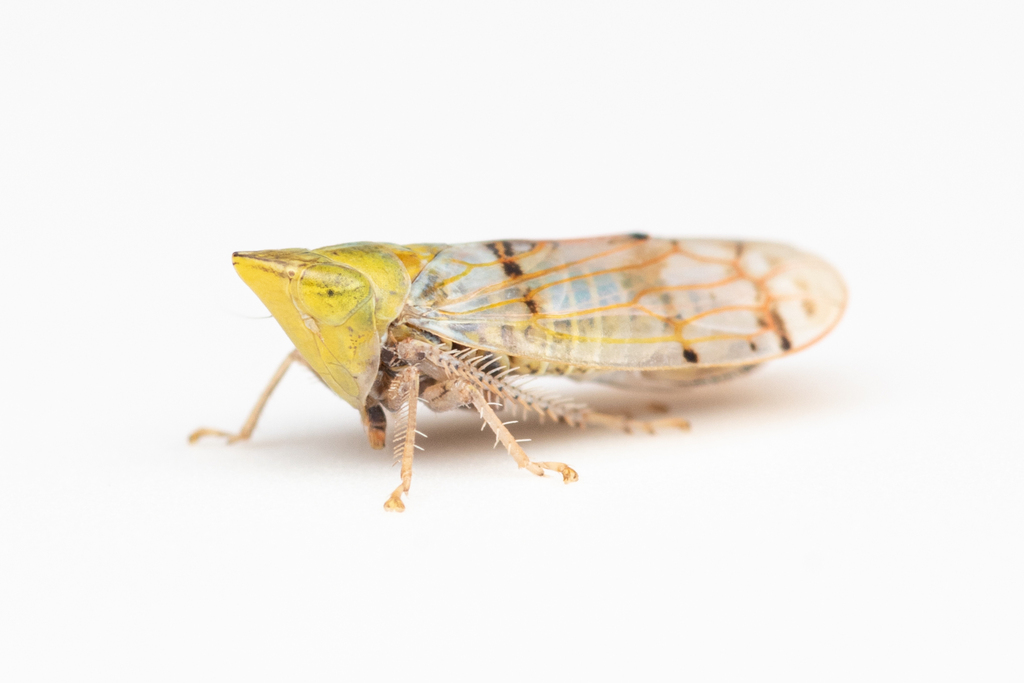
(c) Jakob Horz, some rights reserved (CC BY) · licence
Family: Cicadellidae · Class: Insecta · Order: Hemiptera
Japananus hyalinus (Japanese Maple Leafhopper) is a California animal in the Cicadellidae family.
The Japanese Maple Leafhopper (Japananus hyalinus) is a small hemipteran insect in the family Cicadellidae, originally native to Asia but now established in various regions worldwide. Adults typically measure 3-4 mm in length, with a pale yellow to translucent body and hyaline (clear) wings, giving the species its specific epithet. The forewings are narrow and membranous, often with subtle yellowish or greenish coloration. Like other leafhoppers, J. hyalinus has enlarged hind legs adapted for jumping and piercing-sucking mouthparts used to extract plant fluids. This species has a broad global distribution, having spread from its native range in East Asia to North America, Europe, and other temperate regions through human-mediated dispersal. In North America, the Japanese Maple Leafhopper is now widely distributed across the United States and southern Canada. The species appears to be well-established in California, where it has been documented feeding on various host plants. Japananus hyalinus inhabits a variety of environments but shows a strong association with deciduous trees and shrubs. The species demonstrates considerable host plant flexibility, feeding on members of multiple plant families including Aceraceae (maples), Rosaceae (roses and related species), Betulaceae (birches), and various fruit trees. This polyphagous feeding behavior has likely contributed to its successful establishment in new regions. The leafhopper occurs in both natural forest habitats and urban environments, including parks, gardens, and ornamental plantings. Adults and nymphs feed by inserting their stylet mouthparts into plant tissues and extracting phloem and xylem fluids. Heavy infestations can cause stippling damage to leaves, yellowing, and reduced plant vigor, though significant economic damage is relatively uncommon. The species exhibits typical leafhopper reproductive behavior, with females inserting eggs into plant tissues using their ovipositor. Multiple generations per year are possible in favorable climates, with overwintering typically occurring as eggs or adults depending on local conditions. Adults are most active during warmer months and can be observed jumping or flying short distances when disturbed. Currently, Japananus hyalinus holds no special conservation status and is not listed under federal or state endangered species legislation. As an introduced species that has successfully established populations across multiple continents, the Japanese Maple Leafhopper is considered secure globally. From a management perspective, this species is sometimes monitored as a potential agricultural or horticultural pest rather than a conservation concern. Its ability to utilize diverse host plants and adapt to various climatic conditions suggests the species will likely maintain stable populations in established regions. The primary management considerations involve monitoring for potential impacts on economically important plants and ornamental species in urban and agricultural settings.
Classification
Class: Insecta · Order: Hemiptera · Family: Cicadellidae
Frequently asked questions
How is Japananus hyalinus classified?
Japananus hyalinus belongs to class Insecta, order Hemiptera, family Cicadellidae.
What family does Japananus hyalinus belong to?
Japananus hyalinus is in the Cicadellidae family.
What is Japananus hyalinus?
The Japanese Maple Leafhopper (Japananus hyalinus) is a small hemipteran insect in the family Cicadellidae, originally native to Asia but now established in various regions worldwide.
Is Japananus hyalinus found in California?
Yes. Japananus hyalinus is recorded in California in The California Species Project's catalogue.
Related species
Other California species in the same genus, family, or bioregion.
Data from The California Species Project — 14,000+ California species with verified data from CNPS, CDFW, USFWS, and more.