Jellyella tuberculata
Sargassum Sea Mat
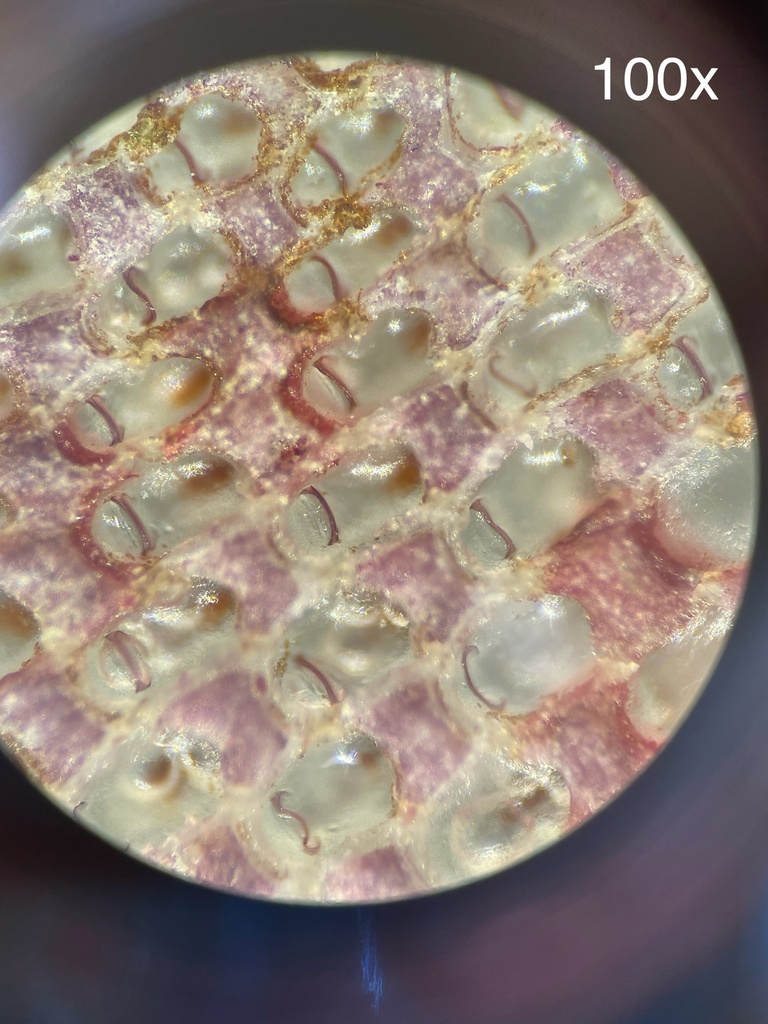
no rights reserved · CC0
Family: Membraniporidae · Class: Gymnolaemata · Order: Cheilostomata
Jellyella tuberculata (Sargassum Sea Mat) is a California animal in the Membraniporidae family.
Jellyella tuberculata, commonly known as the Sargassum Sea Mat, is a marine bryozoan belonging to the order Cheilostomatida and family Membraniporidae. This colonial invertebrate forms encrusting colonies on floating substrates, particularly Sargassum algae in pelagic environments. Individual zooids are small, typically measuring less than 1 millimeter in length, and are arranged in irregular patches or sheets across the surface of their host substrate. The species is characterized by tuberculate surface features that give rise to its specific epithet, with colonies appearing as thin, mat-like growths. Jellyella tuberculata has a wide distribution in marine waters, with records from the Atlantic Ocean and associated marginal seas. According to the World Register of Marine Species, specimens reported from the Pacific and Indian Oceans may represent a different species, being distinct in zooid size and lacking a plectriform apparatus below the operculum (WoRMS 2025). The species' distribution is closely tied to the occurrence of its primary substrate, floating Sargassum algae, which creates patchy but predictable habitat availability across oceanic regions. This bryozoan is specifically adapted to life in the neuston, the surface layer of oceanic waters where floating Sargassum mats provide essential habitat structure. The species colonizes the surface of Sargassum fronds and other floating debris, forming part of the complex epiphytic community associated with pelagic Sargassum ecosystems. These floating algal mats serve as critical habitat for numerous marine species and provide important ecosystem services in open ocean environments. As a suspension feeder, J. tuberculata captures plankton and organic particles from the water column using ciliated feeding structures called lophophores. The species reproduces through the production of larvae that settle on suitable floating substrates to establish new colonies. Ecologically, Jellyella species serve as prey for specialized predators including nudibranchs such as Corambe species, and contribute to the overall biodiversity of neustonic communities (Grokipedia). The species' life cycle and population dynamics are intimately linked to the seasonal and spatial distribution patterns of Sargassum mats, which can vary significantly based on oceanographic conditions and current systems. Currently, there is no specific conservation status assigned to Jellyella tuberculata. However, the species' dependence on Sargassum habitat makes it potentially vulnerable to threats affecting pelagic Sargassum ecosystems, including ocean pollution, climate change impacts on ocean currents, and alterations to marine food webs. The ecological importance of Sargassum communities as nursery habitat for commercially important fish species and endangered sea turtles highlights the broader conservation significance of maintaining healthy populations of associated species like the Sargassum Sea Mat.
Classification
Class: Gymnolaemata · Order: Cheilostomata · Family: Membraniporidae
Frequently asked questions
How is Jellyella tuberculata classified?
Jellyella tuberculata belongs to class Gymnolaemata, order Cheilostomata, family Membraniporidae.
What family does Jellyella tuberculata belong to?
Jellyella tuberculata is in the Membraniporidae family.
What is Jellyella tuberculata?
Jellyella tuberculata, commonly known as the Sargassum Sea Mat, is a marine bryozoan belonging to the order Cheilostomatida and family Membraniporidae.
Is Jellyella tuberculata found in California?
Yes. Jellyella tuberculata is recorded in California in The California Species Project's catalogue.
Related species
Other California species in the same genus, family, or bioregion.
Data from The California Species Project — 14,000+ California species with verified data from CNPS, CDFW, USFWS, and more.