Judolia sexspilota
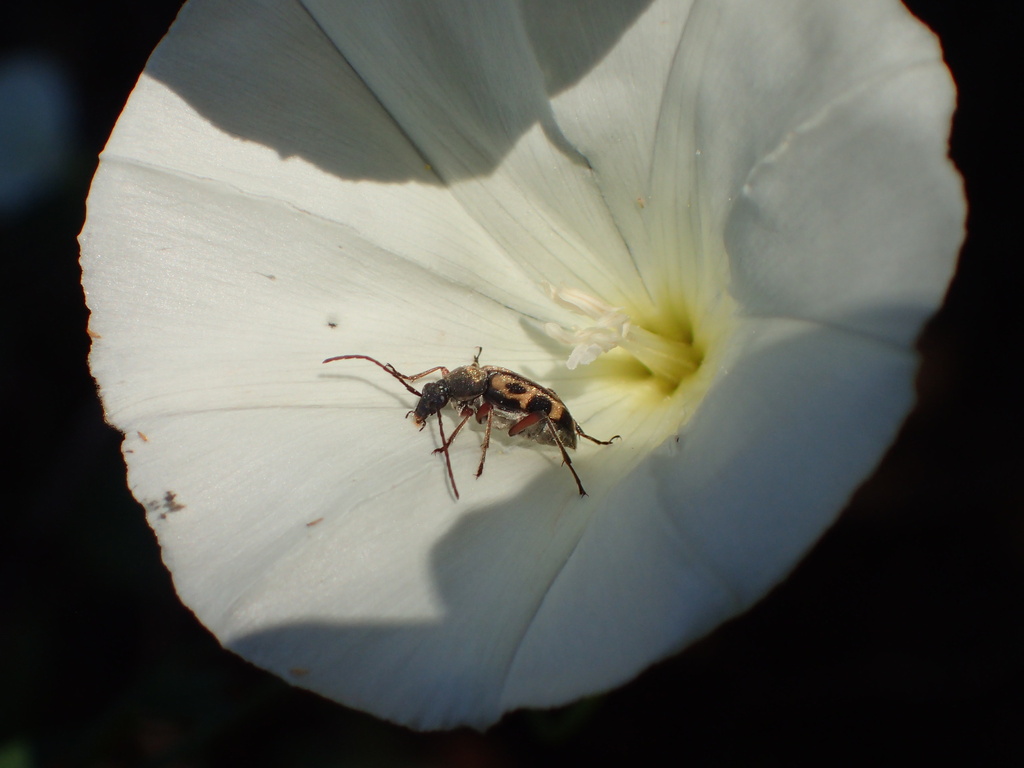
(c) George Williams, some rights reserved (CC BY) · licence
Family: Cerambycidae · Class: Insecta · Order: Coleoptera
Judolia sexspilota is a California animal in the Cerambycidae family.
Judolia sexspilota is a longhorn beetle in the family Cerambycidae, tribe Lepturini. This species belongs to a group of flower longhorn beetles characterized by their elongated antennae and relatively slender build typical of the subfamily Lepturinae. Adult beetles measure approximately 8-15 mm in length, with males typically smaller than females. The body exhibits the typical cerambycid form with a somewhat flattened appearance and moderately long legs adapted for movement on flowers and vegetation. The distribution of Judolia sexspilota appears to be limited within North America, though specific range documentation remains incomplete in available databases. The species is documented in western North America, with occurrences likely concentrated in forested regions where suitable host plants and flowering resources are available. However, detailed county-level distribution data and historical range information have not been comprehensively documented in accessible scientific literature. Habitat preferences for this species remain poorly documented in current literature. Like other members of the tribe Lepturini, adults are likely associated with forested environments where they visit flowers for nectar and pollen. The larval stage presumably develops in dead or dying wood of coniferous or deciduous trees, following the typical cerambycid life cycle pattern. Elevation ranges and specific microhabitat requirements have not been well-studied for this species. Adult beetles are presumed to be active during warmer months when flowers are abundant, as is typical for flower longhorn beetles. Adults likely feed on pollen and nectar from various flowering plants, while larvae develop as wood borers in dead or decaying wood material. The specific host tree species for larval development have not been documented in available scientific literature. Reproductive behavior and seasonal activity patterns follow the general cerambycid pattern, with adults emerging to mate and females depositing eggs in suitable wood substrates. Judolia sexspilota does not appear on federal or state endangered species lists, and no specific conservation status has been assigned to this species. The lack of comprehensive population data or trend information makes it difficult to assess conservation needs. Like many lesser-known beetle species, the primary conservation concerns would likely relate to habitat loss through deforestation, forest management practices that remove dead wood, and potential climate change impacts on forest ecosystems. The species' apparent rarity in collections and limited documentation suggest either genuine scarcity or insufficient survey effort in appropriate habitats. Detailed ecological studies of this longhorn beetle are lacking in current scientific literature. The information presented here reflects the limited documentation available through taxonomic databases and general knowledge of related Lepturini species. Research priorities should include basic life history studies, host plant documentation, distribution mapping, and population assessment to better understand this species' ecological role and conservation status.
Classification
Class: Insecta · Order: Coleoptera · Family: Cerambycidae
Frequently asked questions
How is Judolia sexspilota classified?
Judolia sexspilota belongs to class Insecta, order Coleoptera, family Cerambycidae.
What family does Judolia sexspilota belong to?
Judolia sexspilota is in the Cerambycidae family.
What is Judolia sexspilota?
Judolia sexspilota is a longhorn beetle in the family Cerambycidae, tribe Lepturini.
Is Judolia sexspilota found in California?
Yes. Judolia sexspilota is recorded in California in The California Species Project's catalogue.
Related species
Other California species in the same genus, family, or bioregion.
Data from The California Species Project — 14,000+ California species with verified data from CNPS, CDFW, USFWS, and more.