Juga acutifilosa
Topaz Juga
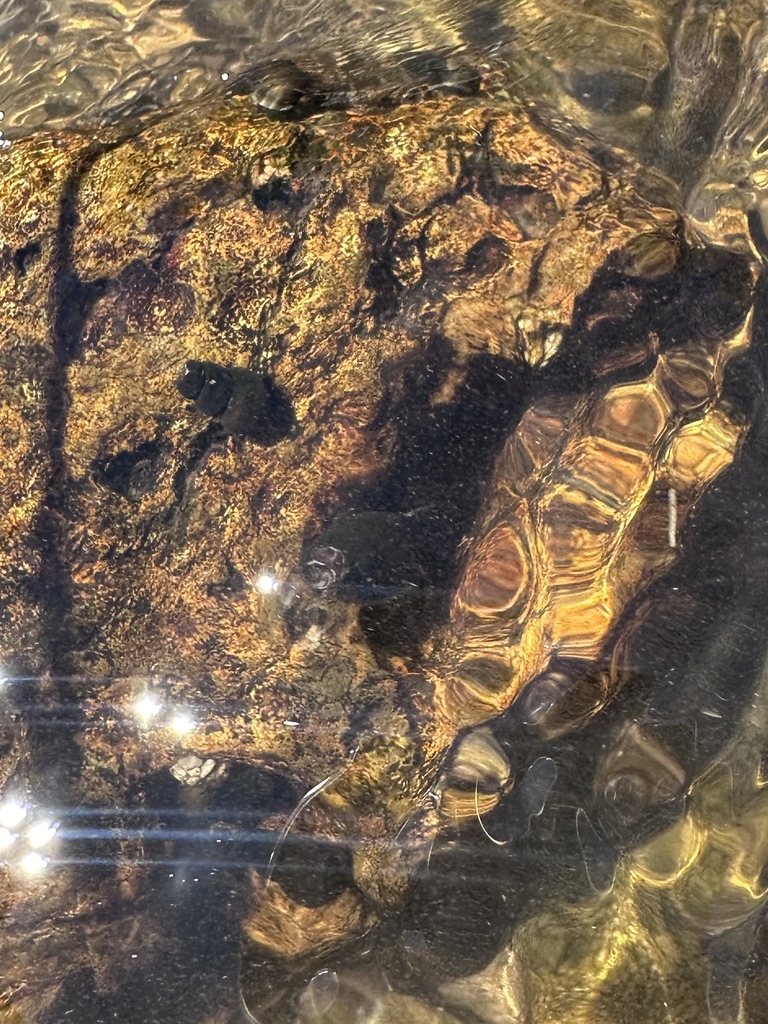
(c) Matt Berger, some rights reserved (CC BY) · licence
Family: Semisulcospiridae · Class: Gastropoda · Order: Caenogastropoda
Conservation status: G2? S2
Juga acutifilosa (Topaz Juga) is a California animal in the Semisulcospiridae family.
The Topaz Juga (Juga acutifilosa) is a freshwater gastropod mollusk in the family Semisulcospiridae. This aquatic snail is distinguished from other Juga species by anatomical features including its operculum nucleus size comprising approximately 41% of total length and distinctive radular characteristics with 2/1/2 rachidian tooth cusping (Strong & Frest 2007). The shell typically exhibits moderate size among freshwater snails, though specific measurements for this species have not been well documented in available literature. The species occurs in northern California, southeastern Oregon, and northwestern Nevada. In California, the Topaz Juga is found in spring-fed systems and flowing waters in the northeastern portion of the state. The species' range extends across approximately 32 known occurrences using a 2-kilometer separation distance, with records spanning from 1993 to 2024 (NatureServe 2024). This distribution pattern reflects the species' adaptation to specific aquatic habitats across the Great Basin and adjacent regions. Topaz Juga inhabits spring-fed creeks, rivers, and associated flowing water systems. The species requires cold, clear water environments typical of spring-fed systems and is adapted to permanent flowing waters rather than intermittent streams. Like other members of the genus Juga, this species is found in well-oxygenated waters with minimal pollution levels, as dissolved oxygen availability severely limits freshwater snail diversity. The species occurs in both lentic and lotic freshwater environments, though specific substrate preferences and depth ranges have not been thoroughly documented. Reproduction in Juga species is iteroparous, with individuals capable of producing offspring multiple times throughout their lives. Most Juga species breed and lay eggs once annually as adults, though specific breeding timing for J. acutifilosa has not been well established. The species exhibits typical freshwater gastropod feeding behavior, likely grazing on algae, detritus, and biofilm from substrate surfaces. Movement patterns are limited, with dispersal typically occurring over distances measured in centimeters rather than kilometers, even during aestivation periods when individuals may temporarily leave aquatic environments. The Topaz Juga carries a global conservation rank of G2?, indicating it is imperiled globally with 6 to 20 occurrences or few remaining individuals. The state rank of S2 reflects similar concern at the California level. While populations appear stable over the long term, the species faces numerous threats including habitat loss and degradation from pollution, nutrient runoff, livestock impacts, stream modification, and urbanization (NatureServe 2024). Additional threats include siltation from logging activities, water diversions for agriculture and municipal use, and climate change impacts on spring-fed systems. The species' limited range and specific habitat requirements make it particularly vulnerable to environmental changes. Long-term population trends remain difficult to assess due to limited monitoring data, though there is no current evidence of range contraction based on consistent occurrence records across the species' distribution.
Classification
Class: Gastropoda · Order: Caenogastropoda · Family: Semisulcospiridae
Conservation status
G2? S2
Frequently asked questions
How is Juga acutifilosa classified?
Juga acutifilosa belongs to class Gastropoda, order Caenogastropoda, family Semisulcospiridae.
What family does Juga acutifilosa belong to?
Juga acutifilosa is in the Semisulcospiridae family.
Is Juga acutifilosa protected or of conservation concern?
Juga acutifilosa carries the following status: G2? S2.
What is Juga acutifilosa?
The Topaz Juga (Juga acutifilosa) is a freshwater gastropod mollusk in the family Semisulcospiridae.
Is Juga acutifilosa found in California?
Yes. Juga acutifilosa is recorded in California in The California Species Project's catalogue.
Related species
Other California species in the same genus, family, or bioregion.
Data from The California Species Project — 14,000+ California species with verified data from CNPS, CDFW, USFWS, and more.