Juga chacei
Chace Juga
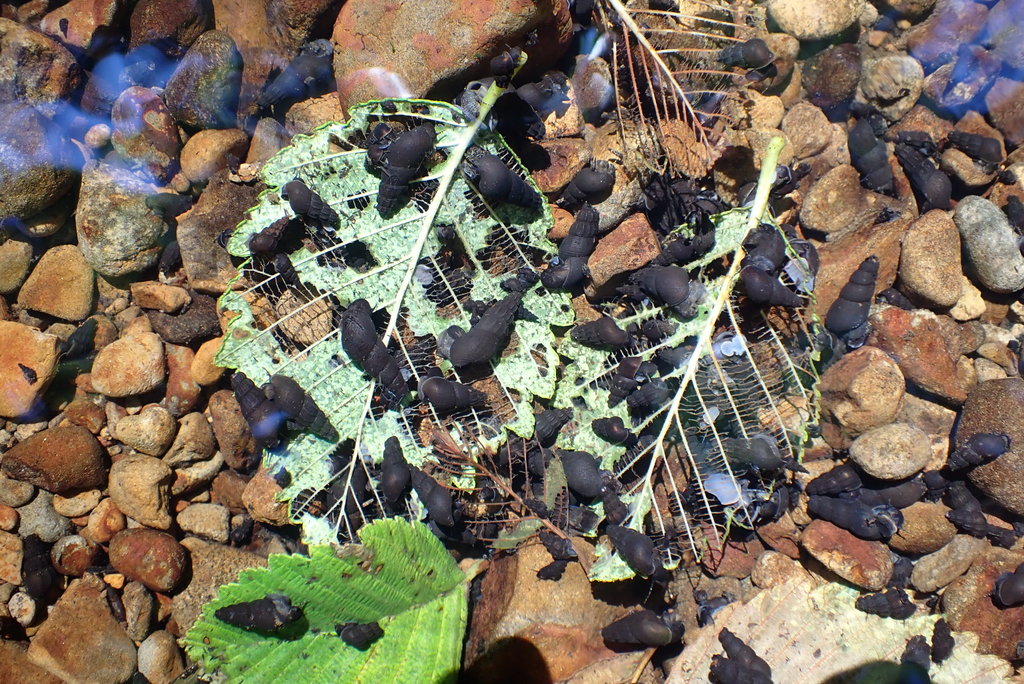
(c) Lee Cain, some rights reserved (CC BY) · licence
Family: Semisulcospiridae · Class: Gastropoda · Order: Caenogastropoda
Conservation status: G1 S1
Juga chacei (Chace Juga) is a California animal in the Semisulcospiridae family.
The Chace juga is a freshwater gastropod mollusk in the family Semisulcospiridae, endemic to California. This species belongs to the genus Juga, which comprises several species of freshwater snails found in western North America. The Chace juga is distinguished from other juga species by specific shell morphological characteristics, though detailed physical descriptions in the scientific literature remain limited. The Chace juga has an extremely restricted range, occurring only in specific freshwater habitats within California. The species' distribution is highly localized, contributing to its conservation concern status. Like other members of the genus Juga, this species is believed to be endemic to particular watershed systems, though comprehensive range mapping has not been completed. This freshwater snail inhabits riverine and stream environments typical of the Juga genus. Members of this genus typically require clean, well-oxygenated freshwater with suitable substrate for attachment and feeding. The specific habitat requirements of Chace juga, including preferred water temperature ranges, substrate types, and flow conditions, have not been thoroughly documented in available scientific literature. As a gastropod mollusk, the Chace juga likely feeds by grazing on algae, biofilms, and organic matter found on submerged surfaces. Reproduction in juga species typically involves the deposition of eggs on hard substrates, though specific reproductive behaviors and seasonal timing for Chace juga have not been well studied. The species' life cycle duration and population dynamics remain largely unknown. The Chace juga is classified as G1 S1, indicating it is critically imperiled both globally and within California, with five or fewer occurrences or very few remaining individuals. This ranking places the species at extremely high risk of extinction. While not currently listed under federal or state endangered species legislation, the species' critical conservation status reflects severe population and range restrictions. Primary threats to juga species typically include habitat degradation from water pollution, flow modifications, sedimentation, and water diversions. The U.S. Fish and Wildlife Service has evaluated petitions for listing related juga species, including the basalt juga, due to habitat destruction and modification concerns (Federal Register 2011). Climate change may pose additional threats through altered precipitation patterns and stream flow regimes. Conservation efforts for the Chace juga are limited by insufficient scientific knowledge about the species' biology, specific habitat requirements, and population status. Comprehensive surveys are needed to determine current population size, distribution, and immediate conservation needs. Protection of remaining freshwater habitat quality within the species' range represents a critical conservation priority. The species would benefit from targeted research to better understand its ecological requirements and threats, which could inform future conservation planning and potential listing decisions.
Classification
Class: Gastropoda · Order: Caenogastropoda · Family: Semisulcospiridae
Conservation status
G1 S1
Frequently asked questions
How is Juga chacei classified?
Juga chacei belongs to class Gastropoda, order Caenogastropoda, family Semisulcospiridae.
What family does Juga chacei belong to?
Juga chacei is in the Semisulcospiridae family.
Is Juga chacei protected or of conservation concern?
Juga chacei carries the following status: G1 S1.
What is Juga chacei?
The Chace juga is a freshwater gastropod mollusk in the family Semisulcospiridae, endemic to California.
Is Juga chacei found in California?
Yes. Juga chacei is recorded in California in The California Species Project's catalogue.
Related species
Other California species in the same genus, family, or bioregion.
Data from The California Species Project — 14,000+ California species with verified data from CNPS, CDFW, USFWS, and more.