Juga nigrina
Black Juga
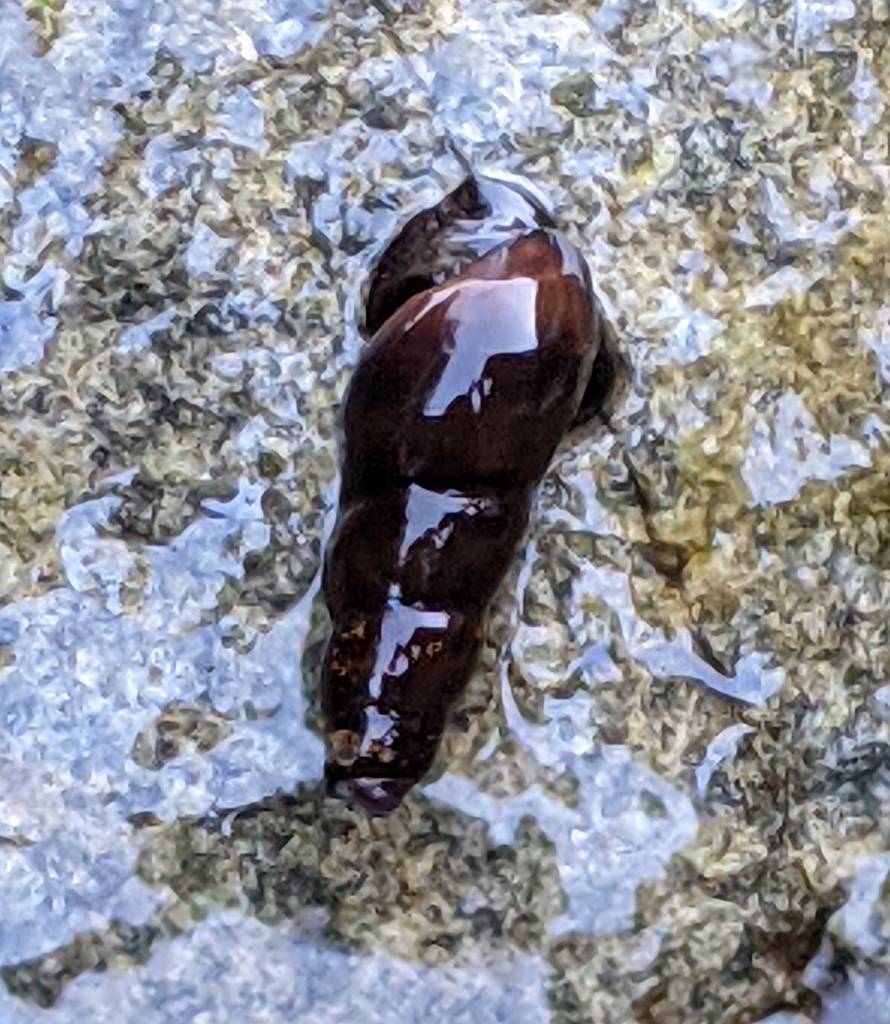
(c) David Anderson, some rights reserved (CC BY) · licence
Family: Semisulcospiridae · Class: Gastropoda · Order: Caenogastropoda
Juga nigrina (Black Juga) is a California animal in the Semisulcospiridae family.
The Black Juga (Juga nigrina) is a medium-sized aquatic gastropod in the family Semisulcospiridae, characterized by its dark reddish-brown to black shell coloration. Adults typically measure 10-30 mm (0.4-1.2 inches) in length, with shells that may be smooth or ridged and sometimes display lighter-colored spiral lines following the shell coils. As a member of the Juga genus, this species possesses gills and is fully aquatic throughout its life cycle. The Black Juga occurs in coastal drainages from south-central Oregon to central California, with additional isolated populations documented in southern Sonoma and Napa counties (NatureServe). This distribution represents a relatively narrow range along the Pacific Coast, reflecting the species' specific habitat requirements and limited dispersal capabilities typical of freshwater gastropods. This species inhabits streams and spring-fed waters, requiring clean, well-oxygenated aquatic environments. Black Juga are considered obligate perennial stream species, indicating their dependence on permanent water flow rather than seasonal or intermittent streams (Xerces Society 2010). The species appears to require good water quality and may be absent from polluted or heavily modified waterways. Their presence in aquatic systems serves as an indicator of perennial flow conditions and relatively pristine stream environments. Black Juga function as rasper-grazers in their aquatic ecosystems, feeding on algae growing on hard surfaces as well as detritus such as decomposing alder leaves and other organic matter (Xerces Society). Their feeding behavior contributes to nutrient cycling and algal control in stream communities. The species exhibits a relatively long life cycle, typical of Juga snails, which can range from 3-7 years. This extended lifespan makes them particularly valuable as biological indicators, as their populations reflect long-term environmental conditions rather than short-term fluctuations. Currently, the Black Juga does not appear on federal or state endangered species lists, though specific population trend data are not readily available. However, like many freshwater gastropods, this species faces potential threats from habitat degradation, water pollution, altered flow regimes, and climate change impacts on stream systems. The species' requirement for clean, permanent water sources makes it particularly vulnerable to watershed modifications, urban development, and agricultural runoff that can degrade water quality. The restricted range and isolated populations, particularly those in Sonoma and Napa counties, may face additional risks from habitat fragmentation. Conservation of riparian corridors and maintenance of natural stream flow patterns are essential for protecting Black Juga populations and the aquatic ecosystems they inhabit.
Classification
Class: Gastropoda · Order: Caenogastropoda · Family: Semisulcospiridae
Frequently asked questions
How is Juga nigrina classified?
Juga nigrina belongs to class Gastropoda, order Caenogastropoda, family Semisulcospiridae.
What family does Juga nigrina belong to?
Juga nigrina is in the Semisulcospiridae family.
What is Juga nigrina?
The Black Juga (Juga nigrina) is a medium-sized aquatic gastropod in the family Semisulcospiridae, characterized by its dark reddish-brown to black shell coloration.
Is Juga nigrina found in California?
Yes. Juga nigrina is recorded in California in The California Species Project's catalogue.
Related species
Other California species in the same genus, family, or bioregion.
Data from The California Species Project — 14,000+ California species with verified data from CNPS, CDFW, USFWS, and more.