Juga occata
Scalloped Juga
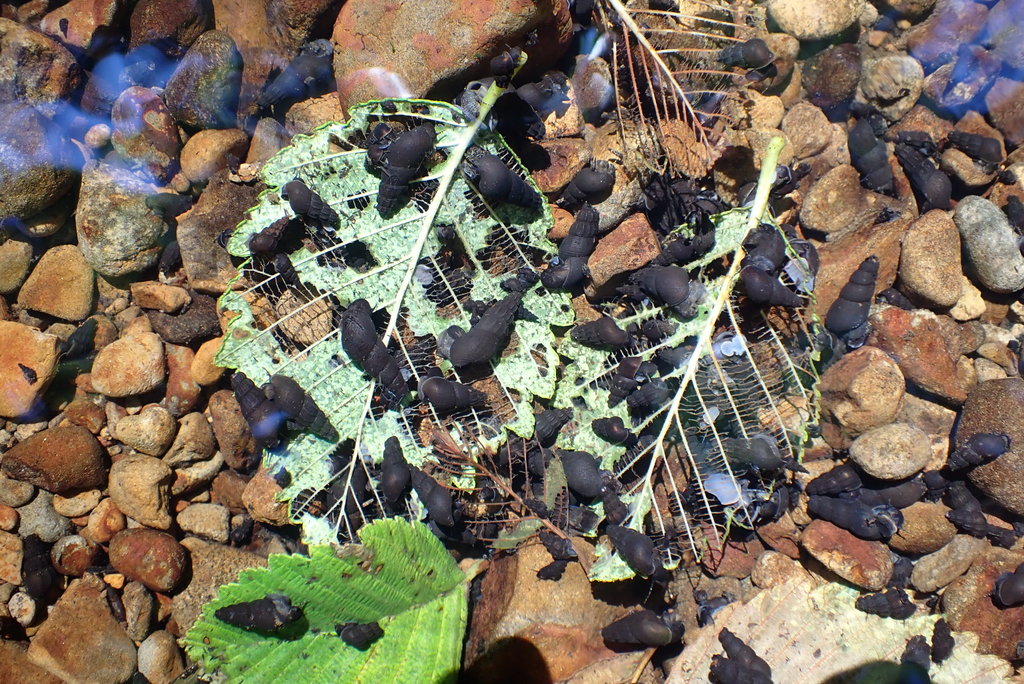
(c) Lee Cain, some rights reserved (CC BY) · licence
Family: Semisulcospiridae · Class: Gastropoda · Order: Caenogastropoda
Conservation status: G1 S1
Juga occata (Scalloped Juga) is a California animal in the Semisulcospiridae family.
The scalloped juga is a freshwater gastropod mollusk endemic to northern California. This species belongs to the family Semisulcospiridae and represents one of the most imperiled freshwater snails in the western United States. The shell morphology and specific diagnostic features that distinguish this species from other Juga species require further taxonomic clarification, as recent systematic studies suggest the genus contains fewer valid species than previously recognized (Strong et al. 2022). Juga occata occurs in small, disjunct populations within the Pit River system of northern California, specifically documented in Lassen, Shasta, and Modoc counties (NatureServe 2024). The species' range represents highly fragmented habitat patches, with most known occurrences located in the Pit River system below Lake Britton. Historical records suggest the species once occupied a broader range in northern California river systems, but placer mining, dredging, and water quality degradation have resulted in extirpation from most former habitat areas except portions of the Pit River drainage (Taylor 1981). The species inhabits flowing freshwater environments typical of Pacific Northwest river systems. Like other freshwater gastropods, scalloped juga requires well-oxygenated water with moderate alkalinity, typically thriving in hard waters with dissolved mineral content between 20-180 parts per million. The species occupies riffle areas and rocky substrates in permanent flowing waters. Current populations exist primarily in areas subject to flow regulation from Pacific Gas and Electric Company's hydroelectric operations, which creates variable water temperatures and discharge patterns that may affect habitat quality. Limited ecological information exists for this species, though freshwater gastropods generally serve as primary consumers, grazing on periphyton, detritus, and organic matter. Reproduction likely follows patterns typical of other Juga species, with individuals depositing eggs on hard substrates during specific seasonal periods. The species' life history characteristics, including longevity, reproductive output, and population dynamics, remain poorly documented and require further scientific investigation. With a global and state ranking of G1 S1, the scalloped juga represents one of California's most critically imperiled freshwater invertebrates. The species faces multiple conservation challenges including habitat fragmentation, water management impacts, pollution, and wildfire threats (NatureServe 2024). Current populations remain small, isolated, and vulnerable to local extirpation from ongoing anthropogenic pressures. The regulated flow regime downstream from Lake Britton creates temperature fluctuations and altered hydrology that may compromise habitat suitability. Water quality degradation from agricultural runoff, urban development, and legacy mining impacts continues to threaten remaining populations. Climate change poses additional risks through altered precipitation patterns, increased wildfire frequency, and elevated stream temperatures. The species' extremely limited distribution and small population sizes make it particularly susceptible to stochastic extinction events. Conservation efforts require comprehensive population monitoring, habitat protection, and water quality improvement within the Pit River drainage to prevent further population decline and potential species extinction.
Classification
Class: Gastropoda · Order: Caenogastropoda · Family: Semisulcospiridae
Conservation status
G1 S1
Frequently asked questions
How is Juga occata classified?
Juga occata belongs to class Gastropoda, order Caenogastropoda, family Semisulcospiridae.
What family does Juga occata belong to?
Juga occata is in the Semisulcospiridae family.
Is Juga occata protected or of conservation concern?
Juga occata carries the following status: G1 S1.
What is Juga occata?
The scalloped juga is a freshwater gastropod mollusk endemic to northern California.
Is Juga occata found in California?
Yes. Juga occata is recorded in California in The California Species Project's catalogue.
Related species
Other California species in the same genus, family, or bioregion.
Data from The California Species Project — 14,000+ California species with verified data from CNPS, CDFW, USFWS, and more.