Klambothrips myopori
Naio Thrips
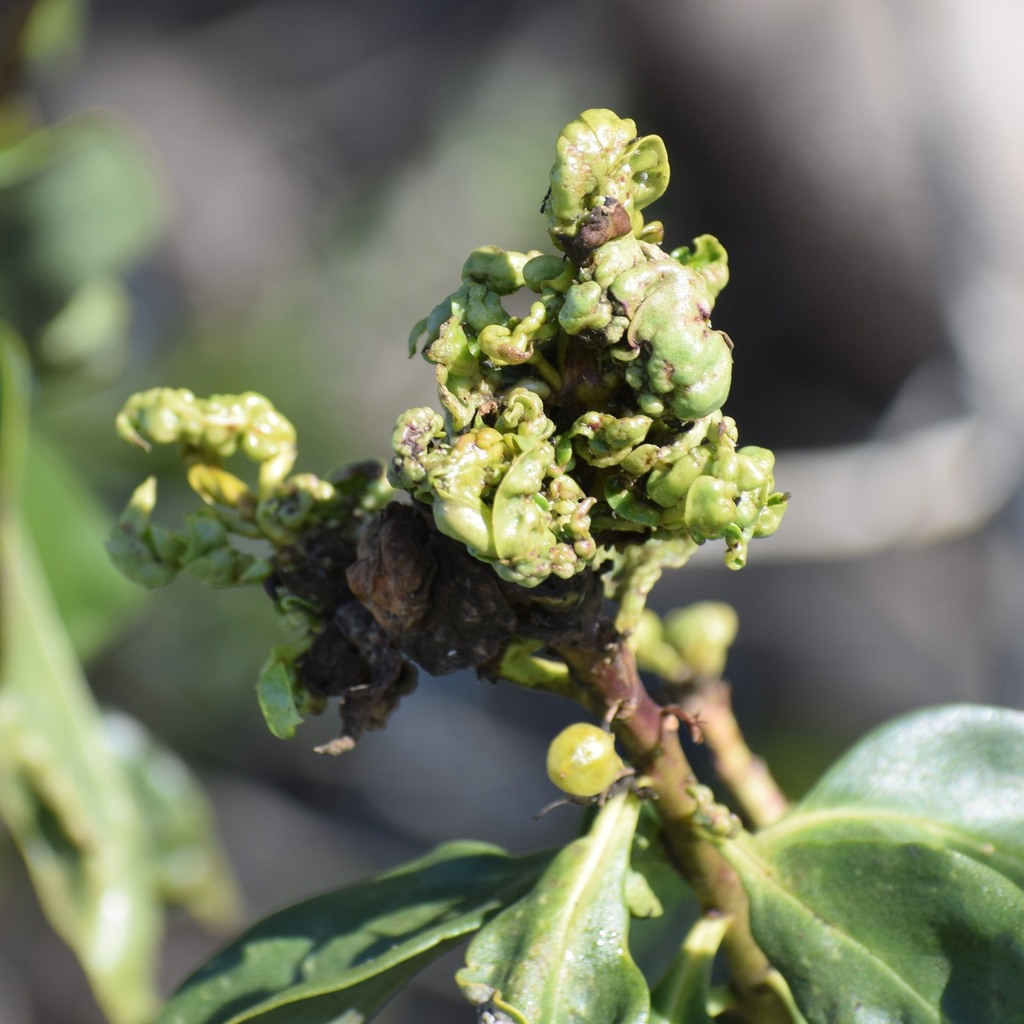
no rights reserved · CC0
Family: Phlaeothripidae · Class: Insecta · Order: Thysanoptera
Klambothrips myopori (Naio Thrips) is a California animal in the Phlaeothripidae family.
Klambothrips myopori, commonly known as the naio thrips or myoporum thrips, is a small invasive insect measuring approximately 2 mm in length. This species belongs to the family Phlaeothripidae within the order Thysanoptera. The thrips displays typical characteristics of its family, with elongated antennae and narrow, fringed wings. Adults are dark-colored with tube-like ovipositors used for egg-laying in plant tissue. The naio thrips is native to Australia but has established populations in several regions outside its natural range. In North America, documented occurrences include California, where it has been recorded in Alameda County, specifically in San Leandro (BugGuide 2009). The species has also spread to Hawaii, where it poses threats to native ecosystems and is considered an invasive pest of ecological concern. This thrips species is highly host-specific, feeding exclusively on plants in the genus Myoporum, commonly known as naio or myoporum trees. Myoporum sandwicense, the native Hawaiian naio, serves as a primary host plant in Pacific island ecosystems. The thrips causes significant damage to host plants through feeding activities, which involve piercing plant tissues and extracting cellular contents. Heavy infestations can result in leaf distortion, premature leaf drop, and overall decline in plant health. Klambothrips myopori exhibits typical thrips reproductive behavior, with females inserting eggs into plant tissues using their specialized ovipositors. Development proceeds through multiple larval stages before reaching adulthood. The species can complete multiple generations per year under favorable conditions, contributing to rapid population growth and spread. Adults and larvae both feed on host plant tissues, creating feeding scars and potentially transmitting plant pathogens. The conservation status of this species reflects its role as an invasive pest rather than a species requiring protection. In Hawaii, K. myopori is identified as a significant threat to native naio populations, which are already stressed by habitat loss and other environmental pressures. The U.S. Fish and Wildlife Service includes this species in invasive species biosecurity protocols, recognizing its potential for ecological damage (USFWS 2022). Management efforts focus on preventing further spread through equipment decontamination and monitoring programs. The thrips' impact on native Hawaiian ecosystems is of particular concern, as Myoporum sandwicense plays important ecological roles in coastal and dry forest habitats. Control measures typically involve integrated pest management approaches, though complete eradication from established populations remains challenging due to the species' cryptic nature and rapid reproductive rate. Early detection and rapid response protocols are essential for preventing establishment in new areas where native Myoporum species occur.
Classification
Class: Insecta · Order: Thysanoptera · Family: Phlaeothripidae
Frequently asked questions
How is Klambothrips myopori classified?
Klambothrips myopori belongs to class Insecta, order Thysanoptera, family Phlaeothripidae.
What family does Klambothrips myopori belong to?
Klambothrips myopori is in the Phlaeothripidae family.
What is Klambothrips myopori?
Klambothrips myopori, commonly known as the naio thrips or myoporum thrips, is a small invasive insect measuring approximately 2 mm in length.
Is Klambothrips myopori found in California?
Yes. Klambothrips myopori is recorded in California in The California Species Project's catalogue.
Related species
Other California species in the same genus, family, or bioregion.
Data from The California Species Project — 14,000+ California species with verified data from CNPS, CDFW, USFWS, and more.