Kogia breviceps
Pygmy Sperm Whale
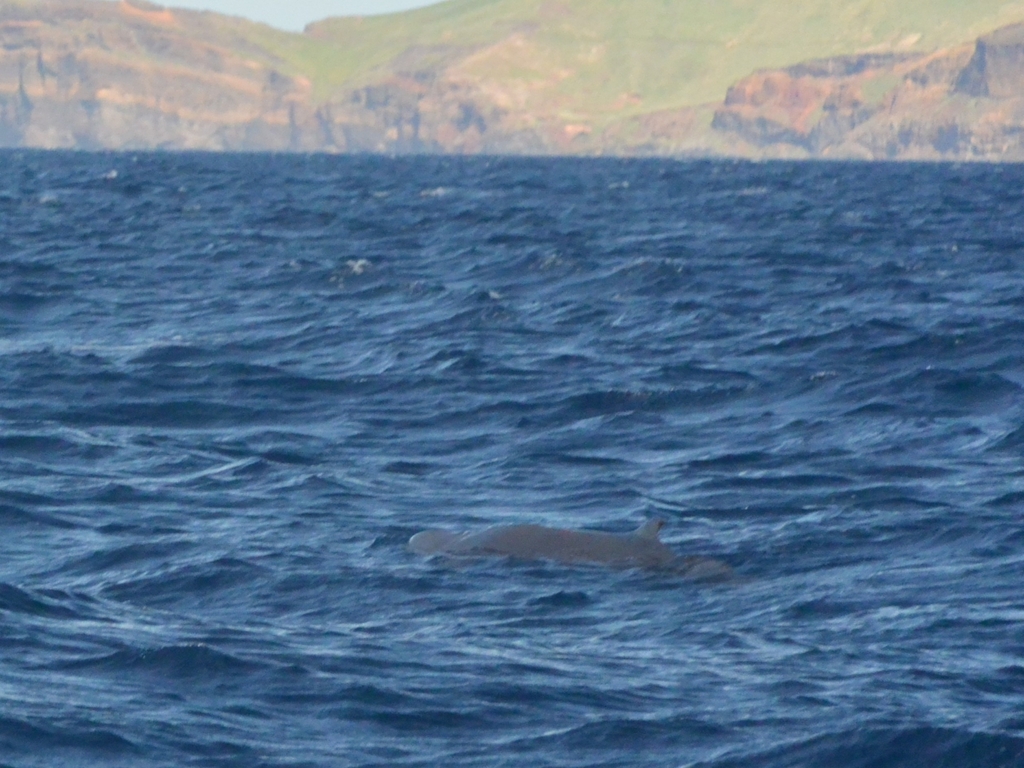
(c) Charlotte Kirchner, some rights reserved (CC BY) · licence
Family: Kogiidae · Class: Mammalia · Order: Artiodactyla
Kogia breviceps (Pygmy Sperm Whale) is a California animal in the Kogiidae family.
The pygmy sperm whale is a small, deep-diving cetacean measuring 2.7 to 3.4 meters (8.9 to 11.2 feet) in length and weighing 300 to 400 kilograms (660 to 880 pounds). Adults display a dark gray to blue-gray dorsal surface with lighter coloration on the ventral side. The species is distinguished by its robust, somewhat triangular head that comprises approximately 15% of total body length, a small underslung jaw, and a distinctive pale bracket-shaped marking behind each eye. The dorsal fin is small, low, and positioned in the posterior third of the back. Unlike its larger relative the sperm whale, the pygmy sperm whale lacks the prominent spermaceti organ and square head profile. Pygmy sperm whales inhabit deep oceanic waters worldwide in tropical and temperate regions. Along the California coast, they occur in offshore waters beyond the continental shelf, typically in depths exceeding 400 meters (1,312 feet). The species ranges from central California southward to Baja California, with most sightings reported in waters off southern California. Historical records indicate occasional strandings along the central and southern California coastline, though live sightings are uncommon due to the species' preference for deep waters far from shore. This species occupies pelagic habitats in the open ocean, favoring areas with steep underwater topography such as submarine canyons and continental shelf edges. Pygmy sperm whales are typically found in waters with surface temperatures between 15 and 25 degrees Celsius (59 to 77 degrees Fahrenheit). They prefer areas with high concentrations of their primary prey, particularly deep-water squid and fish species that migrate vertically in the water column. Pygmy sperm whales are deep divers, capable of reaching depths exceeding 300 meters (984 feet) during foraging dives. Their diet consists primarily of squid, particularly glass squids and other cephalopods, supplemented by small deep-water fish and crustaceans. When threatened, the species can release a dark reddish-brown intestinal fluid, similar to the defensive mechanism employed by squid. They typically occur in small groups of 2 to 6 individuals, though solitary animals are frequently observed. Breeding occurs year-round in warmer waters, with females giving birth to a single calf after a gestation period of approximately 11 months. Calves measure about 1.2 meters (3.9 feet) at birth and nurse for up to one year. The pygmy sperm whale is not federally listed under the Endangered Species Act and lacks specific state protection status in California beyond general marine mammal protections. The species faces threats from ship strikes, entanglement in fishing gear, ocean noise pollution, and ingestion of marine debris. Climate change may affect prey distribution and availability. Population estimates are uncertain due to the species' elusive nature, but the IUCN currently classifies the pygmy sperm whale as Data Deficient globally, reflecting limited population data rather than conservation concern.
Classification
Class: Mammalia · Order: Artiodactyla · Family: Kogiidae
Frequently asked questions
How is Kogia breviceps classified?
Kogia breviceps belongs to class Mammalia, order Artiodactyla, family Kogiidae.
What family does Kogia breviceps belong to?
Kogia breviceps is in the Kogiidae family.
What is Kogia breviceps?
The pygmy sperm whale is a small, deep-diving cetacean measuring 2.7 to 3.4 meters (8.9 to 11.2 feet) in length and weighing 300 to 400 kilograms (660 to 880 pounds).
Is Kogia breviceps found in California?
Yes. Kogia breviceps is recorded in California in The California Species Project's catalogue.
Related species
Other California species in the same genus, family, or bioregion.
Data from The California Species Project — 14,000+ California species with verified data from CNPS, CDFW, USFWS, and more.