Kovarikia oxy
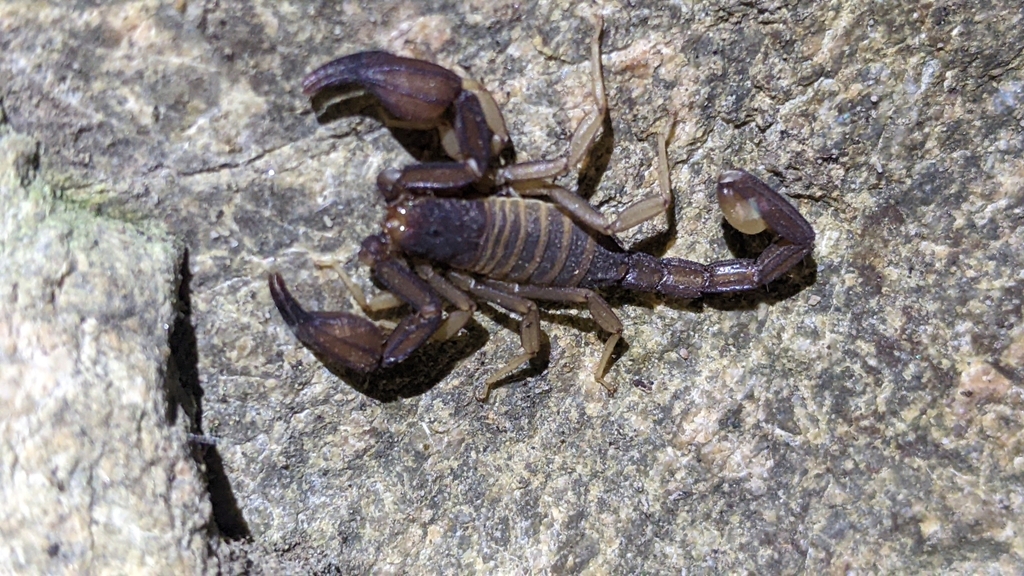
(c) velodrome, some rights reserved (CC BY) · licence
Family: Vaejovidae · Class: Arachnida · Order: Scorpiones
Kovarikia oxy is a California animal in the Vaejovidae family.
Kovarikia oxy is a scorpion species in the family Vaejovidae, one of the prominent scorpion families in North America. Members of the family Vaejovidae are typically small to medium-sized scorpions characterized by their robust build and relatively thick pedipalps compared to other scorpion families. Like other vaejovids, K. oxy likely possesses the family's characteristic features including a segmented tail ending in a venomous stinger, paired pincers (pedipalps) for capturing prey, and eight walking legs. The specific distribution range of Kovarikia oxy has not been comprehensively documented in available scientific literature. The genus Kovarikia appears to have limited geographic distribution, though precise locality records for this species remain poorly documented. California's diverse arid and semi-arid landscapes provide suitable habitat for numerous scorpion species, particularly in desert regions, chaparral, and oak woodland environments. Habitat requirements for K. oxy have not been specifically studied or documented. Most vaejovid scorpions typically inhabit areas with rocky substrates, loose soil, or leaf litter that provide shelter during daylight hours. These scorpions generally prefer environments with adequate hiding places such as rock crevices, fallen logs, or burrows they excavate themselves. Temperature and moisture conditions likely influence habitat selection, as scorpions are sensitive to desiccation. Behavioral and ecological information specific to Kovarikia oxy is not available in current literature. However, based on family characteristics, this species likely exhibits typical scorpion behaviors including nocturnal activity patterns, with individuals emerging after dark to hunt for prey. Vaejovid scorpions typically feed on small arthropods including insects, spiders, and other arachnids, using their pedipalps to capture prey and their stinger to subdue it with venom. Reproductive behavior likely follows the general scorpion pattern of complex courtship rituals followed by live birth of young that ride on the mother's back until their first molt. The conservation status of Kovarikia oxy is unknown, as the species lacks formal assessment by state or federal agencies. No population data, threat assessments, or conservation measures have been documented for this species. The limited scientific information available suggests that basic biological and ecological research is needed to understand this species' distribution, habitat requirements, and conservation needs. Many scorpion species face threats from habitat loss due to urban development and agricultural conversion, though specific threats to K. oxy cannot be determined without additional study. Scientific documentation for this species remains extremely limited. If you have additional verified information about Kovarikia oxy including distribution records, habitat observations, or biological data, please contact us to help improve this species account.
Classification
Class: Arachnida · Order: Scorpiones · Family: Vaejovidae
Frequently asked questions
How is Kovarikia oxy classified?
Kovarikia oxy belongs to class Arachnida, order Scorpiones, family Vaejovidae.
What family does Kovarikia oxy belong to?
Kovarikia oxy is in the Vaejovidae family.
What is Kovarikia oxy?
Kovarikia oxy is a scorpion species in the family Vaejovidae, one of the prominent scorpion families in North America.
Is Kovarikia oxy found in California?
Yes. Kovarikia oxy is recorded in California in The California Species Project's catalogue.
Related species
Other California species in the same genus, family, or bioregion.
Data from The California Species Project — 14,000+ California species with verified data from CNPS, CDFW, USFWS, and more.