Kricogonia lyside
Lyside Sulphur
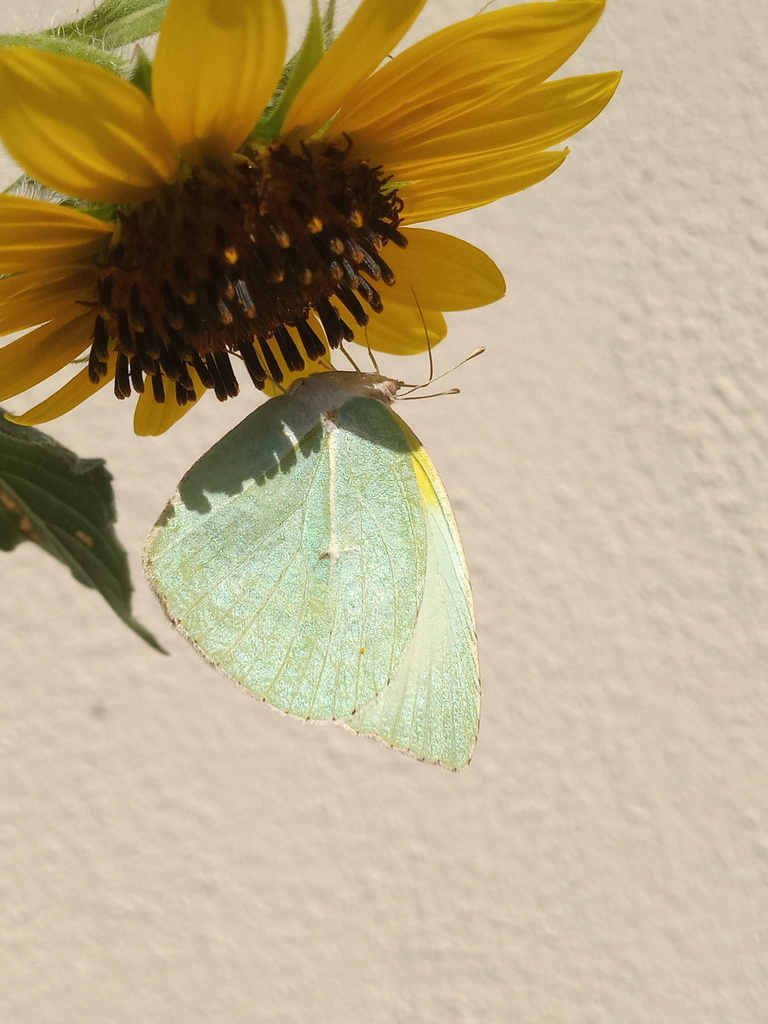
(c) Rodolfo Salinas Villarreal, some rights reserved (CC BY) · licence
Family: Pieridae · Class: Insecta · Order: Lepidoptera
Kricogonia lyside (Lyside Sulphur) is a California animal in the Pieridae family.
The Lyside Sulphur is a medium-sized butterfly in the family Pieridae, characterized by sexual dimorphism in wing coloration and pattern. Males display bright yellow dorsal wing surfaces with black marginal borders, while females exhibit white to pale yellow ground coloration with more extensive dark markings. The forewings measure approximately 32-40 mm (1.3-1.6 inches) in length. Both sexes possess a distinctive orange spot near the forewing apex and display pale yellow to white ventral wing surfaces with subtle gray-green markings that provide effective camouflage when at rest. The species ranges from Venezuela north to southern Texas, where it occurs in large numbers as a resident population. In southern Florida, the Lyside Sulphur is considered rare, likely representing a marginal population at the northern edge of its established range. The butterfly occasionally strays well beyond its normal distribution, with documented records from Colorado, Nebraska, Kentucky, and other states, though these represent vagrant individuals rather than established populations. These dispersal events typically occur during periods of favorable weather conditions and population abundance in core breeding areas. Lyside Sulphurs inhabit tropical and subtropical regions, favoring areas with abundant host plant populations. The species demonstrates strong fidelity to plants in the Zygophyllaceae family, utilizing lignum vitae (Guaiacum sanctum) in southern Florida and Porliera angustifolia in Texas. These host plants typically occur in dry, well-drained soils in coastal hammocks, pine rocklands, and scrubland habitats. Adults are frequently observed in gardens, parks, and disturbed areas where ornamental plantings of host species may be present. Adult Lyside Sulphurs are active year-round in tropical regions, with multiple generations annually. Males exhibit territorial behavior, establishing perches on elevated vegetation to locate receptive females. Mating typically occurs during morning hours, with females subsequently seeking appropriate oviposition sites on young growth of host plants. Eggs are laid singly on leaves or flower buds, with larvae developing through five instars over approximately three weeks. The caterpillars are pale green with faint longitudinal stripes and feed primarily on leaves and developing seed pods. Pupation occurs in a chrysalis attached to the host plant or nearby vegetation, with adult emergence after 10-14 days under optimal conditions. The Lyside Sulphur is not currently listed under federal or state endangered species legislation. However, populations in marginal habitats such as southern Florida may face pressure from habitat loss due to coastal development and hurricanes. The species' dependence on specialized host plants in the Zygophyllaceae family makes it vulnerable to habitat fragmentation and the removal of native vegetation. Conservation efforts focus on protecting remaining populations of lignum vitae and other native host plants in their natural habitats. Climate change may potentially expand suitable habitat northward while simultaneously threatening coastal populations through sea level rise and increased storm intensity.
Classification
Class: Insecta · Order: Lepidoptera · Family: Pieridae
Frequently asked questions
How is Kricogonia lyside classified?
Kricogonia lyside belongs to class Insecta, order Lepidoptera, family Pieridae.
What family does Kricogonia lyside belong to?
Kricogonia lyside is in the Pieridae family.
What is Kricogonia lyside?
The Lyside Sulphur is a medium-sized butterfly in the family Pieridae, characterized by sexual dimorphism in wing coloration and pattern.
Is Kricogonia lyside found in California?
Yes. Kricogonia lyside is recorded in California in The California Species Project's catalogue.
Related species
Other California species in the same genus, family, or bioregion.
Data from The California Species Project — 14,000+ California species with verified data from CNPS, CDFW, USFWS, and more.