Labrisomus xanti
Largemouth Blenny
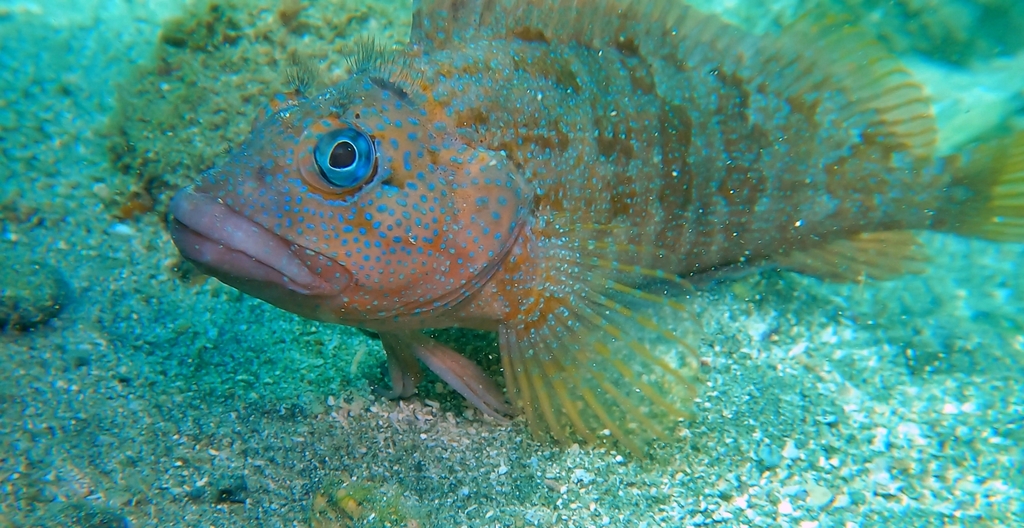
(c) Alberto Alcalá, some rights reserved (CC BY) · licence
Family: Labrisomidae · Class: Teleostei · Order: Perciformes
Labrisomus xanti (Largemouth Blenny) is a California animal in the Labrisomidae family.
The Largemouth Blenny (Labrisomus xanti) is a small marine fish in the family Labrisomidae, native to the eastern Pacific coast of Mexico. Adults reach a maximum total length of 17.8 cm (7.0 inches), with males and females showing similar size ranges (FishBase). The species exhibits a fusiform or normal body shape typical of blenniids, with physical characteristics that distinguish it from other labrisomid species in its range. The Largemouth Blenny occurs along the Pacific coast of Mexico, with its documented range extending from Bahía Sebastián Vizcaíno in Baja California south to Bahía Tenacatita in Jalisco (FishBase). This distribution places the species within the Gulf of California and adjacent Pacific waters, where it inhabits rocky reef environments characteristic of the region's diverse marine ecosystems. This species is reef-associated and inhabits shallow marine waters in tropical zones (FishBase). The Largemouth Blenny shows a strong association with rocky substrates and reef structures, which provide both shelter and foraging opportunities. Its habitat preferences align with the complex topography of the Gulf of California's rocky shores, where crevices and reef formations create suitable microhabitats for benthic-associated fish species. The Largemouth Blenny functions as a shallow water diurnal predator, actively foraging during daylight hours (FishBase). Its diet consists primarily of benthic crustaceans, indicating a specialized feeding strategy focused on bottom-dwelling invertebrate prey. This feeding behavior places the species within the reef's complex food web as a mesopredator, controlling populations of small crustaceans while potentially serving as prey for larger reef fish. The species' diurnal activity pattern suggests behavioral adaptations that maximize foraging efficiency while avoiding nocturnal predators. Little specific information is available regarding the species' reproductive biology, spawning behavior, or life cycle characteristics. The timing of spawning, egg development, and larval duration remain poorly documented for this species, representing knowledge gaps common among many smaller reef fish in the Gulf of California region. The International Union for Conservation of Nature assessed Labrisomus xanti as Least Concern in May 2007, indicating that the species does not currently face significant extinction risk (FishBase). The species is not evaluated under CITES regulations and shows no current threat classification under the Convention on Migratory Species. Its status reflects a relatively stable population within its documented range, though specific population trends and abundance data remain limited. The species poses no known threat to humans and has minimal direct interaction with human activities or fisheries operations. Scientific documentation for this species remains limited beyond basic taxonomic and distributional information. The information presented here is based on available sources including FishBase and IUCN assessments. If you have additional verified information about this species' biology, distribution, or ecology, please contact us to help improve this species account.
Classification
Class: Teleostei · Order: Perciformes · Family: Labrisomidae
Frequently asked questions
How is Labrisomus xanti classified?
Labrisomus xanti belongs to class Teleostei, order Perciformes, family Labrisomidae.
What family does Labrisomus xanti belong to?
Labrisomus xanti is in the Labrisomidae family.
What is Labrisomus xanti?
The Largemouth Blenny (Labrisomus xanti) is a small marine fish in the family Labrisomidae, native to the eastern Pacific coast of Mexico.
Is Labrisomus xanti found in California?
Yes. Labrisomus xanti is recorded in California in The California Species Project's catalogue.
More California species
This species has no close relatives in our California data — here are other species to explore.
Data from The California Species Project — 14,000+ California species with verified data from CNPS, CDFW, USFWS, and more.