Lacinipolia leucogramma
White-lined Lacinipolia
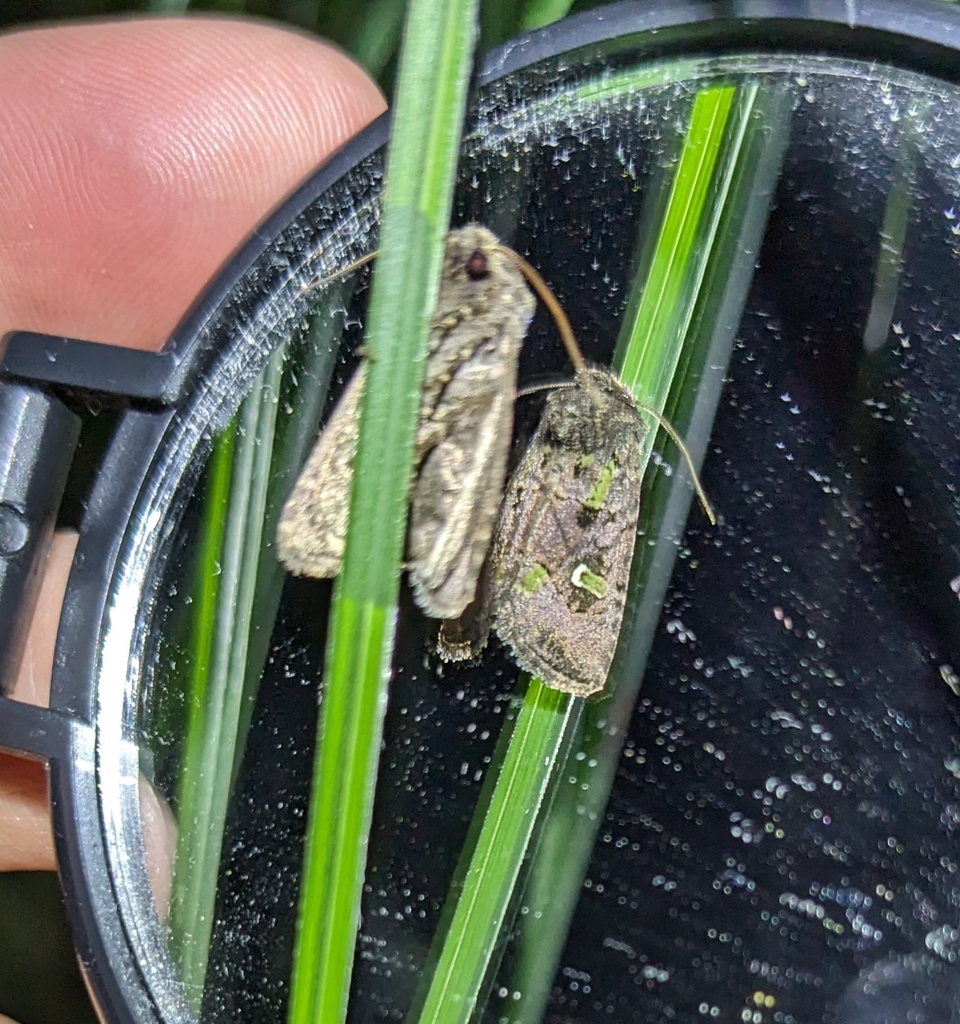
(c) Cam Fox, some rights reserved (CC BY) · licence
Family: Noctuidae · Class: Insecta · Order: Lepidoptera
Lacinipolia leucogramma (White-lined Lacinipolia) is a California animal in the Noctuidae family.
The White-lined Lacinipolia (Lacinipolia leucogramma) is a noctuid moth in the family Noctuidae, subfamily Noctuinae, tribe Eriopygini. This species was originally described by Grote in 1873 as Mamestra leucogramma and has undergone several taxonomic revisions. According to Lafontaine & Schmidt, the current classification includes Polia canities (Hampson, 1905) and Scotogramma francisca (Smith, 1910) as synonyms (Moth Photographers Group). The species is assigned Hodges number 10392 in the standard North American moth catalog. Lacinipolia leucogramma occurs along the Pacific Coast of North America, with documented records from California extending from San Diego County north to Sonoma County. Specific collection localities include Bodega Bay in Sonoma County, San Bruno Mountains, Pala in San Diego County, and Aguanga in Riverside County (Lepidopterists' News, various volumes). The species appears to have a primarily coastal distribution within California, though inland records exist. The species inhabits coastal and near-coastal environments, including coastal strand vegetation and adjacent upland areas. Collection records from San Bruno Mountains and other coastal locations suggest an association with fog-influenced habitats typical of the California coast. Elevational range appears to extend from sea level to moderate elevations, with records from locations such as Pala at 800 feet elevation. Adult flight activity occurs during late summer and fall months, with collection records spanning from September through November. Records from Bodega Bay in September and San Bruno Mountains from September through November indicate peak activity during this period (Lepidopterists' News 1986, 1983). The species appears to be univoltine with a single generation per year. Like other members of the subfamily Noctuinae, adults are likely nocturnal and attracted to artificial lights. Specific host plant relationships and larval biology have not been well documented in the scientific literature. Lacinipolia leucogramma does not appear on federal or California state endangered species lists and lacks formal conservation status designations. The species' distribution along the developed California coast may make it vulnerable to habitat loss from urbanization and coastal development. Collection records from areas like San Bruno Mountains, which face ongoing development pressure, highlight potential conservation concerns. Limited recent survey data makes assessment of population trends difficult. The taxonomic complexity of this species, with multiple historical synonyms, reflects the challenging nature of noctuid moth identification and classification. The consolidation of three previously recognized species under L. leucogramma demonstrates the importance of modern taxonomic revision in understanding moth diversity. Additional research on the species' ecology, host plant relationships, and current distribution would enhance understanding of its conservation status and habitat requirements along the California coast.
Classification
Class: Insecta · Order: Lepidoptera · Family: Noctuidae
Frequently asked questions
How is Lacinipolia leucogramma classified?
Lacinipolia leucogramma belongs to class Insecta, order Lepidoptera, family Noctuidae.
What family does Lacinipolia leucogramma belong to?
Lacinipolia leucogramma is in the Noctuidae family.
What is Lacinipolia leucogramma?
The White-lined Lacinipolia (Lacinipolia leucogramma) is a noctuid moth in the family Noctuidae, subfamily Noctuinae, tribe Eriopygini.
Is Lacinipolia leucogramma found in California?
Yes. Lacinipolia leucogramma is recorded in California in The California Species Project's catalogue.
Related species
Other California species in the same genus, family, or bioregion.
Data from The California Species Project — 14,000+ California species with verified data from CNPS, CDFW, USFWS, and more.