Lacinipolia olivacea
Olive Arches Moth
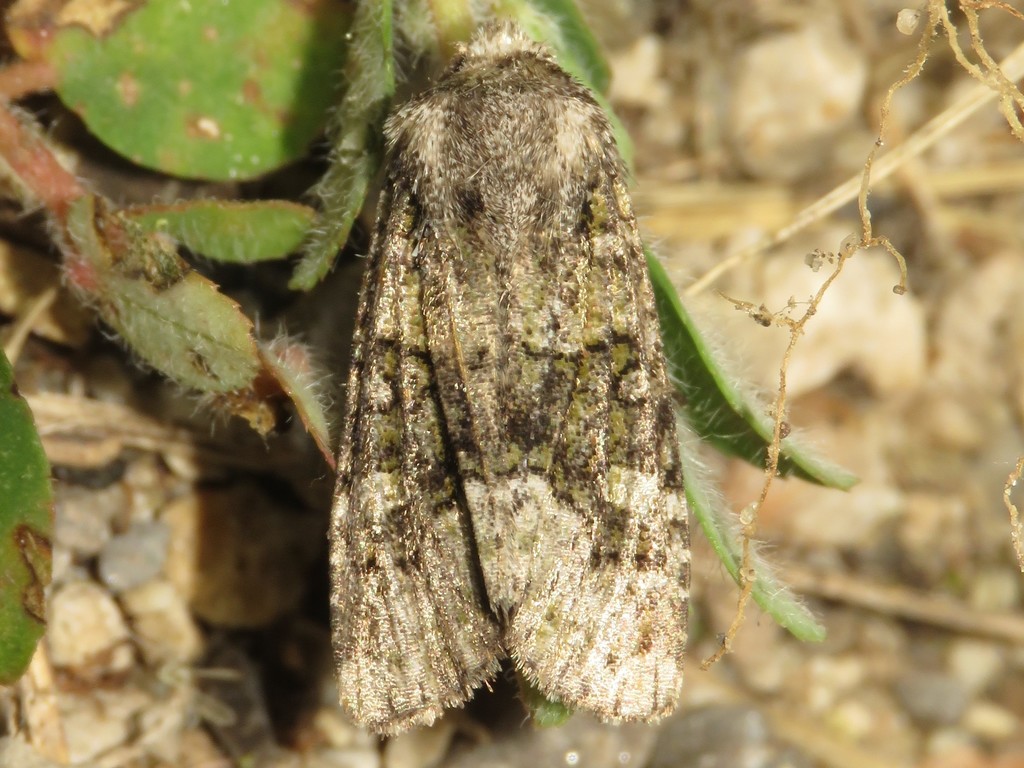
(c) Dan MacNeal, some rights reserved (CC BY) · licence
Family: Noctuidae · Class: Insecta · Order: Lepidoptera
Lacinipolia olivacea (Olive Arches Moth) is a California animal in the Noctuidae family.
Lacinipolia olivacea, commonly known as the Olive Arches Moth, is a medium-sized noctuoid moth in the family Noctuidae. Adults typically measure 14-18 mm (0.55-0.71 inches) in forewing length with a wingspan ranging from 28-36 mm (1.1-1.4 inches). The forewings display a mottled olive-brown to grayish-brown ground color with darker brown markings forming the characteristic arched patterns that give the species its common name. The reniform and orbicular spots are present but often indistinct, outlined in pale scales. The hindwings are pale gray to whitish with darker veining and a faint discal spot. Males possess feathered antennae, while females have simple, thread-like antennae. The Olive Arches Moth occurs across much of North America, with its range extending from southern Canada through the United States. In California, the species has been documented in various regions, though specific distribution records are limited. The moth's presence in California represents the western extent of its continental range, with populations potentially occurring in both coastal and inland areas. This species inhabits diverse ecosystems including deciduous and mixed woodlands, forest edges, riparian areas, and disturbed habitats such as parks and gardens. Adults are attracted to artificial lights and can be found in suburban environments where suitable host plants are present. The moth shows adaptability to various elevation ranges, from sea level to moderate montane zones, though specific elevation limits in California require further documentation. Olive Arches Moths are nocturnal, with adults active from late spring through early fall, typically exhibiting peak flight activity during summer months. The species is multivoltine in warmer regions, producing two or more generations annually. Females deposit eggs singly or in small clusters on host plant foliage. Larvae feed on various herbaceous plants and low shrubs, including members of the Asteraceae (sunflower family) and other dicotyledonous plants. The caterpillars are cutworms, feeding primarily at night and hiding in soil or leaf litter during daylight hours. Pupation occurs in earthen cells in the soil, with adults emerging after 2-3 weeks depending on temperature conditions. The conservation status of Lacinipolia olivacea has not been formally assessed at federal or state levels. The species is not currently listed under the Endangered Species Act or California Endangered Species Act. Population trends and specific threats to California populations remain poorly documented, reflecting the general lack of comprehensive surveys for many moth species. Potential threats may include habitat loss from urban development, agricultural conversion, and altered fire regimes in natural areas. Climate change could affect the species' distribution and phenology, particularly at the margins of its range. Light pollution may impact adult behavior and reproduction, as artificial lighting can disrupt natural mating and dispersal patterns. Further research is needed to establish baseline population data and assess conservation needs for this species in California.
Classification
Class: Insecta · Order: Lepidoptera · Family: Noctuidae
Frequently asked questions
How is Lacinipolia olivacea classified?
Lacinipolia olivacea belongs to class Insecta, order Lepidoptera, family Noctuidae.
What family does Lacinipolia olivacea belong to?
Lacinipolia olivacea is in the Noctuidae family.
What is Lacinipolia olivacea?
Lacinipolia olivacea, commonly known as the Olive Arches Moth, is a medium-sized noctuoid moth in the family Noctuidae.
Is Lacinipolia olivacea found in California?
Yes. Lacinipolia olivacea is recorded in California in The California Species Project's catalogue.
Related species
Other California species in the same genus, family, or bioregion.
Data from The California Species Project — 14,000+ California species with verified data from CNPS, CDFW, USFWS, and more.