Lactista gibbosus
Trailside grasshopper
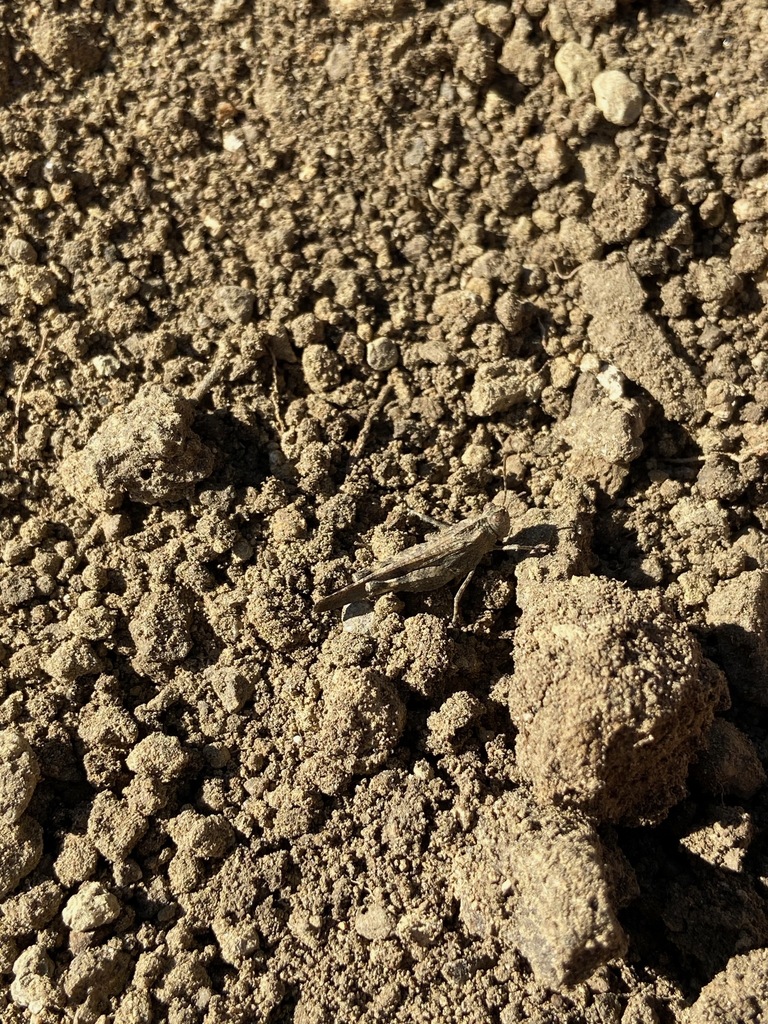
(c) Emily Chebul, some rights reserved (CC BY-SA) · licence
Family: Acrididae · Class: Insecta · Order: Orthoptera
Lactista gibbosus (Trailside grasshopper) is a California animal in the Acrididae family.
The trailside grasshopper is a small, compact band-winged grasshopper belonging to the family Acrididae. Adults measure approximately 17 mm in length, with males typically smaller than females (BugGuide). The species exhibits variable coloration but is generally characterized by a stocky build and a pronotum that narrows prominently from rear to front when viewed from above. Unlike the closely related Lactista azteca, the trailside grasshopper lacks the strong narrow dark stripe that crosses the hind femur and tegmina, or this marking is not noticeably darker than other dark markings on the body (BugGuide). The species belongs to the band-winged grasshoppers (subfamily Oedipodinae), which are known for their distinctive wing patterns revealed during flight. Lactista gibbosus occurs across central California and extends southward through southern and western Arizona into northern Sonora, Mexico, and throughout the length of Baja California (BugGuide). Within California, documented occurrences include Los Angeles County, Orange County, and other central California locations. The species likely occurs in southern Nevada but requires verification in that region. This distribution pattern suggests adaptation to arid and semi-arid environments characteristic of the southwestern United States and northwestern Mexico. The trailside grasshopper inhabits varied sunny, exposed areas, most commonly in gravelly to rocky terrain (BugGuide). The species demonstrates considerable habitat flexibility and is sometimes abundant in disturbed areas such as road cuts, indicating tolerance for human-modified environments. This adaptability to disturbed habitats may contribute to the species' apparent stability compared to more specialized grasshopper species. Elevational records include observations at approximately 2,000 feet in Los Angeles County, though the full elevational range has not been comprehensively documented. Lactista gibbosus exhibits year-round activity with multiple broods throughout the year, though populations are often most abundant during spring months (BugGuide). This extended breeding season distinguishes it from many grasshopper species that have more restricted seasonal activity patterns. Specific details about diet, mating behavior, and reproductive biology have not been extensively studied, though like other band-winged grasshoppers, the species likely feeds on various herbaceous plants and grasses. The ability to maintain multiple broods per year suggests relatively rapid development times and potentially high reproductive output under favorable conditions. The trailside grasshopper currently lacks federal or state listing status, and no specific conservation concerns have been identified for this species as of December 2025. Its apparent tolerance for disturbed habitats and documented presence in multiple counties suggest a relatively stable population status. The species' adaptability to human-modified environments may provide some resilience against habitat loss, unlike more specialized grasshopper species that require specific native plant communities. However, comprehensive population surveys and trend analyses have not been conducted, and the species' overall conservation status would benefit from additional research and monitoring efforts to establish baseline population data.
Classification
Class: Insecta · Order: Orthoptera · Family: Acrididae
Frequently asked questions
How is Lactista gibbosus classified?
Lactista gibbosus belongs to class Insecta, order Orthoptera, family Acrididae.
What family does Lactista gibbosus belong to?
Lactista gibbosus is in the Acrididae family.
What is Lactista gibbosus?
The trailside grasshopper is a small, compact band-winged grasshopper belonging to the family Acrididae.
Is Lactista gibbosus found in California?
Yes. Lactista gibbosus is recorded in California in The California Species Project's catalogue.
Related species
Other California species in the same genus, family, or bioregion.
Data from The California Species Project — 14,000+ California species with verified data from CNPS, CDFW, USFWS, and more.