Laemostenus complanatus
Cosmopolitan Ground Beetle
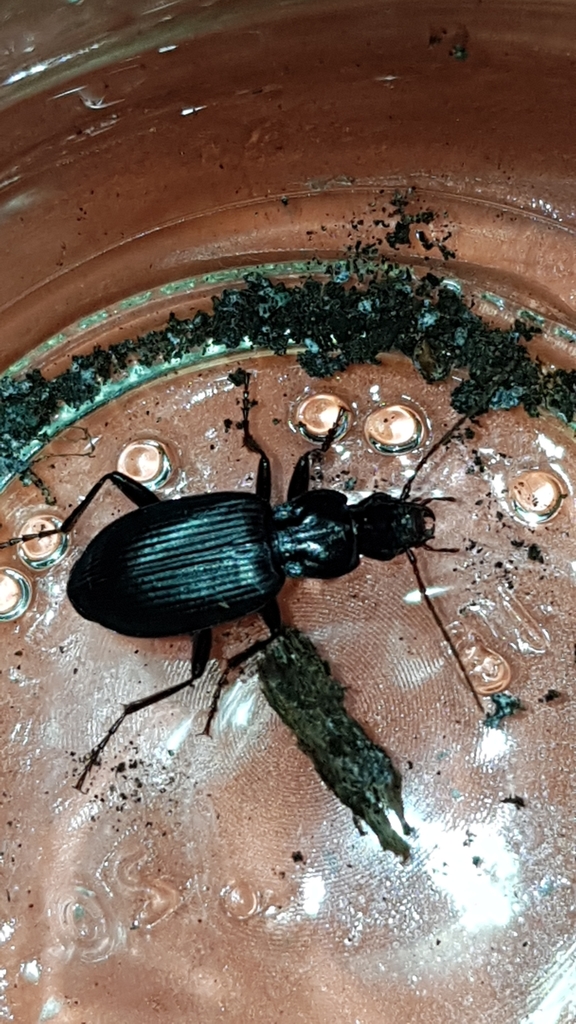
(c) Martín Sánchez Vilchis, some rights reserved (CC BY-SA) · licence
Family: Carabidae · Class: Insecta · Order: Coleoptera
Laemostenus complanatus (Cosmopolitan Ground Beetle) is a California animal in the Carabidae family.
The cosmopolitan ground beetle is a medium-sized carabid beetle measuring 13-16 mm in length. This species belongs to the family Carabidae, subfamily Harpalinae, tribe Sphodrini, and was first described by Dejean in 1828. Like other ground beetles, it possesses the characteristic body form of its family with well-developed mandibles, prominent eyes, and long antennae adapted for its predatory lifestyle. Native to North Africa, Laemostenus complanatus has achieved an almost cosmopolitan distribution through human-mediated dispersal (BugGuide). In North America, the species occurs along the Pacific coast from southern British Columbia to southwestern California. This introduced beetle has successfully established populations in coastal regions, taking advantage of port environments and urban habitats that facilitate its spread. The species inhabits diverse environments including littoral zones in ports, cellars, caves, forests, and meadows (BugGuide). This habitat flexibility has contributed to its successful colonization of new regions. The beetle shows particular affinity for anthropogenic environments, often being found in basements, warehouses, and other human-modified spaces. It also occurs in natural forested areas and open meadow habitats, demonstrating considerable ecological plasticity. As a predatory ground beetle, L. complanatus is primarily nocturnal, emerging at night to hunt for prey. Ground beetles in this genus typically feed on various invertebrates including other insects, larvae, and soft-bodied arthropods. The species likely overwinters as adults, a common strategy among temperate carabids. Reproduction occurs during warmer months, with females depositing eggs in soil or leaf litter. Larvae develop through three instars before pupating, completing their metamorphosis in the soil. Laemostenus complanatus holds no special conservation status and is not listed under federal or state endangered species legislation. As an introduced species that has established viable populations across much of its North American range, it faces no significant conservation concerns. The species' broad habitat tolerance and association with human-modified environments suggest it is likely to maintain stable populations. Its cosmopolitan distribution indicates successful adaptation to various climatic conditions and ecological niches. The beetle's success as an introduced species demonstrates the complex dynamics of biological invasions in ground beetle communities. While not considered a significant pest, its establishment represents another example of how global trade and transportation networks facilitate species dispersal. The species serves as part of the broader predatory beetle fauna in urban and suburban ecosystems, potentially providing some beneficial pest control services through its predation on other invertebrates. However, its impact on native ground beetle communities has not been extensively studied. Taxonomically, the species is placed in the subgenus Laemostenus (Laemostenus), reflecting its position within this diverse genus of ground beetles. The genus Laemostenus contains numerous species worldwide, many of which share similar ecological preferences for cave environments and human-associated habitats.
Classification
Class: Insecta · Order: Coleoptera · Family: Carabidae
Frequently asked questions
How is Laemostenus complanatus classified?
Laemostenus complanatus belongs to class Insecta, order Coleoptera, family Carabidae.
What family does Laemostenus complanatus belong to?
Laemostenus complanatus is in the Carabidae family.
What is Laemostenus complanatus?
The cosmopolitan ground beetle is a medium-sized carabid beetle measuring 13-16 mm in length.
Is Laemostenus complanatus found in California?
Yes. Laemostenus complanatus is recorded in California in The California Species Project's catalogue.
Related species
Other California species in the same genus, family, or bioregion.
Data from The California Species Project — 14,000+ California species with verified data from CNPS, CDFW, USFWS, and more.