Laetilia dilatifasciella
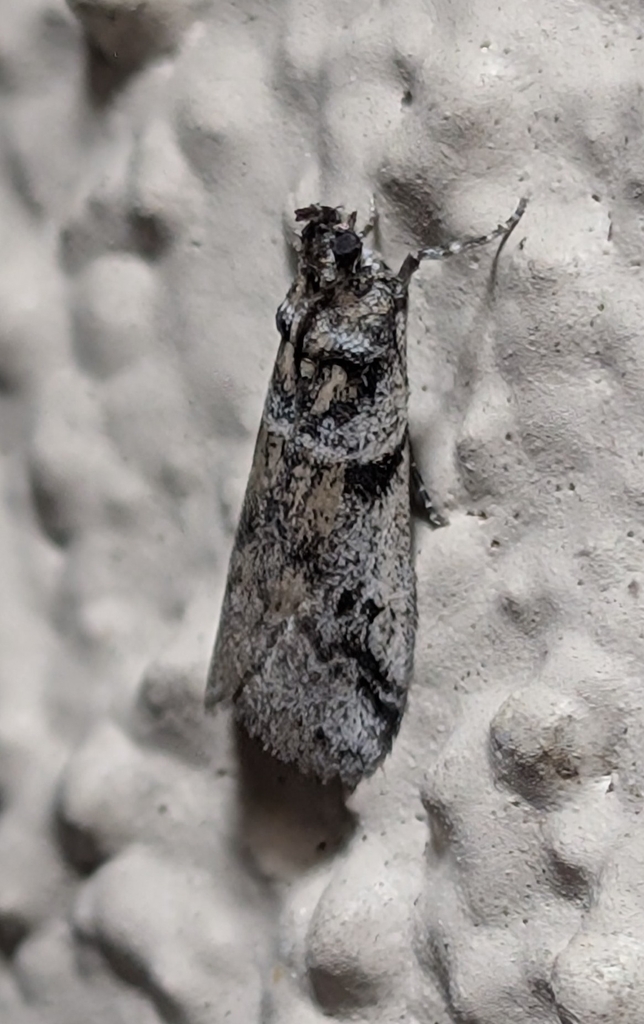
(c) Tom and T Herman, some rights reserved (CC BY) · licence
Family: Pyralidae · Class: Insecta · Order: Lepidoptera
Laetilia dilatifasciella is a California animal in the Pyralidae family.
Laetilia dilatifasciella is a small pyralid moth in the family Pyralidae, subfamily Phycitinae. This species belongs to a genus of moths commonly known as seed moths or flour moths, many of which are associated with stored products or plant seeds. Adult moths typically measure 8 to 12 millimeters in wingspan, displaying the characteristic narrow forewings and broader hindwings common to the Pyralidae family. The forewings are generally pale brown to grayish-brown with darker fasciae or bands across the wing surface, though specific wing pattern details for this species require further documentation. The hindwings are typically lighter in coloration, often whitish or pale gray. Like other pyralid moths, adults have relatively long, thread-like antennae and palpi that project forward from the head. The range and distribution of Laetilia dilatifasciella in California remains poorly documented in current literature. Members of the genus Laetilia are found throughout North America, with several species recorded from western states. However, specific locality records and distributional data for L. dilatifasciella in California require additional survey work and taxonomic verification. The species may occur in multiple biogeographic regions of the state, but confirmed presence data is limited. Habitat preferences for Laetilia dilatifasciella are not well-established, though other members of the genus typically inhabit areas where their host plants occur. Many Laetilia species are associated with various plant families, particularly those producing seeds or fruits that serve as larval food sources. The species likely occupies habitats ranging from natural plant communities to disturbed areas where suitable host plants grow. Elevation range and specific microhabitat requirements remain undocumented. The life cycle of Laetilia dilatifasciella follows the typical lepidopteran pattern of egg, larva, pupa, and adult stages. Larvae are presumed to be seed feeders or may develop within plant material, consistent with other species in the genus. Some Laetilia species are known to feed on seeds of composites, legumes, or other plant families. Adult flight periods, mating behavior, and reproductive cycles have not been specifically documented for this species. Like most pyralid moths, adults are likely nocturnal and attracted to artificial lights. The conservation status of Laetilia dilatifasciella is currently unknown, as the species lacks formal assessment by state or federal agencies. No specific population data, trend information, or threat assessments are available in current literature. The species is not listed under the federal Endangered Species Act or California Endangered Species Act. Given the general lack of biological and ecological information, conservation needs cannot be adequately assessed. Further taxonomic work, including verification of species validity and distinction from closely related taxa, may be necessary. Basic biological studies documenting distribution, host plant associations, and life history would provide essential information for future conservation planning. The species may face similar threats to other native moths, including habitat loss, pesticide use, and light pollution, but specific impacts remain unassessed.
Classification
Class: Insecta · Order: Lepidoptera · Family: Pyralidae
Frequently asked questions
How is Laetilia dilatifasciella classified?
Laetilia dilatifasciella belongs to class Insecta, order Lepidoptera, family Pyralidae.
What family does Laetilia dilatifasciella belong to?
Laetilia dilatifasciella is in the Pyralidae family.
What is Laetilia dilatifasciella?
Laetilia dilatifasciella is a small pyralid moth in the family Pyralidae, subfamily Phycitinae.
Is Laetilia dilatifasciella found in California?
Yes. Laetilia dilatifasciella is recorded in California in The California Species Project's catalogue.
Related species
Other California species in the same genus, family, or bioregion.
Data from The California Species Project — 14,000+ California species with verified data from CNPS, CDFW, USFWS, and more.