Lagenorhynchus obliquidens
Pacific White-sided Dolphin
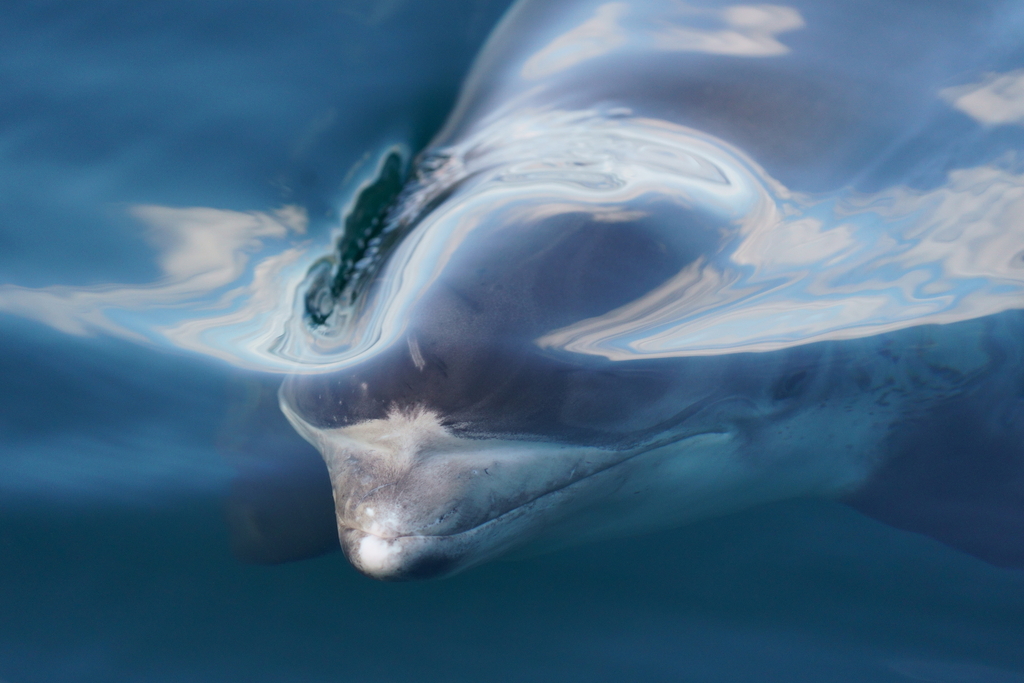
(c) Mikael Nyman, some rights reserved (CC BY) · licence
Family: Delphinidae · Class: Mammalia · Order: Artiodactyla
Lagenorhynchus obliquidens (Pacific White-sided Dolphin) is a California animal in the Delphinidae family.
The Pacific white-sided dolphin is a robust, medium-sized cetacean measuring 1.7 to 2.5 meters (5.6 to 8.2 feet) in length and weighing 75 to 200 kilograms (165 to 440 pounds). The species exhibits distinctive tricolored patterns with a dark gray to black dorsal surface, lighter gray flanks, and white ventral coloration. A prominent pale gray stripe extends from the eye to below the dorsal fin, while white patches mark the flanks behind the dorsal fin. The dorsal fin is tall, falcate, and positioned at mid-body. Adults possess 23 to 36 small, conical teeth in each jaw quadrant, adapted for grasping small prey. Pacific white-sided dolphins inhabit the cool temperate and subarctic waters of the North Pacific Ocean. Their range extends from the Sea of Japan and Kuril Islands in the west to the coast of Baja California, Mexico in the east. Along the California coast, the species occurs year-round in offshore and nearshore waters, with seasonal movements related to prey availability and oceanographic conditions. Population estimates suggest approximately 26,000 individuals in California waters, with the total North Pacific population estimated at 900,000 to one million animals. The species typically inhabits continental shelf and slope waters at depths ranging from 100 to 2,000 meters (328 to 6,562 feet), though they occasionally venture into shallower coastal areas. Pacific white-sided dolphins prefer waters with temperatures between 8 and 19 degrees Celsius (46 to 66 degrees Fahrenheit) and are often associated with upwelling zones and areas of high productivity. They demonstrate seasonal distribution patterns, moving closer to shore during summer months when prey concentrations increase. Pacific white-sided dolphins are highly social animals, forming groups ranging from 10 to 100 individuals, though super-pods of several thousand have been documented. They exhibit cooperative feeding behaviors, often associating with other marine mammals including Risso's dolphins, northern right whale dolphins, and California sea lions. The species feeds primarily on small schooling fish such as anchovies, sardines, and herring, as well as squid and krill. Foraging typically occurs at depths of 25 to 250 meters (82 to 820 feet), with dives lasting one to six minutes. Reproduction occurs through polygynous mating systems, with females reaching sexual maturity at 8 to 11 years and males at 10 to 15 years. Gestation lasts approximately 10 to 12 months, with calving intervals of two to three years. Peak calving occurs from May through September. Mothers nurse calves for 18 to 24 months, maintaining close maternal bonds during this period. Pacific white-sided dolphins are not federally listed under the Endangered Species Act and are not designated as a species of special concern in California. However, the species faces threats from fisheries interactions, particularly gillnet entanglement, ship strikes, pollution including marine debris and chemical contaminants, and climate change impacts on prey distribution. The Marine Mammal Protection Act provides federal protection, prohibiting harassment, capture, or killing without permits.
Classification
Class: Mammalia · Order: Artiodactyla · Family: Delphinidae
Frequently asked questions
How is Lagenorhynchus obliquidens classified?
Lagenorhynchus obliquidens belongs to class Mammalia, order Artiodactyla, family Delphinidae.
What family does Lagenorhynchus obliquidens belong to?
Lagenorhynchus obliquidens is in the Delphinidae family.
What is Lagenorhynchus obliquidens?
The Pacific white-sided dolphin is a robust, medium-sized cetacean measuring 1.7 to 2.5 meters (5.6 to 8.2 feet) in length and weighing 75 to 200 kilograms (165 to 440 pounds).
Is Lagenorhynchus obliquidens found in California?
Yes. Lagenorhynchus obliquidens is recorded in California in The California Species Project's catalogue.
Related species
Other California species in the same genus, family, or bioregion.
Data from The California Species Project — 14,000+ California species with verified data from CNPS, CDFW, USFWS, and more.