Lampetra richardsoni
Western brook lamprey
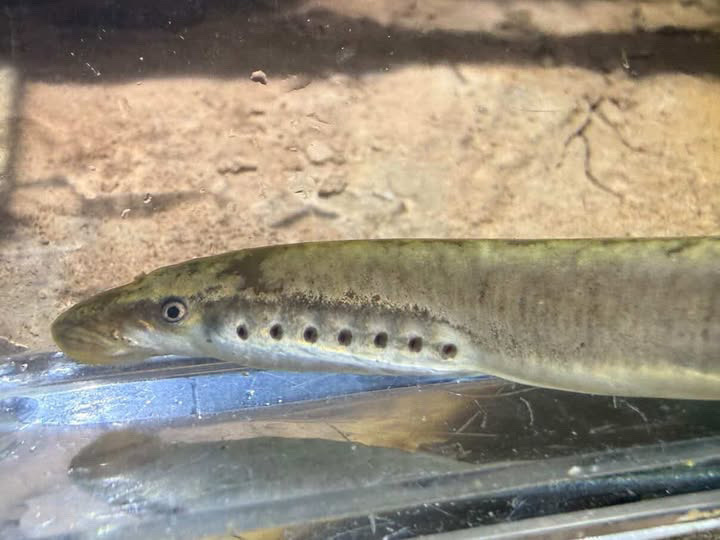
(c) Nick Tobler (Cowturtle), some rights reserved (CC BY) · licence
Family: Petromyzontidae · Class: Cephalaspidomorphi · Order: Petromyzontiformes
Lampetra richardsoni (Western brook lamprey) is a California animal in the Petromyzontidae family.
The western brook lamprey is a small, eel-like fish species belonging to the ancient family Petromyzontidae. Adults measure 120 to 180 mm (4.7 to 7.1 inches) in total length, with a slender, cylindrical body that lacks paired fins. The species displays a mottled brown to olive coloration on the dorsal surface, fading to yellowish-white on the ventral side. Unlike parasitic lamprey species, adult western brook lampreys possess a non-functional, toothless oral disc and do not feed during their brief adult stage. The western brook lamprey occurs throughout the Pacific Northwest, ranging from southeastern Alaska south to central California. In California, populations are documented in coastal watersheds from the Klamath River system south to the Russian River in Sonoma County. The species is also present in select tributaries of the Sacramento River system, including streams in Shasta, Tehama, and Butte counties. Historically, the range may have extended further south, but habitat modifications have likely reduced distribution. This species inhabits clear, cool streams and small rivers with gravel and sand substrates. Western brook lampreys prefer areas with moderate to swift current velocity and high dissolved oxygen levels. Water temperatures typically range from 8 to 18 degrees Celsius (46 to 64 degrees Fahrenheit). The species requires specific substrate conditions for larval development, favoring fine sediments and organic matter in depositional areas such as stream margins and backwaters. Elevation ranges from sea level to approximately 1,500 meters (4,920 feet) in mountainous regions. Western brook lampreys exhibit a complex life cycle consisting of distinct larval and adult phases. Larvae, known as ammocoetes, burrow into soft sediments where they filter-feed on organic detritus, algae, and microscopic organisms for three to seven years. During metamorphosis, typically occurring in late summer or fall, ammocoetes develop adult characteristics including functional eyes and reproductive organs. Adults spawn in spring, constructing shallow nests in gravel substrates where females deposit 1,000 to 2,000 eggs. Males fertilize eggs externally, and both sexes die shortly after spawning. The species demonstrates high site fidelity, with adults typically spawning in natal streams. Currently, the western brook lamprey holds no federal or state conservation listing status in California. However, populations face mounting pressures from habitat degradation, water diversions, and sedimentation resulting from logging and agricultural practices. Dam construction has fragmented many watersheds, blocking access to spawning and rearing habitats. Climate change poses additional threats through altered precipitation patterns and increased water temperatures. Water quality degradation from urban runoff and agricultural pollutants further compromises habitat suitability. Despite these challenges, the species maintains stable populations in protected watersheds and areas with minimal human disturbance. Monitoring efforts focus on assessing population trends and habitat quality in key watersheds throughout the California portion of its range.
Classification
Class: Cephalaspidomorphi · Order: Petromyzontiformes · Family: Petromyzontidae
Frequently asked questions
How is Lampetra richardsoni classified?
Lampetra richardsoni belongs to class Cephalaspidomorphi, order Petromyzontiformes, family Petromyzontidae.
What family does Lampetra richardsoni belong to?
Lampetra richardsoni is in the Petromyzontidae family.
What is Lampetra richardsoni?
The western brook lamprey is a small, eel-like fish species belonging to the ancient family Petromyzontidae.
Is Lampetra richardsoni found in California?
Yes. Lampetra richardsoni is recorded in California in The California Species Project's catalogue.
Related species
Other California species in the same genus, family, or bioregion.
Data from The California Species Project — 14,000+ California species with verified data from CNPS, CDFW, USFWS, and more.