Lampropeltis californiae
California Kingsnake
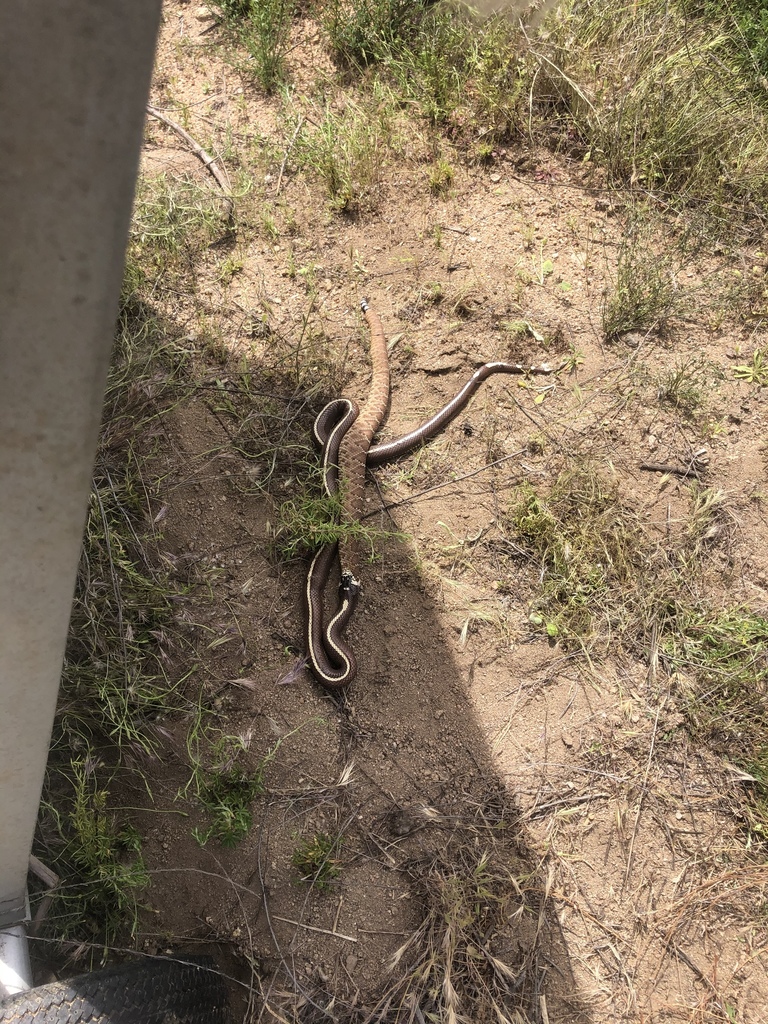
(c) Amy Huie, some rights reserved (CC BY) · licence
Family: Colubridae · Class: Reptilia · Order: Squamata
Lampropeltis californiae (California Kingsnake) is a California animal in the Colubridae family.
The California kingsnake is a medium-sized constrictor measuring 91 to 107 centimeters (36 to 42 inches) in total length, with some individuals reaching up to 152 centimeters (60 inches). The species exhibits considerable color variation, with the most common pattern consisting of alternating black and white or cream-colored bands encircling the body. Some populations display longitudinal stripes running the length of the body, while others show a combination of banded and striped patterns. The head is relatively small and only slightly distinct from the neck, with smooth, shiny scales covering the entire body. California kingsnakes occur throughout California from sea level to approximately 2,100 meters (6,900 feet) elevation. The species ranges from Baja California, Mexico, northward through California into southern Oregon, and eastward into Nevada, Utah, and Arizona. Within California, they inhabit diverse ecosystems from coastal chaparral and oak woodlands to desert regions, mountain forests, and agricultural areas. They are found in all biogeographic regions of the state except the highest elevations of the Sierra Nevada and Cascade ranges. This adaptable species occupies a wide variety of habitats including chaparral, oak and pine woodlands, grasslands, desert scrub, riparian zones, and suburban areas. California kingsnakes utilize rock outcrops, fallen logs, abandoned burrows, and human structures for shelter. They are equally comfortable in arid desert environments and mesic coastal areas, demonstrating considerable ecological adaptability. The species shows preference for areas with adequate cover and proximity to water sources. California kingsnakes are primarily terrestrial but capable climbers and occasional swimmers. They are active during daylight hours in cooler months and shift to crepuscular or nocturnal activity during hot summer periods. As constrictors, they subdue prey by coiling around it and restricting breathing. Their diet consists primarily of rodents, birds, eggs, lizards, and other snakes, including venomous species such as rattlesnakes. The species is immune to pit viper venom, making it an important predator of rattlesnakes. Mating occurs from March through June, with females laying 3 to 24 leathery eggs in summer. Eggs incubate for 40 to 65 days, with hatchlings measuring 20 to 30 centimeters (8 to 12 inches) at emergence. The California kingsnake is not federally or state listed and maintains stable populations throughout most of its range. The species benefits from habitat diversity and adapts well to human-modified environments, including agricultural areas and suburban developments. Primary threats include habitat fragmentation, vehicle mortality on roads, and collection for the pet trade, though these impacts do not appear to significantly affect overall population stability. Climate change may alter suitable habitat distribution, particularly at elevational extremes, but the species' adaptability suggests resilience to moderate environmental changes.
Classification
Class: Reptilia · Order: Squamata · Family: Colubridae
Frequently asked questions
How is Lampropeltis californiae classified?
Lampropeltis californiae belongs to class Reptilia, order Squamata, family Colubridae.
What family does Lampropeltis californiae belong to?
Lampropeltis californiae is in the Colubridae family.
What is Lampropeltis californiae?
The California kingsnake is a medium-sized constrictor measuring 91 to 107 centimeters (36 to 42 inches) in total length, with some individuals reaching up to 152 centimeters (60 inches).
Is Lampropeltis californiae found in California?
Yes. Lampropeltis californiae is recorded in California in The California Species Project's catalogue.
Related species
Other California species in the same genus, family, or bioregion.
Data from The California Species Project — 14,000+ California species with verified data from CNPS, CDFW, USFWS, and more.