Lampropeltis zonata ssp. (pulchra)
California mountain kingsnake (San Diego population)
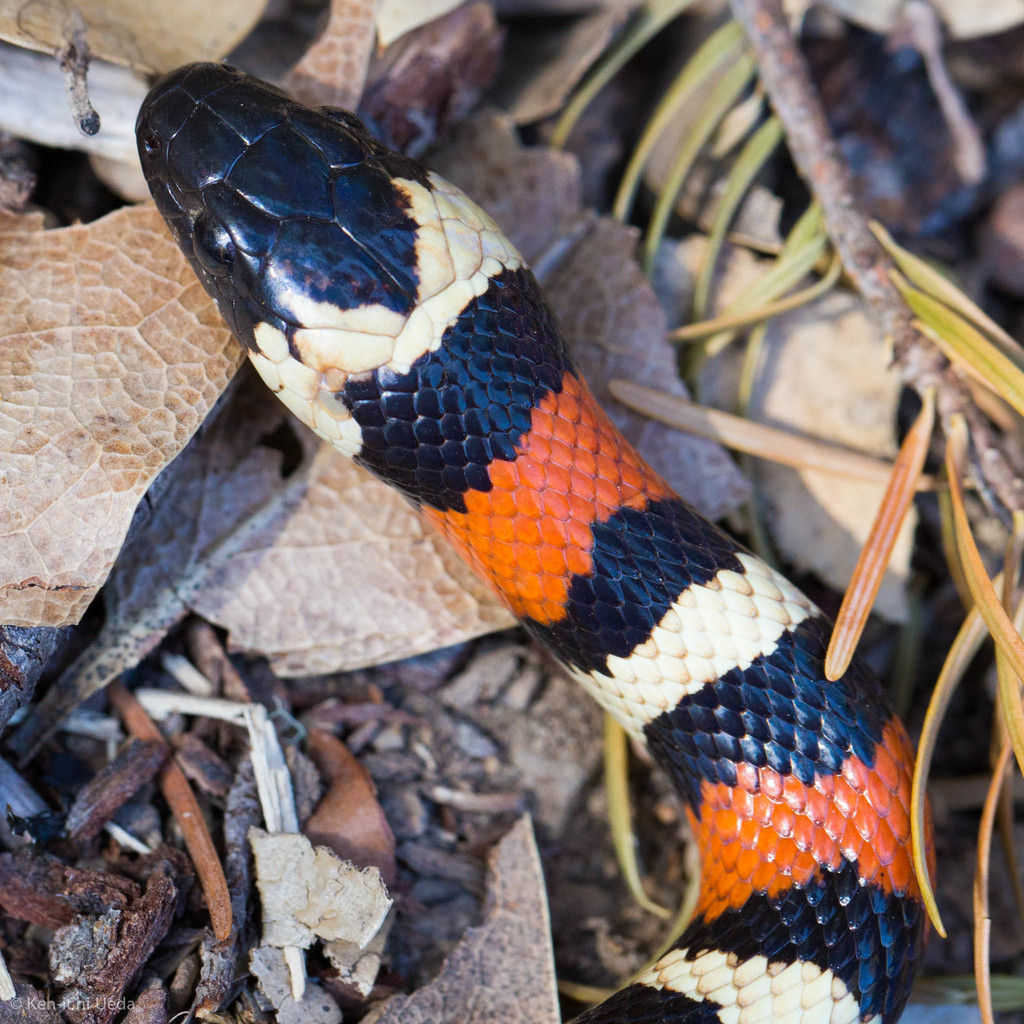
(c) Ken-ichi Ueda, some rights reserved (CC BY) · licence
Family: Colubridae · Class: Reptilia · Order: Squamata
Conservation status: WL · G4G5 S1S2
Lampropeltis zonata ssp. (pulchra) (California mountain kingsnake (San Diego population)) is a California animal in the Colubridae family.
The California mountain kingsnake (San Diego population) is a medium-sized, non-venomous snake distinguished by its distinctive banding pattern of alternating red, black, and white or cream-colored rings that encircle the body. Adults typically measure 61 to 102 centimeters (24 to 40 inches) in total length, with a maximum recorded length of 122 centimeters (48 inches). The red bands are bordered by black bands, which distinguishes this species from the venomous coral snake found in other regions. The head is relatively small and black, often with white or cream markings on the snout and throat. Juveniles display the same color pattern as adults but with more vibrant coloration. Historically, the San Diego population of the California mountain kingsnake occurred throughout the mountains of San Diego County, including the Peninsular Ranges. The current range is significantly reduced and fragmented, with populations documented in the Laguna, Cuyamaca, and Palomar mountain ranges. Elevation ranges from approximately 915 to 2,135 meters (3,000 to 7,000 feet) in suitable habitat. The species' range has contracted due to habitat loss and fragmentation, with many historical localities no longer supporting populations. This subspecies inhabits mixed coniferous forests, oak woodlands, and chaparral communities at higher elevations. Preferred microhabitats include areas with fallen logs, rock outcrops, and dense vegetation that provide cover and hunting opportunities. The species shows a strong association with riparian zones and areas near permanent or seasonal water sources. Rocky slopes and talus fields are particularly important as they provide thermoregulatory sites and prey habitat. California mountain kingsnakes are primarily ophiophagous, meaning they specialize in eating other snakes, including venomous species such as rattlesnakes. Their diet also includes lizards, small mammals, birds, and occasionally amphibians. They are constrictors, killing prey by coiling around them and applying pressure. Breeding occurs in late spring to early summer, with females laying 3 to 9 eggs in rotting logs, leaf litter, or underground burrows. Eggs incubate for 65 to 75 days, with hatchlings emerging in late summer or early fall. The species is secretive and primarily crepuscular to nocturnal in activity, though they may be active during cooler daylight hours. The San Diego population is designated as a California Department of Fish and Wildlife Watch List species with a state rank of S1S2, indicating it is critically imperiled to imperiled in California. Population trends suggest continued decline due to habitat loss from urban development, fire suppression leading to altered vegetation communities, and habitat fragmentation. Climate change poses additional threats through altered precipitation patterns and increased fire frequency. The small, isolated nature of remaining populations makes them particularly vulnerable to local extinctions. Conservation efforts focus on habitat protection, fire management that maintains natural fire cycles, and monitoring of known populations to assess population trends and habitat quality.
Classification
Class: Reptilia · Order: Squamata · Family: Colubridae
Conservation status
WL · G4G5 S1S2
Frequently asked questions
How is Lampropeltis zonata ssp. (pulchra) classified?
Lampropeltis zonata ssp. (pulchra) belongs to class Reptilia, order Squamata, family Colubridae.
What family does Lampropeltis zonata ssp. (pulchra) belong to?
Lampropeltis zonata ssp. (pulchra) is in the Colubridae family.
Is Lampropeltis zonata ssp. (pulchra) protected or of conservation concern?
Lampropeltis zonata ssp. (pulchra) carries the following status: WL · G4G5 S1S2.
What is Lampropeltis zonata ssp. (pulchra)?
The California mountain kingsnake (San Diego population) is a medium-sized, non-venomous snake distinguished by its distinctive banding pattern of alternating red, black, and white or cream-colored rings that encircle the body.
Is Lampropeltis zonata ssp. (pulchra) found in California?
Yes. Lampropeltis zonata ssp. (pulchra) is recorded in California in The California Species Project's catalogue.
Related species
Other California species in the same genus, family, or bioregion.
Data from The California Species Project — 14,000+ California species with verified data from CNPS, CDFW, USFWS, and more.