Lanius cristatus
Brown Shrike
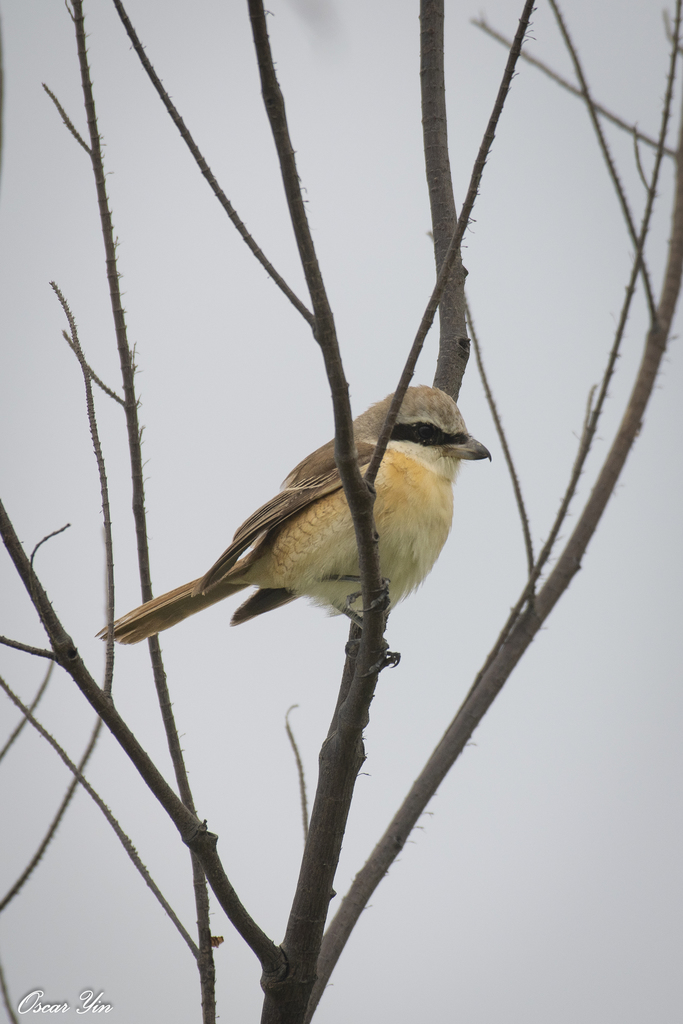
(c) 尹若宇, some rights reserved (CC BY-SA) · licence
Family: Laniidae · Class: Aves · Order: Passeriformes
Lanius cristatus (Brown Shrike) is a California animal in the Laniidae family.
The Brown Shrike is a medium-sized passerine bird measuring 17 to 19 centimeters (6.7 to 7.5 inches) in length with a wingspan of 24 to 27 centimeters (9.4 to 10.6 inches). Adults weigh between 25 to 35 grams (0.9 to 1.2 ounces). The species exhibits sexual dimorphism in plumage. Males display rufous-brown upperparts with a distinctive black mask extending from the bill through the eye to the ear coverts. The underparts are whitish with fine dark barring on the flanks. Females are similar but generally duller with less pronounced facial markings. Both sexes possess a moderately hooked bill typical of shrikes and relatively long tails with white outer tail feathers visible in flight. The Brown Shrike breeds across northern Asia from eastern Siberia through Mongolia, northeastern China, and the Korean Peninsula to northern Japan. During winter, populations migrate to Southeast Asia, India, and southern China. In California, the Brown Shrike is an extremely rare vagrant, with fewer than ten documented records since the first confirmed sighting in 1984. Most California records occur during fall migration from September through November along the coast, with observations reported from Marin, San Francisco, Monterey, and San Diego counties. This species typically inhabits open woodlands, forest edges, scrublands, and agricultural areas with scattered trees or bushes during breeding season. Brown Shrikes prefer areas with prominent perches for hunting and adequate shrub cover for nesting. In their native range, they occupy elevations from sea level to approximately 1,500 meters (4,900 feet). California vagrant records have occurred in coastal scrub, parks, and suburban areas with suitable perching sites. Brown Shrikes are sit-and-wait predators that hunt from exposed perches. Their diet consists primarily of insects including beetles, grasshoppers, crickets, and moths, supplemented by small vertebrates such as lizards, frogs, and occasionally small birds. Like other shrikes, they exhibit the distinctive behavior of impaling prey on thorns or sharp objects, creating food caches. The species is largely solitary outside the breeding season. Breeding occurs from May through July in their native range, with females constructing cup-shaped nests in dense shrubs or small trees. Clutch size ranges from four to six eggs, with an incubation period of 14 to 16 days. The Brown Shrike is not federally or state listed in California due to its status as a vagrant species rather than a resident or regular migrant. Globally, the International Union for Conservation of Nature classifies the species as Least Concern, with stable populations across most of its breeding range. However, some regional populations face pressure from habitat loss due to agricultural intensification and urban development. Climate change may affect migration patterns and wintering grounds, potentially influencing the frequency of vagrant occurrences in North America. Conservation efforts in California focus on monitoring and documenting rare bird occurrences to better understand vagrancy patterns and potential range shifts.
Classification
Class: Aves · Order: Passeriformes · Family: Laniidae
Frequently asked questions
How is Lanius cristatus classified?
Lanius cristatus belongs to class Aves, order Passeriformes, family Laniidae.
What family does Lanius cristatus belong to?
Lanius cristatus is in the Laniidae family.
What is Lanius cristatus?
The Brown Shrike is a medium-sized passerine bird measuring 17 to 19 centimeters (6.7 to 7.5 inches) in length with a wingspan of 24 to 27 centimeters (9.4 to 10.6 inches).
Is Lanius cristatus found in California?
Yes. Lanius cristatus is recorded in California in The California Species Project's catalogue.
Related species
Other California species in the same genus, family, or bioregion.
Data from The California Species Project — 14,000+ California species with verified data from CNPS, CDFW, USFWS, and more.