Lanius ludovicianus anthonyi
Island Loggerhead Shrike
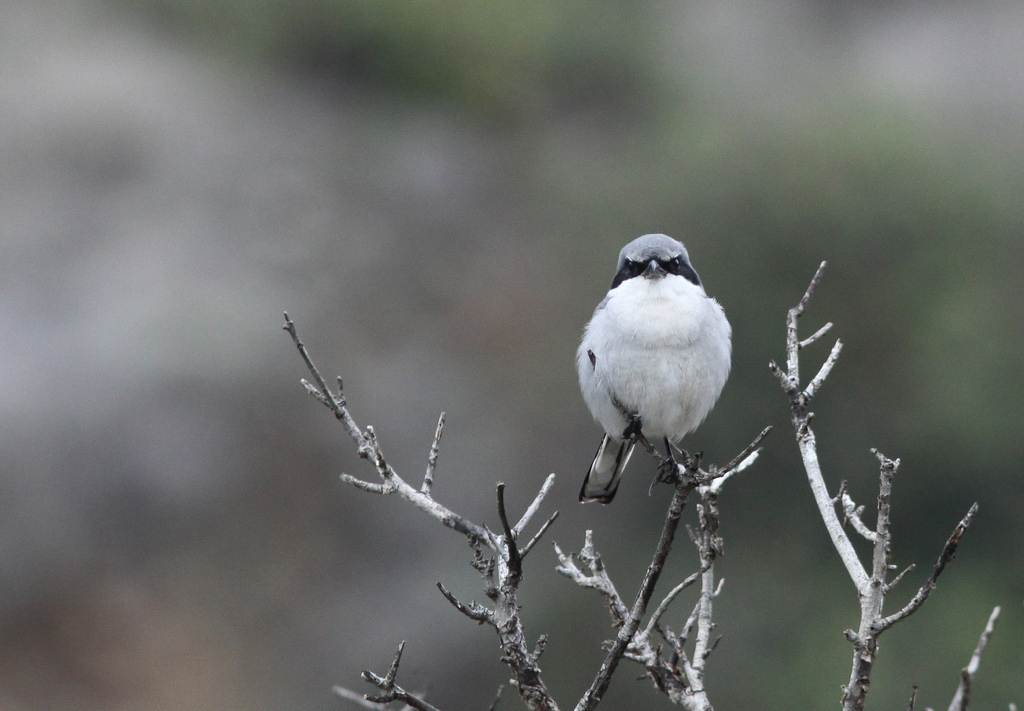
(c) Adam J. Searcy, some rights reserved (CC BY) · licence
Family: Laniidae · Class: Aves · Order: Passeriformes
Conservation status: G4T1 S1
Lanius ludovicianus anthonyi (Island Loggerhead Shrike) is a California animal in the Laniidae family.
The Island loggerhead shrike is a critically endangered subspecies of loggerhead shrike endemic to California's Channel Islands. Adults measure approximately 20-25 cm (8-10 inches) in length with a distinctive hooked bill adapted for their predatory lifestyle. They display the characteristic shrike coloration of gray upperparts, white underparts, and a prominent black mask extending from the bill through the eye. The species exhibits sexual dimorphism, with males typically larger and more boldly marked than females. Historically, the Island loggerhead shrike was found on multiple California Channel Islands, but current populations are restricted to San Clemente Island. The subspecies has experienced severe range contraction, with extirpations from other Channel Islands documented in recent decades. San Clemente Island, located approximately 100 km southwest of San Diego, now represents the sole remaining habitat for this subspecies. The species inhabits xeric environments throughout San Clemente Island, including maritime desert scrub and woodland habitats (USFWS Species Profile). They prefer open areas with scattered shrubs and trees that provide suitable perches for hunting and nesting. The island's unique Mediterranean climate and isolated geography have shaped the subspecies' ecological adaptations over thousands of years. Island loggerhead shrikes are sit-and-wait predators that hunt from conspicuous perches, swooping down to capture prey including insects, small reptiles, and occasionally small birds and mammals. They are known for their behavior of impaling prey on thorns or barbed wire, earning them the nickname "butcher birds." Breeding typically occurs from February through July, with pairs constructing cup-shaped nests in dense shrubs or low trees. Females lay 4-6 eggs, with both parents participating in incubation and chick rearing. The U.S. Fish and Wildlife Service listed the Island loggerhead shrike as endangered on October 18, 2006 (USFWS ECOS Database). The subspecies faces critical conservation challenges with a global ranking of G4T1, indicating it is critically imperiled. Primary threats include habitat degradation, predation by introduced species such as feral cats and black rats, and the subspecies' extremely limited range making it vulnerable to catastrophic events. According to recovery planning documents, non-native predators are considered a primary cause of mortality despite ongoing removal efforts. Recovery efforts focus on habitat restoration, predator control, and population monitoring on San Clemente Island. The species' recovery depends on maintaining sufficient habitat to support viable self-sustaining populations while ensuring long-term habitat management. Current population estimates remain critically low, emphasizing the urgent need for continued conservation intervention to prevent extinction of this unique island endemic.
Classification
Class: Aves · Order: Passeriformes · Family: Laniidae
Conservation status
G4T1 S1
Frequently asked questions
How is Lanius ludovicianus anthonyi classified?
Lanius ludovicianus anthonyi belongs to class Aves, order Passeriformes, family Laniidae.
What family does Lanius ludovicianus anthonyi belong to?
Lanius ludovicianus anthonyi is in the Laniidae family.
Is Lanius ludovicianus anthonyi protected or of conservation concern?
Lanius ludovicianus anthonyi carries the following status: G4T1 S1.
What is Lanius ludovicianus anthonyi?
The Island loggerhead shrike is a critically endangered subspecies of loggerhead shrike endemic to California's Channel Islands.
Is Lanius ludovicianus anthonyi found in California?
Yes. Lanius ludovicianus anthonyi is recorded in California in The California Species Project's catalogue.
Related species
Other California species in the same genus, family, or bioregion.
Data from The California Species Project — 14,000+ California species with verified data from CNPS, CDFW, USFWS, and more.