Lanius ludovicianus mearnsi
San Clemente loggerhead shrike
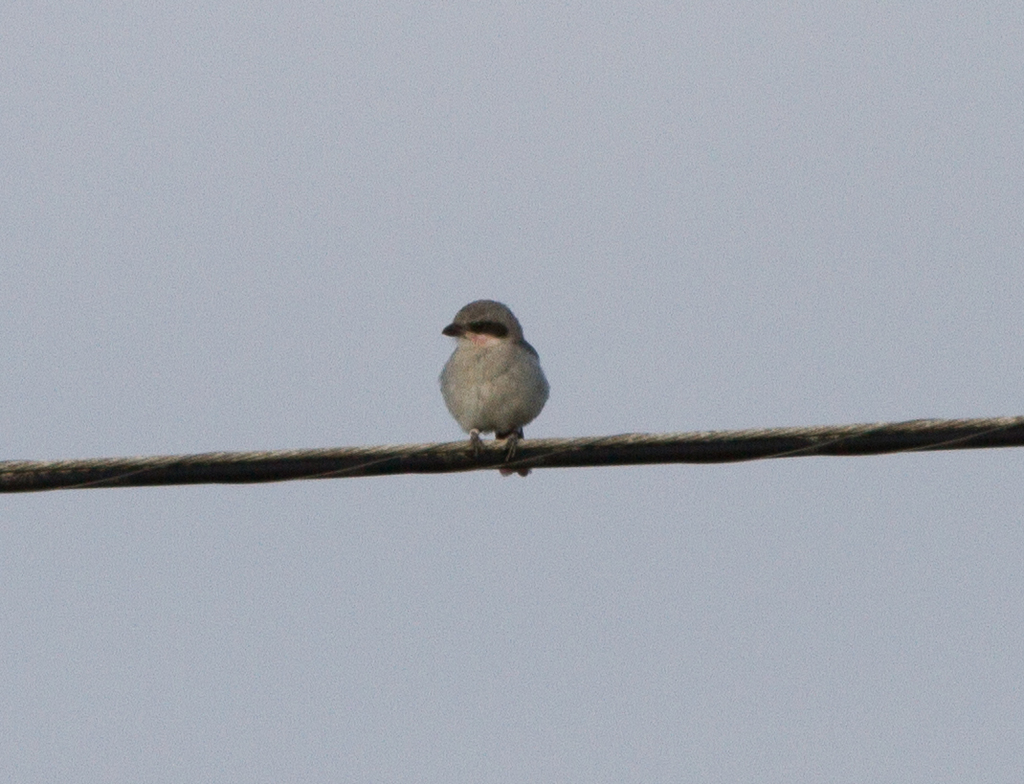
(c) Adam J. Searcy, some rights reserved (CC BY) · licence
Family: Laniidae · Class: Aves · Order: Passeriformes
Conservation status: Endangered · G4T1Q S2
Lanius ludovicianus mearnsi (San Clemente loggerhead shrike) is a California animal in the Laniidae family.
The San Clemente loggerhead shrike is a subspecies of the loggerhead shrike endemic to San Clemente Island, California. This medium-sized predatory bird measures approximately 20-25 cm (8-10 inches) in length with a distinctive black mask extending from the bill through the eyes. The species exhibits typical shrike plumage with gray upperparts, white underparts, and black wings marked by white patches visible in flight. Like other shrikes, it possesses a prominently hooked mandible with a tomial tooth adapted for its predatory lifestyle. Historically and currently, the San Clemente loggerhead shrike is restricted entirely to San Clemente Island, located approximately 100 kilometers (62 miles) west of San Diego in the California Channel Islands. This represents the most geographically limited distribution of any loggerhead shrike subspecies in North America. The subspecies was first described by Ridgway and has remained isolated on this 147-square-kilometer island throughout its known existence. The species inhabits xeric habitats throughout San Clemente Island, including maritime desert scrub and canyon woodlands (USFWS). According to recovery planning documents, the subspecies is distributed primarily within the southern two-thirds of the island along canyons that support canyon woodland vegetation. These habitats provide the open perching sites and thorny vegetation essential for the shrike's hunting and food-caching behaviors. San Clemente loggerhead shrikes are territorial predators that feed on insects, small mammals, birds, lizards, and amphibians. True to their common name "butcherbird," they impale prey on thorny vegetation or barbed surfaces to create food caches, a behavior that distinguishes shrikes from other passerines. Breeding biology follows the general pattern of mainland loggerhead shrikes, with pairs establishing territories during the breeding season and constructing cup nests in shrubs or small trees. The San Clemente loggerhead shrike has been federally listed as Endangered since September 12, 1977, making it one of the longest-listed bird subspecies in California. The subspecies faces unique conservation challenges due to its extremely limited range and small population size. Historical habitat degradation from introduced ungulates, particularly goats and pigs, significantly impacted the island's native vegetation communities. Recovery efforts have focused on habitat restoration following the removal of feral ungulates from San Clemente Island by the U.S. Navy, which manages the island as a military installation. Recent recovery reports indicate the population has remained relatively stable in recent years, though exact population estimates vary. The species' persistence depends entirely on maintaining suitable habitat on San Clemente Island and preventing the introduction of new threats such as invasive species or diseases. The U.S. Fish and Wildlife Service developed a recovery plan for the subspecies in 1984, with ongoing monitoring and adaptive management guided by the U.S. Navy's natural resources program. Climate change poses emerging challenges through potential shifts in island vegetation communities and extreme weather events that could impact this geographically restricted population.
Classification
Class: Aves · Order: Passeriformes · Family: Laniidae
Conservation status
Endangered · G4T1Q S2
Frequently asked questions
How is Lanius ludovicianus mearnsi classified?
Lanius ludovicianus mearnsi belongs to class Aves, order Passeriformes, family Laniidae.
What family does Lanius ludovicianus mearnsi belong to?
Lanius ludovicianus mearnsi is in the Laniidae family.
Is Lanius ludovicianus mearnsi protected or of conservation concern?
Lanius ludovicianus mearnsi carries the following status: Endangered · G4T1Q S2.
What is Lanius ludovicianus mearnsi?
The San Clemente loggerhead shrike is a subspecies of the loggerhead shrike endemic to San Clemente Island, California.
Is Lanius ludovicianus mearnsi found in California?
Yes. Lanius ludovicianus mearnsi is recorded in California in The California Species Project's catalogue.
Related species
Other California species in the same genus, family, or bioregion.
Data from The California Species Project — 14,000+ California species with verified data from CNPS, CDFW, USFWS, and more.