Lantanophaga pusillidactyla
Lantana Plume Moth
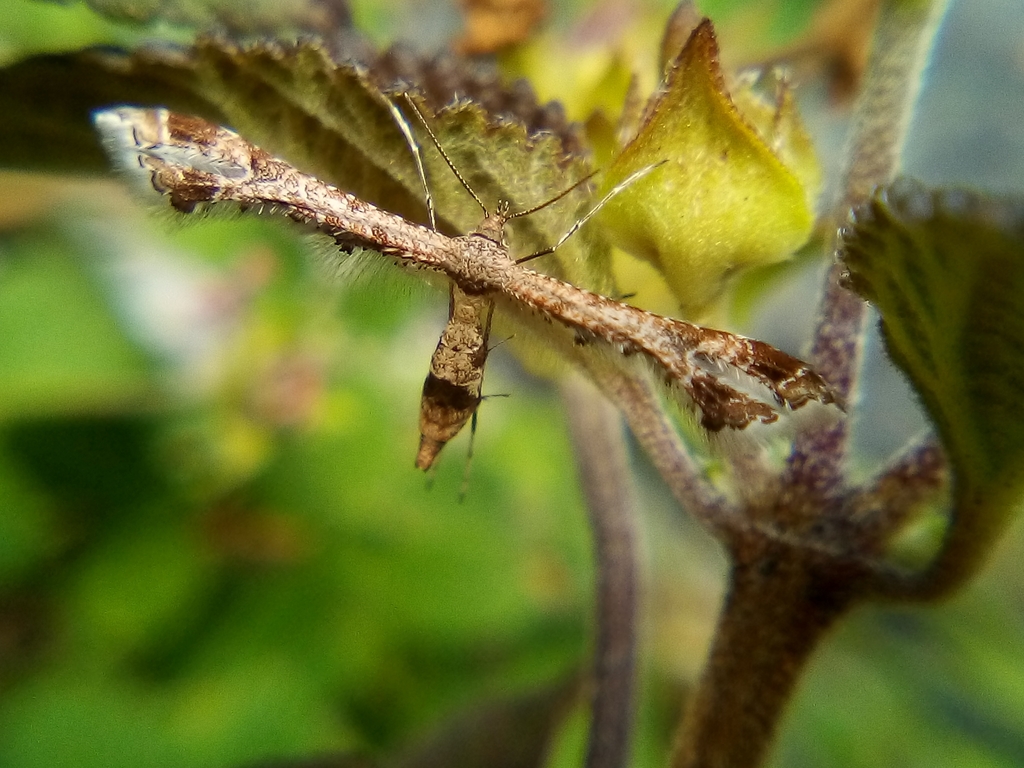
(c) Stephen Thorpe, some rights reserved (CC BY) · licence
Family: Pterophoridae · Class: Insecta · Order: Lepidoptera
Lantanophaga pusillidactyla (Lantana Plume Moth) is a California animal in the Pterophoridae family.
The Lantana Plume Moth (Lantanophaga pusillidactyla) is a small member of the family Pterophoridae, characterized by the distinctive feathery wing structure typical of plume moths. The forewings are divided into two plumes and the hindwings into three, giving the appearance of multiple feathers when at rest. The species displays typical pterophorid morphology with narrow, elongated wings that are held perpendicular to the body when resting. Wingspan measurements and detailed morphological descriptions remain poorly documented in the scientific literature. This species occurs throughout much of North America, with documented records extending from the southern United States through Central America and into the Caribbean. According to BugGuide, the species was originally described by Walker in 1864 from Jamaica (BugGuide 2025). In North America, the species has been recorded across multiple states, though specific distribution patterns within California require further documentation. The species appears to have established populations wherever suitable host plants are available. The Lantana Plume Moth inhabits areas where its host plants occur, typically in disturbed habitats, gardens, and naturalized areas. The species shows a strong association with plants in the families Verbenaceae, Lamiaceae, Euphorbiaceae, and Lentibulariaceae. According to the Moth Photographers Group, documented host genera include Lantana, Lippia, Phyla, Mentha, Caperonia, and Utricularia (Shropshire & Douglas 2025). This broad host range suggests the species can exploit various microhabitats from wetland margins where Utricularia occurs to xeric environments supporting Lantana species. Larval development occurs within the tissues of host plants, with caterpillars typically feeding as leaf miners or stem borers. The species likely completes multiple generations per year in warmer climates, as is typical for many pterophorid moths. Adult flight periods and specific reproductive behaviors have not been well documented. The broad host plant range suggests considerable ecological plasticity, allowing the species to exploit diverse plant communities and potentially expand its range as host plants are introduced to new areas. The conservation status of Lantanophaga pusillidactyla has not been formally assessed. The species appears to be relatively widespread and is not currently listed under state or federal endangered species legislation. The moth's association with both native and introduced plant species, particularly the widely cultivated Lantana, may provide some resilience against habitat loss. However, like many microlepidoptera, population trends and specific conservation needs remain poorly studied. The species serves as a potential biological control agent for invasive Lantana species, though this relationship requires further investigation. Detailed ecological studies of this species are lacking. The above information synthesizes available observations from taxonomic databases and community science platforms. Further research is needed to document flight periods, detailed life history, and population dynamics throughout its range.
Classification
Class: Insecta · Order: Lepidoptera · Family: Pterophoridae
Frequently asked questions
How is Lantanophaga pusillidactyla classified?
Lantanophaga pusillidactyla belongs to class Insecta, order Lepidoptera, family Pterophoridae.
What family does Lantanophaga pusillidactyla belong to?
Lantanophaga pusillidactyla is in the Pterophoridae family.
What is Lantanophaga pusillidactyla?
The Lantana Plume Moth (Lantanophaga pusillidactyla) is a small member of the family Pterophoridae, characterized by the distinctive feathery wing structure typical of plume moths.
Is Lantanophaga pusillidactyla found in California?
Yes. Lantanophaga pusillidactyla is recorded in California in The California Species Project's catalogue.
Related species
Other California species in the same genus, family, or bioregion.
Data from The California Species Project — 14,000+ California species with verified data from CNPS, CDFW, USFWS, and more.