Lanx patelloides
Kneecap Lanx
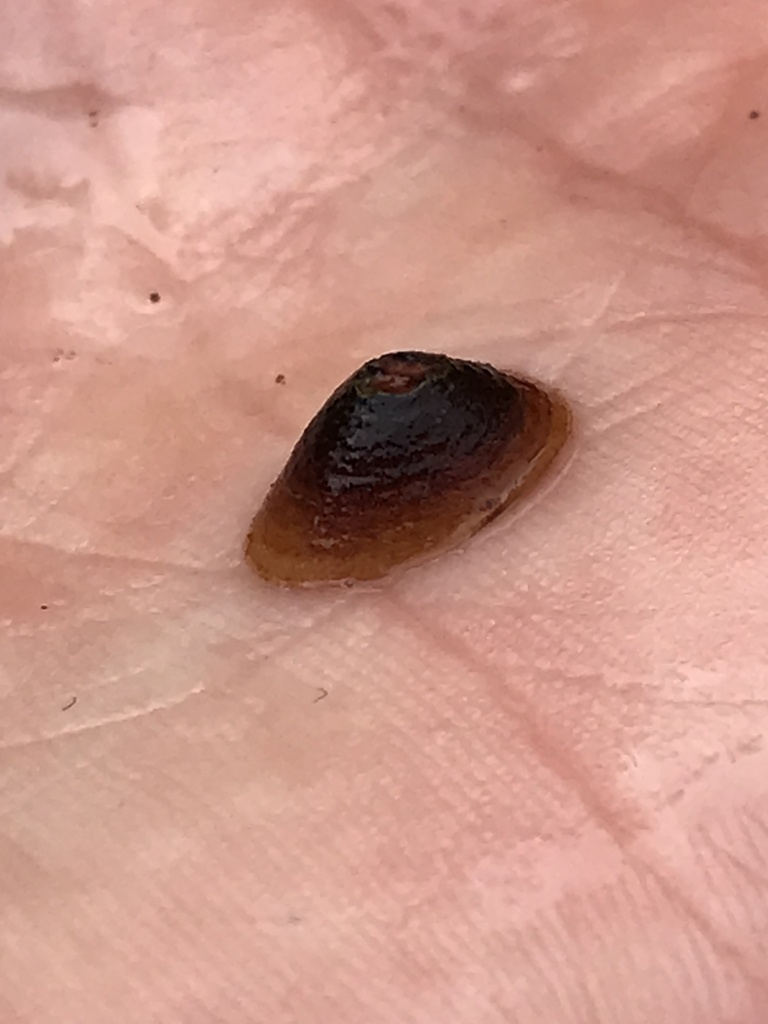
(c) LJ Moore-McClelland, some rights reserved (CC BY) · licence
Family: Lymnaeidae · Class: Gastropoda · Order: Hygrophila
Conservation status: G2? S2
Lanx patelloides (Kneecap Lanx) is a California animal in the Lymnaeidae family.
The kneecap lanx is a freshwater gastropod mollusk in the family Lymnaeidae, subfamily Lancinae. This limpet-like species exhibits the characteristic flattened, conical shell typical of the genus Lanx, though specific morphological details remain poorly documented in the scientific literature. Like other members of the subfamily Lancinae, the kneecap lanx possesses a patelliform (limpet-shaped) shell that allows it to maintain a tight grip on rocky substrates in flowing water. Lanx patelloides occurs in the northwestern United States, where all known species within the subfamily Lancinae are restricted to river and tributary systems ranging from the Sacramento River north to the Kootenai River, a tributary of the Columbia River (USFWS 2023). The species' specific distribution within this broader range has not been comprehensively documented, though it is among the species found in Pacific Northwest river systems. The kneecap lanx inhabits freshwater environments, particularly rocky substrates in rivers and streams where water flow provides adequate oxygenation. Like other Lancinae species, it likely requires specific hydrological conditions including consistent water flow and stable rocky surfaces for attachment. The subfamily's restriction to northwestern river systems suggests adaptation to the region's particular geological and hydrological characteristics, though detailed habitat requirements for L. patelloides specifically remain undocumented. Ecological information for the kneecap lanx is extremely limited. As a gastropod mollusk, it likely feeds by grazing on algae, diatoms, and organic matter adhering to rock surfaces, using its radula to scrape food particles. Reproductive biology, including breeding seasons, egg-laying behavior, and larval development, has not been documented for this species. The species' life history patterns presumably follow those typical of freshwater limpets, with individuals maintaining territories on preferred rock surfaces and reproducing through egg deposition. The conservation status of Lanx patelloides reflects significant uncertainty about the species' current condition. NatureServe assigns it a Global Status of G2?, indicating the species is imperiled globally with 6 to 20 occurrences or few remaining individuals, but with the question mark denoting uncertainty in the ranking (NatureServe 2025). This uncertain status likely reflects limited survey data and taxonomic questions within the genus Lanx. The species does not appear to have federal protection under the Endangered Species Act, unlike the closely related Banbury Springs limpet (now Idaholanx fresti), which was federally listed as endangered in 1992. The primary conservation challenges for northwestern freshwater mollusks include habitat alteration from dam construction, water diversions, pollution, and sedimentation. Climate change may additionally impact stream flow patterns and water temperatures critical to these species' survival. Scientific documentation for Lanx patelloides remains extremely limited, hampering conservation assessment and management efforts. Systematic surveys and taxonomic clarification are needed to better understand this species' distribution, population status, and conservation needs.
Classification
Class: Gastropoda · Order: Hygrophila · Family: Lymnaeidae
Conservation status
G2? S2
Frequently asked questions
How is Lanx patelloides classified?
Lanx patelloides belongs to class Gastropoda, order Hygrophila, family Lymnaeidae.
What family does Lanx patelloides belong to?
Lanx patelloides is in the Lymnaeidae family.
Is Lanx patelloides protected or of conservation concern?
Lanx patelloides carries the following status: G2? S2.
What is Lanx patelloides?
The kneecap lanx is a freshwater gastropod mollusk in the family Lymnaeidae, subfamily Lancinae.
Is Lanx patelloides found in California?
Yes. Lanx patelloides is recorded in California in The California Species Project's catalogue.
Related species
Other California species in the same genus, family, or bioregion.
Data from The California Species Project — 14,000+ California species with verified data from CNPS, CDFW, USFWS, and more.