Laphria franciscana
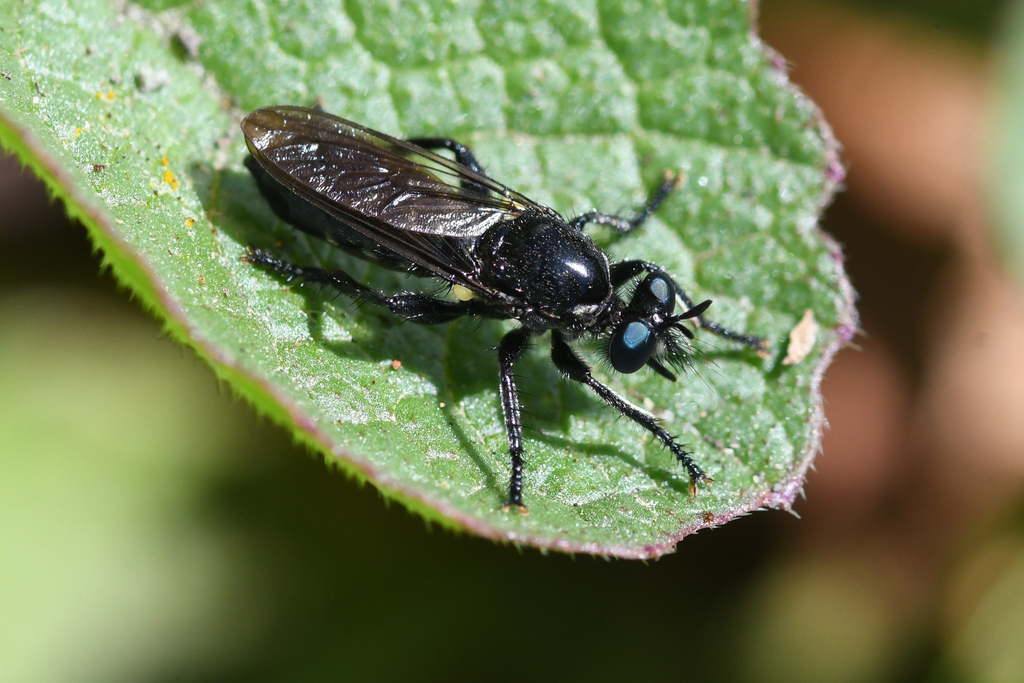
(c) Trevor Van Loon, some rights reserved (CC BY) · licence
Family: Asilidae · Class: Insecta · Order: Diptera
Laphria franciscana is a California animal in the Asilidae family.
Laphria franciscana is a robber fly species in the family Asilidae, known for their predatory behavior and distinctive morphology. Adult robber flies in the genus Laphria are characterized by their robust, densely hairy bodies and prominent proboscis used for piercing and feeding on other insects. These flies typically measure 10-25 millimeters in length, with strong legs adapted for grasping prey and large compound eyes that provide excellent vision for hunting. The thorax is often covered in dense setae, giving many species a bee-like appearance that may serve as protective mimicry. The distribution and range of Laphria franciscana have not been comprehensively documented in available scientific literature. The specific epithet "franciscana" suggests a possible association with the San Francisco Bay Area or broader franciscan geological formations of California, though detailed range maps and occurrence records are not readily available through standard biodiversity databases. This data gap reflects the broader challenge of documenting the full diversity and distribution of California's dipteran fauna. Habitat preferences for this species remain poorly documented. Robber flies in the genus Laphria typically inhabit areas with abundant prey insects, including woodland edges, chaparral, and mixed vegetation communities where they can perch on exposed branches or rocks to ambush passing prey. Many asilid species show preferences for specific elevation ranges and vegetation types, but these parameters have not been established for L. franciscana through available research. Like other robber flies, L. franciscana is presumed to be an aerial predator that captures other flying insects through ambush tactics. Adult asilids perch in conspicuous locations and dart out to capture prey, which they subdue with a proboscis injection of proteolytic enzymes. Prey typically includes flies, bees, wasps, and other soft-bodied insects. Mating behavior likely follows the general asilid pattern of males approaching perched females, with females subsequently laying eggs in soil or organic matter. Larval development occurs in soil where they feed on organic matter and possibly other soil invertebrates. The conservation status of Laphria franciscana is not established through standard wildlife databases or federal listings. This species does not appear on USFWS endangered species lists or California Department of Fish and Wildlife special status species inventories as of December 2025. The apparent lack of recent scientific documentation suggests either extreme rarity, taxonomic uncertainty, or insufficient survey effort for this group. Many California dipteran species remain poorly known due to limited taxonomic expertise and research focus on this diverse insect order. Scientific documentation for this species remains extremely limited despite comprehensive database searches. The information presented here is based on general knowledge of asilid biology and taxonomy. Detailed ecological studies, distribution mapping, and population assessments have not been conducted for this species. We welcome contributions of verified scientific data, photographs, or field observations to enhance this species account.
Classification
Class: Insecta · Order: Diptera · Family: Asilidae
Frequently asked questions
How is Laphria franciscana classified?
Laphria franciscana belongs to class Insecta, order Diptera, family Asilidae.
What family does Laphria franciscana belong to?
Laphria franciscana is in the Asilidae family.
What is Laphria franciscana?
Laphria franciscana is a robber fly species in the family Asilidae, known for their predatory behavior and distinctive morphology.
Is Laphria franciscana found in California?
Yes. Laphria franciscana is recorded in California in The California Species Project's catalogue.
Related species
Other California species in the same genus, family, or bioregion.
Data from The California Species Project — 14,000+ California species with verified data from CNPS, CDFW, USFWS, and more.