Lapposyrphus lapponicus
Common Loopwing Aphideater
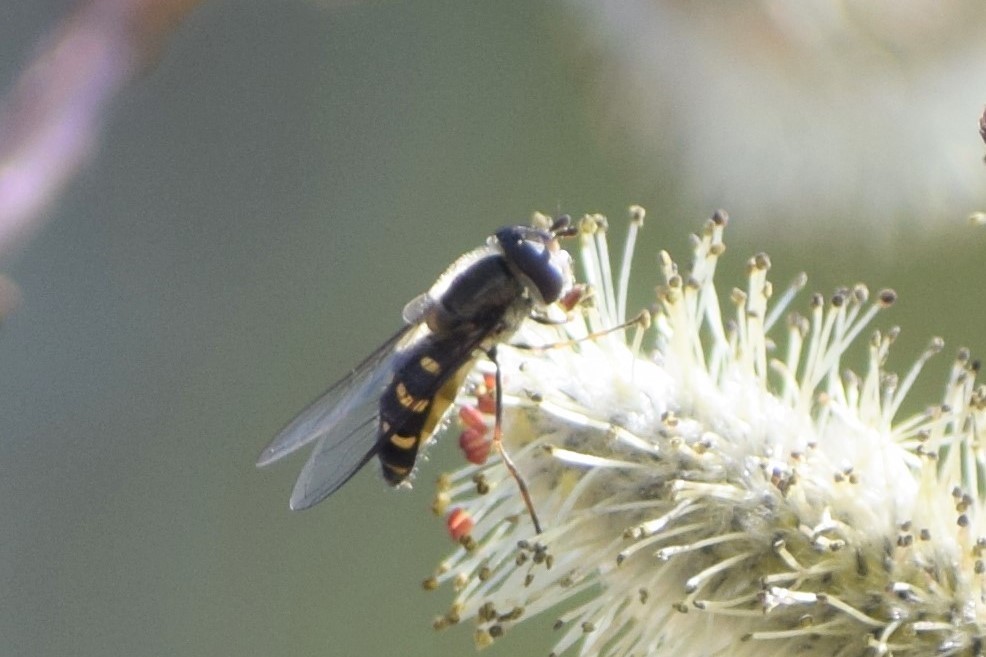
(c) Syd Cannings, some rights reserved (CC BY) · licence
Family: Syrphidae · Class: Insecta · Order: Diptera
Lapposyrphus lapponicus (Common Loopwing Aphideater) is a California animal in the Syrphidae family.
The Common Loopwing Aphideater is a small to medium-sized hover fly measuring approximately 6.4 mm (0.25 inches) in length (BugGuide). This syrphid fly exhibits the characteristic black and yellow coloration typical of many hover flies, with distinctive wing venation that includes an S-shaped vein pattern used for species identification. Sexual dimorphism is present, with males and females showing subtle differences in coloration and body structure. Lapposyrphus lapponicus has a broad distribution across North America, extending from northern regions including Alaska and Canada south through the western United States. In California, the species has been documented in multiple counties including Sacramento County in the Central Valley, where it was photographed in Fair Oaks in November 2018, and Lassen County in the northeastern region, where it was observed at Eagle Lake Recreation Area in June 2021 (BugGuide). The species also occurs in Arizona, with records from Coconino County at elevations around 1,954 meters, and extends east to Nebraska, indicating a wide geographic range across diverse climatic zones. This species inhabits a variety of environments from lowland areas to montane regions. Observations suggest it occurs in both valley floor locations and higher elevation sites, with documented occurrences ranging from Central Valley grasslands to mountain recreation areas. The species appears to be active across different seasons, with California records spanning from June through November, suggesting either an extended flight period or multiple generations per year. As with other syrphid flies, adults are important pollinators, visiting flowers for nectar and pollen. A male was documented pollinating Bebb's Willow (Salix bebbiana) in Arizona, demonstrating their role in plant reproduction (BugGuide). The larvae are aphidophagous, feeding on aphids and other small soft-bodied insects, making them valuable biological control agents in both natural and agricultural systems. The common name "Aphideater" reflects this larval feeding behavior, which provides significant ecological services through natural pest control. Adults exhibit typical hover fly behavior, including hovering flight patterns and rapid darting movements. They are attracted to flowers and can often be observed feeding on nectar during daylight hours. The species appears to be relatively widespread and locally common where suitable habitat exists, based on multiple photographic records across its range. Currently, Lapposyrphus lapponicus has no special conservation status and appears to maintain stable populations across its range. The species demonstrates adaptability to various habitat types and elevations, from valley floors to montane environments. No specific threats have been identified for this species, and its broad distribution and apparent habitat flexibility suggest it is not of immediate conservation concern. However, like many insects, it may face general pressures from habitat loss and climate change affecting pollinator communities throughout its range.
Classification
Class: Insecta · Order: Diptera · Family: Syrphidae
Frequently asked questions
How is Lapposyrphus lapponicus classified?
Lapposyrphus lapponicus belongs to class Insecta, order Diptera, family Syrphidae.
What family does Lapposyrphus lapponicus belong to?
Lapposyrphus lapponicus is in the Syrphidae family.
What is Lapposyrphus lapponicus?
The Common Loopwing Aphideater is a small to medium-sized hover fly measuring approximately 6.4 mm (0.25 inches) in length (BugGuide).
Is Lapposyrphus lapponicus found in California?
Yes. Lapposyrphus lapponicus is recorded in California in The California Species Project's catalogue.
Related species
Other California species in the same genus, family, or bioregion.
Data from The California Species Project — 14,000+ California species with verified data from CNPS, CDFW, USFWS, and more.