Larca laceyi
Lacey's Cave Pseudoscorpion
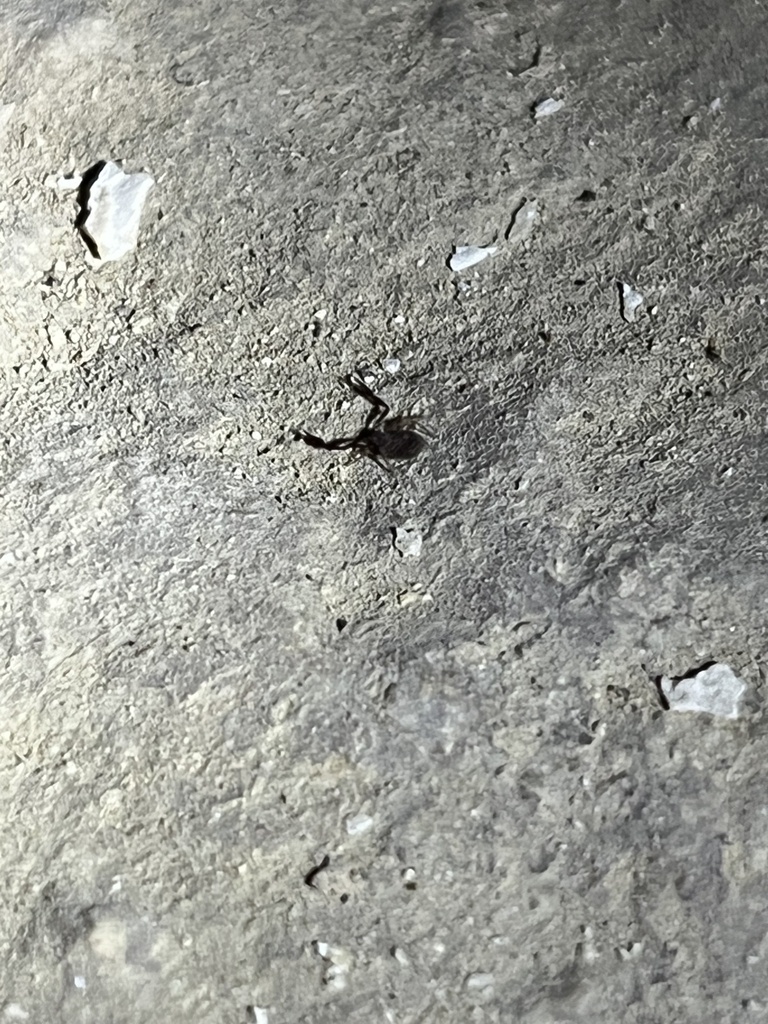
(c) htasoff, some rights reserved (CC BY) · licence
Family: Garypidae · Class: Arachnida · Order: Pseudoscorpiones
Conservation status: G1 S1
Larca laceyi (Lacey's Cave Pseudoscorpion) is a California animal in the Garypidae family.
Lacey's Cave Pseudoscorpion (Larca laceyi) is a small arachnid endemic to California's cave systems. As a pseudoscorpion, this species possesses the characteristic flattened body and enlarged, claw-bearing pedipalps that distinguish the order Pseudoscorpiones from true scorpions, but lacks a segmented tail and stinger. Specific morphological measurements for this species have not been documented in available literature, though most cave-dwelling pseudoscorpions measure 2 to 8 millimeters in body length. The species likely exhibits the pale coloration typical of cave-adapted organisms, with reduced or absent pigmentation as an adaptation to the perpetually dark cave environment. According to NatureServe, Larca laceyi is likely limited in distribution to caves of Calaveras County, California (NatureServe 2025). This extremely restricted range makes it one of California's most geographically limited arachnids. The species appears to be a cave endemic, meaning it has evolved specifically within cave ecosystems and cannot survive in surface environments. No historical range data exists to suggest the species ever occurred outside its current known distribution. The species inhabits cave environments exclusively, representing a specialized ecological adaptation to subterranean habitats. Cave ecosystems are characterized by constant temperatures, high humidity, and complete darkness. These environments typically maintain stable conditions year-round, with temperatures often reflecting the average annual surface temperature of the region. The caves of Calaveras County where this species occurs are likely formed in limestone or other carbonate rocks, creating the alkaline conditions and structural features that support diverse cave fauna communities. Specific behavioral and ecological information for Larca laceyi remains largely undocumented in scientific literature. Like other pseudoscorpions, this species likely functions as a predator within the cave ecosystem, feeding on small arthropods such as springtails, mites, and other cave-dwelling invertebrates. Pseudoscorpions are generally sit-and-wait predators that use their enlarged pedipalps to capture prey. Reproduction in pseudoscorpions typically involves complex courtship behaviors and the production of small numbers of offspring that undergo direct development without a larval stage. Cave-dwelling species often exhibit extended life cycles compared to their surface-dwelling relatives, possibly as an adaptation to the resource-limited cave environment. Larca laceyi holds a conservation status of G1 S1, indicating it is critically imperiled both globally and within California, with typically five or fewer occurrences or very few remaining individuals. This ranking reflects the species' extremely limited distribution and the inherent vulnerability of cave endemic species. Cave ecosystems face numerous threats including groundwater contamination, alterations to surface hydrology, human disturbance, and climate change effects on regional water tables. The species' restriction to Calaveras County caves makes it particularly vulnerable to localized threats such as mining activities, recreational caving impacts, or changes in cave hydrology. Conservation of this species requires protection of its cave habitat and careful management of human activities that could affect cave ecosystems. As of December 2025, no specific recovery or management plans have been developed for this species, highlighting the need for additional research to understand its distribution, population status, and conservation requirements.
Classification
Class: Arachnida · Order: Pseudoscorpiones · Family: Garypidae
Conservation status
G1 S1
Frequently asked questions
How is Larca laceyi classified?
Larca laceyi belongs to class Arachnida, order Pseudoscorpiones, family Garypidae.
What family does Larca laceyi belong to?
Larca laceyi is in the Garypidae family.
Is Larca laceyi protected or of conservation concern?
Larca laceyi carries the following status: G1 S1.
What is Larca laceyi?
Lacey's Cave Pseudoscorpion (Larca laceyi) is a small arachnid endemic to California's cave systems.
Is Larca laceyi found in California?
Yes. Larca laceyi is recorded in California in The California Species Project's catalogue.
Related species
Other California species in the same genus, family, or bioregion.
Data from The California Species Project — 14,000+ California species with verified data from CNPS, CDFW, USFWS, and more.