Larus argentatus
Herring Gull
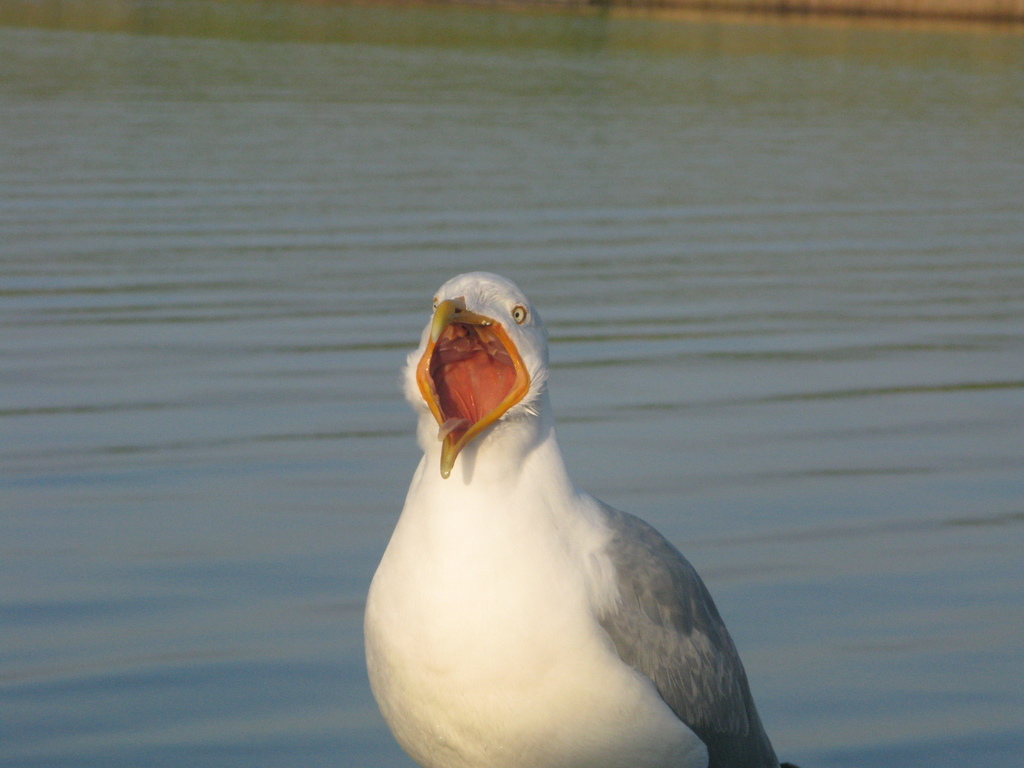
(c) biogeek, some rights reserved (CC BY) · licence
Family: Laridae · Class: Aves · Order: Charadriiformes
Larus argentatus (Herring Gull) is a California animal in the Laridae family.
The Herring Gull is a large, robust seabird measuring 56 to 66 cm (22 to 26 inches) in length with a wingspan of 124 to 150 cm (49 to 59 inches). Adults weigh between 750 to 1,250 grams (1.7 to 2.8 pounds). Breeding adults display pale gray backs and wings with black wingtips marked by white spots, white heads and underparts, and yellow bills with a red spot near the tip of the lower mandible. The legs are pink to flesh-colored. Non-breeding adults show brown streaking on the head and neck. Juveniles are mottled brown overall with dark bills and legs, requiring up to four years to reach adult plumage. The species exhibits sexual dimorphism, with males typically larger than females. Herring Gulls breed across northern North America and Eurasia. In California, they occur primarily as winter visitors and migrants along the entire coastline from October through April. Small numbers may remain through summer, particularly in northern California. The species is most abundant in central and northern California coastal areas, including San Francisco Bay, Monterey Bay, and Humboldt Bay. They also occur inland at large lakes and reservoirs during winter months. This species inhabits diverse coastal and inland aquatic environments. Along the coast, Herring Gulls frequent beaches, harbors, piers, estuaries, and nearshore waters. They utilize rocky shores, sandy beaches, and mudflats for foraging. Inland habitats include large lakes, reservoirs, rivers, agricultural fields, and landfills. The species shows high tolerance for human-modified environments and urban areas. During winter in California, they roost communally on beaches, jetties, and offshore islands. Herring Gulls are opportunistic omnivores with a diverse diet including fish, crustaceans, mollusks, marine worms, insects, eggs, chicks of other birds, small mammals, and human refuse. They employ various foraging strategies including surface diving, scavenging, kleptoparasitism, and ground gleaning. The species is highly social, often feeding and roosting in large flocks. Breeding occurs from April to August in northern regions, with pairs constructing nests of vegetation on clifftops, islands, or flat rooftops. Females typically lay 2 to 3 olive-brown eggs with dark markings. Both parents incubate eggs for 28 to 30 days and care for chicks until fledging at 35 to 40 days. The Herring Gull is not federally listed and maintains stable populations across most of its range. The International Union for Conservation of Nature classifies the species as Least Concern globally. In California, populations appear stable, though the species faces localized threats from habitat loss, pollution, and climate change impacts on marine food webs. Oil spills pose periodic risks to coastal populations. The species' adaptability to human environments and opportunistic feeding habits contribute to its overall population stability. Some breeding colonies in other regions have experienced declines due to predation, human disturbance, and environmental contaminants.
Classification
Class: Aves · Order: Charadriiformes · Family: Laridae
Frequently asked questions
How is Larus argentatus classified?
Larus argentatus belongs to class Aves, order Charadriiformes, family Laridae.
What family does Larus argentatus belong to?
Larus argentatus is in the Laridae family.
What is Larus argentatus?
The Herring Gull is a large, robust seabird measuring 56 to 66 cm (22 to 26 inches) in length with a wingspan of 124 to 150 cm (49 to 59 inches).
Is Larus argentatus found in California?
Yes. Larus argentatus is recorded in California in The California Species Project's catalogue.
Related species
Other California species in the same genus, family, or bioregion.
Data from The California Species Project — 14,000+ California species with verified data from CNPS, CDFW, USFWS, and more.