Larus canus
Mew Gull
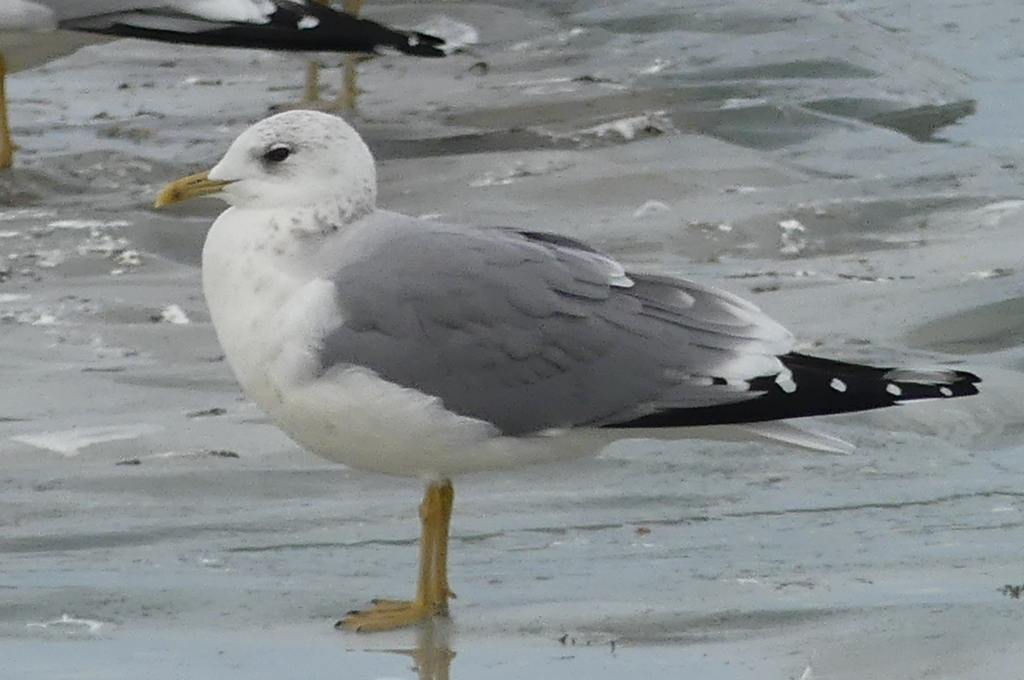
no rights reserved · CC0
Family: Laridae · Class: Aves · Order: Charadriiformes
Larus canus (Mew Gull) is a California animal in the Laridae family.
The Mew Gull is a medium-sized gull species measuring 40 to 46 centimeters (16 to 18 inches) in length with a wingspan of 96 to 110 centimeters (38 to 43 inches). Adults in breeding plumage display clean white heads, necks, underparts, and tails, contrasted by pale gray mantles and wing coverts. The bill is greenish-yellow without dark markings, distinguishing it from similar species like the Ring-billed Gull. Legs are yellow to greenish-yellow. Winter adults develop dark streaking on the head and neck. Juveniles show extensive brown mottling on the upperparts and a dark-tipped pink bill that gradually transitions to adult coloration over two to three years. In North America, Mew Gulls breed primarily across Alaska and western Canada, with limited breeding populations in the Pacific Northwest. During migration and winter, they occur along the Pacific Coast from British Columbia to Baja California. In California, the species is present primarily as a winter resident and migrant from October through April. They are most commonly observed along the central and northern California coast, with smaller numbers appearing inland in the Central Valley and at large reservoirs. The species shows strong site fidelity to wintering areas, with individuals often returning to the same coastal locations annually. Mew Gulls occupy diverse coastal and inland aquatic habitats. During the breeding season in northern regions, they nest near freshwater lakes, marshes, and slow-moving rivers, often in areas with adjacent coniferous forest. In California's wintering grounds, they frequent beaches, harbors, estuaries, mudflats, and agricultural fields. The species adapts readily to human-modified environments, commonly foraging in parking lots, landfills, and urban waterfront areas. They roost communally on beaches, jetties, and protected shorelines. Mew Gulls are opportunistic omnivores with a diverse diet including fish, marine invertebrates, earthworms, insects, small mammals, and human food waste. They employ multiple foraging strategies: surface-dipping while swimming, plunge-diving from low heights, walking on mudflats and beaches to probe for invertebrates, and following fishing boats for discarded bycatch. The species exhibits kleptoparasitic behavior, stealing food from other seabirds. During winter in California, they often forage in mixed flocks with other gull species and frequently associate with fishing activities in harbors and bays. Breeding occurs from May through August in northern territories, with pairs constructing nests on the ground near water or occasionally in low trees. Clutch size typically ranges from two to three eggs, with an incubation period of 24 to 26 days. Both parents participate in incubation and chick care, with fledging occurring after approximately 32 to 35 days. The Mew Gull is not federally listed and maintains stable populations across most of its range as of December 2025. The species has shown adaptability to human activities and climate variations, though breeding populations in some regions face pressure from habitat modification and disturbance at nesting sites. Climate change may affect breeding timing and prey availability in northern habitats, but overall conservation status remains secure.
Classification
Class: Aves · Order: Charadriiformes · Family: Laridae
Frequently asked questions
How is Larus canus classified?
Larus canus belongs to class Aves, order Charadriiformes, family Laridae.
What family does Larus canus belong to?
Larus canus is in the Laridae family.
What is Larus canus?
The Mew Gull is a medium-sized gull species measuring 40 to 46 centimeters (16 to 18 inches) in length with a wingspan of 96 to 110 centimeters (38 to 43 inches).
Is Larus canus found in California?
Yes. Larus canus is recorded in California in The California Species Project's catalogue.
Related species
Other California species in the same genus, family, or bioregion.
Data from The California Species Project — 14,000+ California species with verified data from CNPS, CDFW, USFWS, and more.