Larus crassirostris
Black-tailed Gull
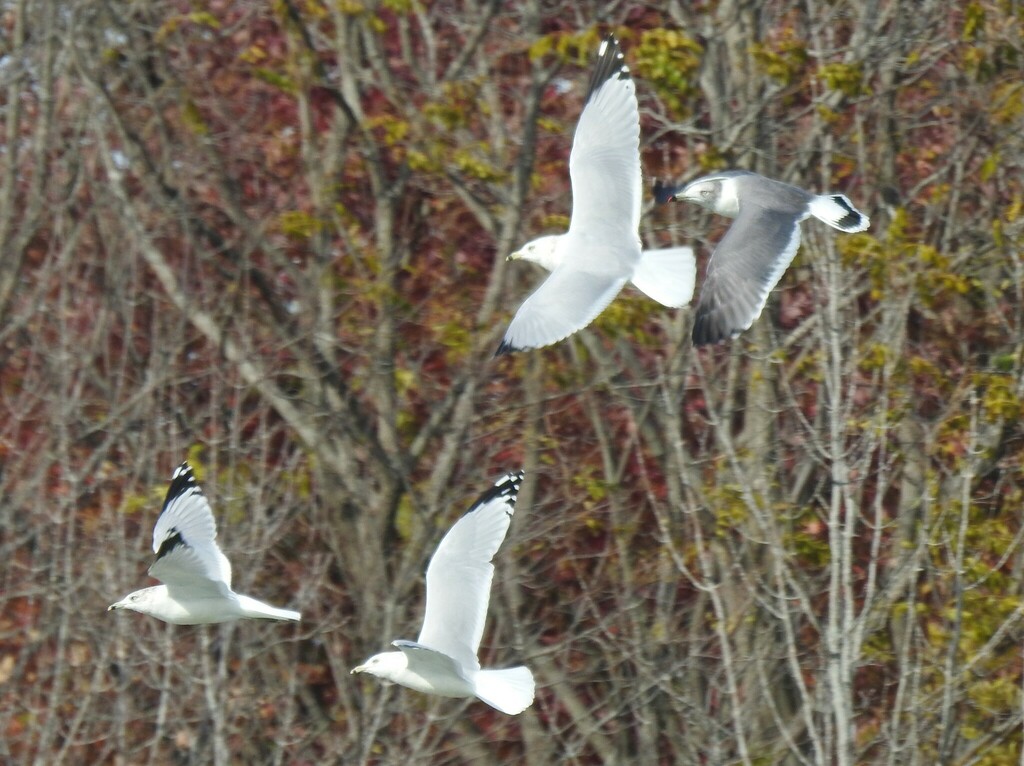
(c) Laurel Meredyk, some rights reserved (CC BY) · licence
Family: Laridae · Class: Aves · Order: Charadriiformes
Larus crassirostris (Black-tailed Gull) is a California animal in the Laridae family.
The Black-tailed Gull is a medium-sized seabird native to East Asia that has been recorded as a rare vagrant in California waters. Adults measure 46-47 cm (18-18.5 inches) in length with a wingspan of 120-128 cm (47-50 inches). The species weighs approximately 400-680 grams (14-24 ounces). In breeding plumage, adults display a white head and underparts with pale gray upperparts and wings. The distinctive black tail band, from which the species derives its name, contrasts sharply with the white rump and tail base. The bill is yellow with a red and black tip, while the legs are bright yellow. Non-breeding adults show dark streaking on the head and neck. Juveniles are mottled brown and white with a dark terminal tail band and pink legs. The Black-tailed Gull breeds primarily along the coasts of Japan, Korea, eastern China, and Russia's Far East. The species is considered accidental in North America, with fewer than 10 documented records in California as of December 2025. Most California sightings have occurred along the central and northern coast, including records from Monterey Bay, Half Moon Bay, and Bodega Bay. These vagrant individuals typically appear during fall and winter months, often associating with other gull species at coastal locations. In its native range, the species inhabits rocky coastal islands, harbors, and nearshore marine environments. Black-tailed Gulls nest colonially on cliff ledges, rocky slopes, and flat areas of offshore islands. During the non-breeding season, they frequent harbors, estuaries, and coastal waters, rarely venturing far inland. The species shows a preference for areas with abundant fish populations and suitable roosting sites. Black-tailed Gulls are opportunistic feeders, consuming small fish, marine invertebrates, crustaceans, and occasionally refuse from fishing vessels. They employ various foraging strategies including surface dipping, shallow diving, and scavenging. The breeding season extends from May through August in their native range. Pairs construct simple scrape nests lined with vegetation, typically laying 2-3 olive-brown eggs with dark markings. Incubation lasts approximately 24-26 days, with both parents sharing duties. Chicks fledge after 35-40 days but may remain dependent on parents for several additional weeks. The Black-tailed Gull is not federally or state-listed in California, as it is not a breeding resident species. The global population is considered stable, with an estimated 100,000-150,000 breeding pairs according to BirdLife International. In its native range, the species faces threats from coastal development, pollution, and disturbance at breeding colonies. Climate change may affect prey availability and distribution patterns. For California, the species remains a rare but regular vagrant, with sightings generating considerable interest among birders and researchers studying vagrant patterns in Pacific seabirds.
Classification
Class: Aves · Order: Charadriiformes · Family: Laridae
Frequently asked questions
How is Larus crassirostris classified?
Larus crassirostris belongs to class Aves, order Charadriiformes, family Laridae.
What family does Larus crassirostris belong to?
Larus crassirostris is in the Laridae family.
What is Larus crassirostris?
The Black-tailed Gull is a medium-sized seabird native to East Asia that has been recorded as a rare vagrant in California waters.
Is Larus crassirostris found in California?
Yes. Larus crassirostris is recorded in California in The California Species Project's catalogue.
Related species
Other California species in the same genus, family, or bioregion.
Data from The California Species Project — 14,000+ California species with verified data from CNPS, CDFW, USFWS, and more.